
REVIEW · MEDELLíN LANDMARKS & METROCABLE VIEWS
Cable car to el Paraiso, the city slum
A cable car ride into Bogotá’s real life.
What I like most is the pair of cable car views and street art in El Paraiso, explained by guides who connect the visuals to daily life in the neighborhood. The experience is designed to feel like you’re moving at resident speed, and you’ll often hear firsthand stories from local hosts such as Andrea and Brian, or tour guides like Melissa and Juan.
This is also one of those tours where conditions matter. You’ll want good weather, because the area is on a hill and visibility is part of the point. If you’re expecting a perfectly flat, sit-down museum-style outing, plan for more walking and more outdoor time.
In This Review
- Quick hit highlights for El Paraiso
- Why El Paraiso matters more than the usual Bogotá route
- Meeting in Teusaquillo and setting expectations for a 9:00 am start
- Riding the TransMiCable Tunal cable car for that top-of-the-hill view
- Walking El Paraiso street art with context, not just captions
- Getting value from a private, small-group guide
- Snacks and simple food culture on the hill
- Safety, comfort, and how to avoid the common mistakes
- Price and Logistics: is $67 worth it?
- Who should book this El Paraiso cable car tour
- Final call: should you book El Paraiso with Rolombia Trips?
- FAQ
- What is the duration of the El Paraiso cable car tour?
- How much does the tour cost, and what does it include?
- Where do I meet the guide?
- What time does the tour start?
- How many people are in the group?
- Is the cable car part included, and where do you ride from?
- What kind of neighborhood experience should I expect in El Paraiso?
- Is the tour dependent on weather?
- What is the cancellation policy?
Quick hit highlights for El Paraiso
- TransMiCable Tunal cable car ride for a top-of-the-hill view of Bogotá, with admission included
- El Paraiso street art walk tied to the neighborhood’s efforts and community projects
- Local-guided context from residents such as Andrea and Brian, plus city overview from your main guide
- Small group, maximum 15 people, built for real questions, not a lecture line
- Snacks included such as empanadas and traditional juices (when offered on your day)
More cable line, more plazas, more paisa city
- Bogotá: Private City Tour, Monserrate, Emerald and Botero★ 4.9 · 798 reviews
- Bogotá´s Barrios: El Paraíso Favela Tour with Cable Car★ 4.8 · 731 reviews
- Bogotá City Tour with Monserrate, Gold and Botero Museums★ 4.9 · 584 reviews
- BOGOTA: City Tour, Monserrate, Gold Museum, Botero Museum, Plaza Bolívar★ 4.8 · 146 reviews
Why El Paraiso matters more than the usual Bogotá route
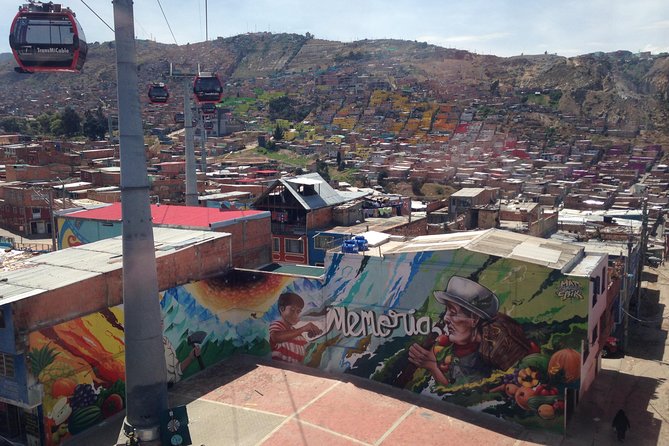
Bogotá has famous stops for a reason, but El Paraiso gives you the version of the city you’d never piece together from photos or a couple of central neighborhoods. This hill area is where you see how community, art, and resilience show up in everyday life. You’re not just looking at street art as decoration. You’re seeing how graffiti culture connects to identity, pride, and local improvement projects.
The best part is the framing. Your guide doesn’t treat the cable car as a quick photo op. Instead, they use the ride and the walk to explain how the neighborhood fits into the bigger story of the city’s hills and communities. You also get a sense of El Paraiso’s relationship to the wider Ciudad Bolivar area, including why people talk about these neighborhoods as places that are actively trying to change things for residents.
And yes, the views help. But the views are the hook, not the whole reason to go. You’ll come away with better context for Bogotá than you would get from just collecting landmarks.
Meeting in Teusaquillo and setting expectations for a 9:00 am start
The tour starts at El Empanadazo de lla 39Dg. 40a #14-03, Teusaquillo. The start time is 9:00 am, and it ends back at the same meeting point. That loop matters because it keeps your day simple, especially if you’re staying in central Bogotá.
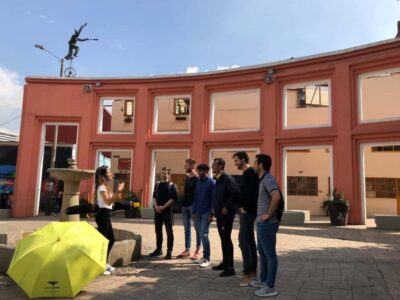
You’ll be traveling in a small group, capped at 15, and it’s described as private in the sense that you get personal attention from your guide rather than being one person in a huge crowd. In practice, this is what lets you ask real questions about life, art, and how residents see outsiders.
A detail I’d call out: expect some time moving between points. On some days, the journey to the cable car can involve using public transport, and that travel time can come with commentary from your guide. It’s not wasted time. It’s part of how you start understanding the neighborhood before you ever step into it.
Riding the TransMiCable Tunal cable car for that top-of-the-hill view
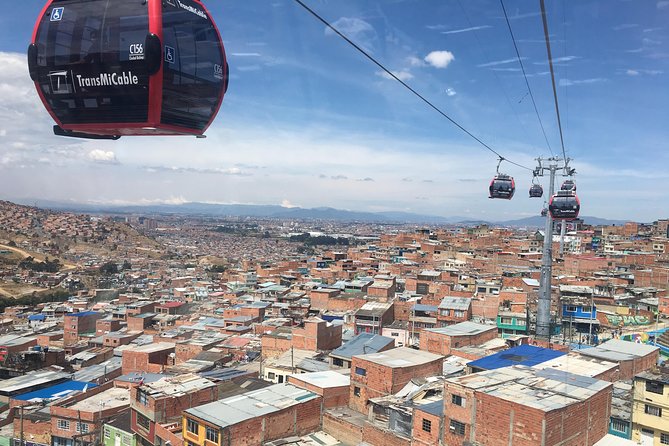
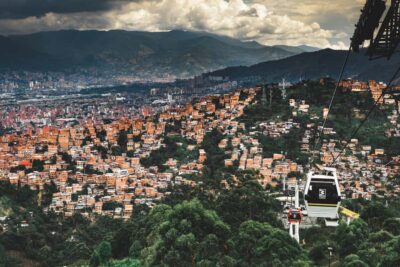
The heart of the morning is the cable car ride to the highest point of the hill, departing from the TransMiCable Tunal station. The cable car segment is short, about 15 minutes, but it’s timed to give you the view as a real moment, not a rushed stop.
Because the ticket is included, you don’t have to figure out schedules or payment on the day. You just show up and go. This also makes the trip feel more local. Instead of hopping in taxis and skipping the public systems, you use the city’s own connection up and over the hills.
What you’ll want to do during the ride:
- Keep your camera ready, especially if the sky is clear.
- Take a moment to look beyond the obvious postcard angles. The guide will often point out what you’re actually seeing, not just how pretty it is.
One more practical note: the tour requires good weather. If clouds roll in, the view can be less dramatic. It doesn’t spoil the whole experience, but it’s a big part of why the cable car is worth the trip.
Walking El Paraiso street art with context, not just captions
Once you’re in El Paraiso, the focus shifts from sweeping city views to close-up neighborhood life. This is where the tour earns its keep. You’ll walk around and see street art that’s famous for a reason, but you’ll also learn how it ties into local culture and community efforts.
The art here isn’t presented like street art tourism, where you only look and move on. Your guide connects the graffiti culture to projects that help people, and you’ll hear stories about how residents use art to communicate, organize, and push for improvement. Local hosts such as Andrea and Brian often share what the neighborhood means to them personally, which changes the tone of what you’re seeing.
As you walk, don’t treat it like a checklist of murals. Slow down for a minute in each area and let your guide explain what to look for. The payoff is that you start reading the neighborhood visually, like you’re understanding a language.
You may also get a broader neighborhood overview, sometimes including references to viewpoints like El Mirador and the history of Ciudad Bolivar. Even if you don’t remember every detail, you’ll feel the through-line: how communities on the hills build identity, support, and change over time.
Other city runs through Bogota
Getting value from a private, small-group guide
This tour runs with a maximum of 15 people, and the description leans heavily on personal attention. That matters because El Paraiso is not the kind of place you want to wander through without context. With fewer people, your guide can answer follow-up questions. With a resident component, you also get perspectives that you can’t replicate from a one-size-fits-all guidebook.
The names you might meet vary by day, but the experience is often built around two layers:
1) Your main guide, who explains the citywide picture and keeps the story coherent.
2) A local host in the neighborhood, often someone like Andrea or Brian, who shares what day-to-day life and street art culture look like from inside.
That two-layer setup is one of the most praised parts of the experience. It turns “see this place” into “understand this place,” and it usually leads to better photos too, because you know what’s worth framing.
Snacks and simple food culture on the hill
Food is part of the comfort here, not a separate event. Snacks are included, and on some days you’ll get items like empanadas and traditional juices. It’s a good addition because the morning is active. You’re on your feet, outdoors, and walking through neighborhoods with minimal chances to stop for food like you would in the center.
Practical tip: keep the snack portion in mind when planning breakfast. You can eat beforehand, but don’t overdo it. You’ll likely appreciate the food more with a lighter meal earlier.
If you’re the type who enjoys food-as-culture, this is worth noting. These snacks aren’t framed like fine dining. They’re framed like neighborhood life.
Safety, comfort, and how to avoid the common mistakes
Safety comes up often for this kind of neighborhood visit, and the tone from the experience is consistent: you should feel looked after while you’re with the guides and local hosts. Still, treat this like any city day outside the obvious tourist lanes.
Your best moves:
- Stay with the group and follow your guide’s pacing.
- Wear shoes you can walk in comfortably, since you’re spending time outdoors in a hill neighborhood.
- Keep an eye on weather. If conditions are poor, the tour may be adjusted.
I also like the way the experience is structured around people who live there. That reduces the awkward feeling of being a random outsider wandering around. Instead, you’re joining a guided flow, asking questions as you go, and taking in street art with someone who can translate what you’re seeing.
Price and Logistics: is $67 worth it?
At $67 per person for about 4 hours, you’re paying for more than a cable car ticket. The ticket to the cable car is included, you get guided interpretation of El Paraiso and street art, and snacks are part of the package.
Where the value really shows up is in the “why” of the visit:
- You’re not just going to a viewpoint, you’re going to a neighborhood with a story.
- You’re not just taking transit, you’re learning from it.
- You’re not just seeing murals, you’re understanding what those murals represent locally.
If you were to DIY this, you’d likely spend time figuring out routes, buying tickets, and piecing together local context yourself. The tour’s real cost savings is not only money, it’s mental energy. You arrive, you go, and you know what to pay attention to.
Who should book this El Paraiso cable car tour
This is a strong fit if you want:
- A Bogotá experience beyond the obvious center highlights
- A cable car ride that actually connects to the neighborhood story
- Street art that comes with meaning, community context, and resident perspectives
- A small-group, personal-attention style tour
It’s also a good choice if you’re curious about how Ciudad Bolivar communities work to improve residents’ lives. The neighborhood walk includes that human angle, and that’s what makes it feel more “real city” than “photo stop.”
You might skip it if you:
- Strongly prefer low walking and predictable indoor time
- Are planning around weather-sensitive days and can’t be flexible
Final call: should you book El Paraiso with Rolombia Trips?
I’d book this if you want Bogotá with texture, not just monuments. The combination of TransMiCable Tunal cable car views, a walk through El Paraiso street art, and resident-style explanations is exactly the kind of half-day that changes how you see a city. The small group size and the chance to meet local hosts like Andrea and Brian are major reasons it feels more personal than a typical tour.
If the weather is looking messy where you’ll be in Bogotá, have a backup mindset. Otherwise, go. Bring good walking shoes, set aside curiosity, and let the guides do their thing.
FAQ
What is the duration of the El Paraiso cable car tour?
It runs for approximately 4 hours.
How much does the tour cost, and what does it include?
The price is $67.00 per person. The cable car admission ticket is included, and snacks are included.
Where do I meet the guide?
You meet at El Empanadazo de lla 39Dg. 40a #14-03, Teusaquillo, Bogotá.
What time does the tour start?
The start time is 9:00 am.
How many people are in the group?
The tour has a maximum of 15 travelers.
Is the cable car part included, and where do you ride from?
Yes, admission is included. The ride starts at TransMiCable Tunal station.
What kind of neighborhood experience should I expect in El Paraiso?
You’ll learn about El Paraiso from your guide, ride the city’s cable car, and walk around Paraiso to see its famous street art.
Is the tour dependent on weather?
Yes. The experience requires good weather. If it’s canceled due to poor weather, you’ll be offered a different date or a full refund.
What is the cancellation policy?
You can cancel for free up to 24 hours in advance for a full refund. Cut-off times are based on the experience’s local time.
The Rest of Our Bogota Reviews



Bogota City Routes
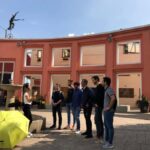

Medellin From the Cable Line


Just added to our Bogota shelf
- Fun Graffiti Workshop: The Art of Aerosol and Color
★ 5.0 · 3 reviews - From Bogota: White Water Rafting Experience
★ 4.4 · 3 reviews - From Bogota: Excursion to Jaime Duque Park
★ 5.0 · 3 reviews - Bogotá: La Candelaria Food Tour with Tastings
★ 4.2 · 3 reviews - Walking tour José Celestino Mutis Botanical Garden 3 hrs
★ 5.0 · 3 reviews
Medellín Landmarks & Metrocable Views, compared.
 ★ 4.8Medellin: Comuna 13 Graffiti Tour, Cable Car & Street FoodFrom $189,046 reviews
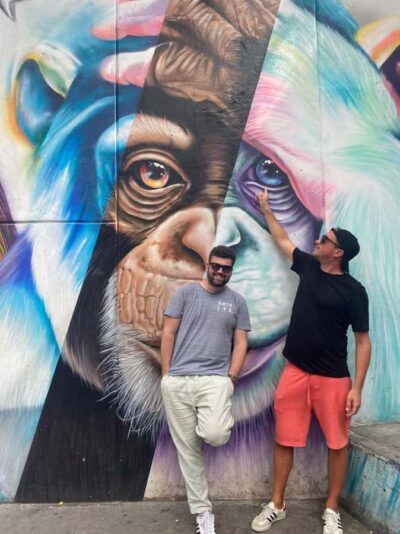 ★ 4.8Medellín: Comuna 13 District Tour with Cable Car RideFrom $271,467 reviews
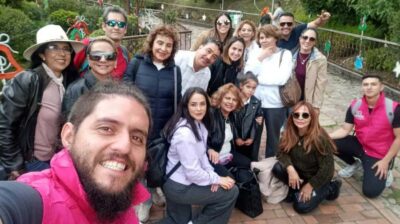 ★ 4.9Bogotá: Private City Tour, Monserrate, Emerald and BoteroFrom $65798 reviews
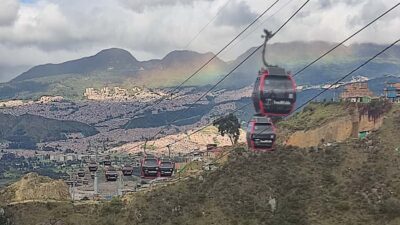 ★ 4.8Bogotá´s Barrios: El Paraíso Favela Tour with Cable CarFrom $78731 reviews
 ★ 4.9Bogotá City Tour with Monserrate, Gold and Botero MuseumsFrom $65584 reviews
 ★ 4.9Medellín: Private City Tour with Metrocable and Comuna 13From $76330 reviews
 ★ 4.8Medellin: Street Food and Poblado Rooftop Tour with a LocalFrom $39317 reviews
 ★ 4.8Shared Medellín Downtown Tour with Wireless AudioFrom $13315 reviews
Where else this tour turns up