
REVIEW · CHIVA PARTY BUS & NIGHT RUMBA
City Tour in Chiva through the City of Cartagena
Cartagena hits you fast, then keeps teaching. This 4-hour Chiva tour mixes big waterfront views with hands-on history, from the Fort of San Felipe de Barajas to the UNESCO Walled City walk. You get a certified guide and convenient transport, plus multiple stops made for photos.
I especially like how the route connects the dots. You start near the emancipation area and clock-tower gateway, then move into the bay, the city’s monuments, and finally the fort and old center. I also like that the fort includes guided entry, so you are not just touring walls, you are getting the story.
One drawback to consider: the ride is not air-conditioned, and heat can feel intense. A few stops also include shopping-style detours, so if you hate sales pressure, plan to be firm and quick.
In This Review
- Quick Hits Before You Go
- A Chiva Ride That Actually Makes Cartagena Feel Big
- Emancipation-Era Start Near the Clock Tower and Pegasos Pier
- Bahia Views: The Commercial Gateway to America
- Letters of Cartagena and Monument to Old Shoes: Small Stops, Good Stories
- Fort of San Felipe de Barajas: What Included Guided Entry Changes
- India Catalina: The Legend That Links Roots to the City
- Ending in the Historic Center: UNESCO Streets, Real Walking Time
- Clock Tower Gateway: Puerta del Reloj and the Old City Entry
- Price and Value: Why $35 Can Feel Like a Deal
- Heat, Crowds, Sound Quality, and Other Real-World Notes
- English Support: The One Factor You Should Check
- Who This Tour Fits Best
- Should You Book This Chiva City Tour?
- FAQ
- What is included in the tour price?
- How long is the tour?
- What is the main historical highlight?
- Is bottled water included?
- Is the tour done on a Chiva bus?
- How big is the group?
- Is there an English-speaking guide?
- Does the tour include any walking?
- Can I cancel for a full refund?
Quick Hits Before You Go
- Chiva transportation keeps things fun and different, but it is hot and you climb up to board
- Fort San Felipe de Barajas has included guided entry, so you understand what you are seeing
- Photo stops like Letters of Cartagena and Monument to Old Shoes break up the driving time
- UNESCO Historic Center ending means you finish in the most walkable, atmospheric area
- Group size capped at 30 keeps the tour from turning into chaos
- English support varies by guide, but staff attention shows up in the better reviews
Other late ones, if the first worked out
- Cartagena: Pub Crawl with Dancing Lessons and Free Shots★ 4.2 · 211 reviews
- Party Bus Tour★ 4.5 · 77 reviews
- Playa Blanca Barú: VIP Access to Mambo Beach Club★ 4.0 · 61 reviews
- Eco Plan National Aviary and Lunch in Playa Mambo Beach Barú★ 4.0 · 56 reviews
A Chiva Ride That Actually Makes Cartagena Feel Big
Cartagena is a city of layers. The ocean-facing side has its own drama, the colonial core has its own rhythm, and the fort hill tells you the city was built to resist. Riding in a Chiva is a smart way to cover ground without burning your whole day.
The pace also works for first-timers. You are not just snapping pictures from a single neighborhood. You see the commercial gateway vibe along the bay, then pivot to emancipation-era landmarks, then jump to the military architecture at San Felipe, and finally end in the Walled City where the streets do the talking.
A practical note: you will likely get the best experience by going into it expecting heat and photos, not museum-style quiet. The open-air feel and lively stops are part of the charm, even if it means you should dress for sun and have a plan for hydration.
Emancipation-Era Start Near the Clock Tower and Pegasos Pier
The tour begins in the area tied to Cartagena’s emancipation story, right by the Clock Tower vicinity, close to the Pegasos Pier and Independence Centennial Park. Even before you hop into the longer stops, you get a sense of where the city’s modern identity meets its historical self.
From there, the route passes by the convention area and heads toward the bay. This early setup matters because it frames everything else. When you later reach the fort, you will understand why Cartagena cared so much about guarding the approaches to the city.
Bahia Views: The Commercial Gateway to America
Your first real break is at the bay, where the Bahia de Cartagena is described as the commercial gateway to America. This is one of those Cartagena moments where the city walls and the water look like they belong together, because they truly were built to work as one system.
Expect about 15 minutes here. That is enough time to soak in the sun and sea views and grab photos without turning the tour into a long wait. Since the bay is outdoors, this stop also reminds you what you are in for: bright light, strong sun, and a need for sunscreen.
Tip: if you are chasing the best photos, use the first minutes wisely. Light can shift quickly on the water, and other groups will arrive at similar times.
Letters of Cartagena and Monument to Old Shoes: Small Stops, Good Stories
After the bay, the tour shifts to two monuments that feel different from the big-ticket fort.
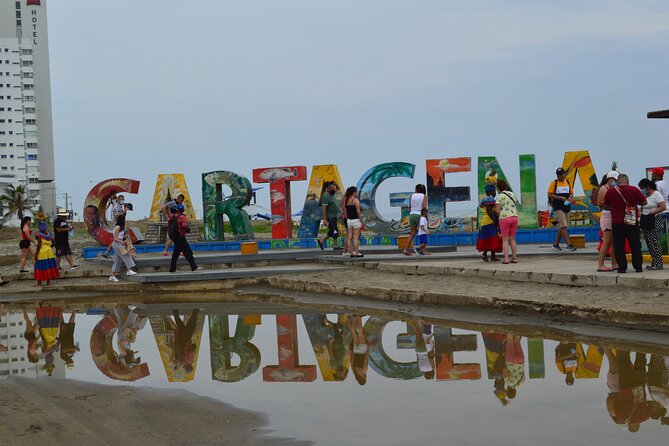
First comes the Letters of Cartagena. This monument is made with recycled materials and is roughly 2.40 to 2.60 meters tall, making it tall enough to make your photos pop even in a busy public area. You get a brief stop, but it is one of those quick photo moments that gives your trip an instant visual souvenir.
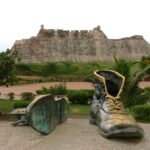
Next is the Monumento a los Zapatos Viejos. This one is not just a sculpture. It is tied to one of Cartagena’s poets and reflects the pride in humble origins and the idea of belonging. The time here is short, around 20 minutes, but the emotional angle is what sticks.
Why I like these stops: they add culture between major landmarks. They also help you remember the city beyond forts and churches, which is easy to do in Cartagena.
Other city runs through Cartagena
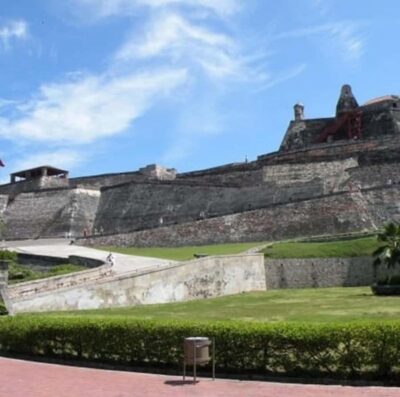
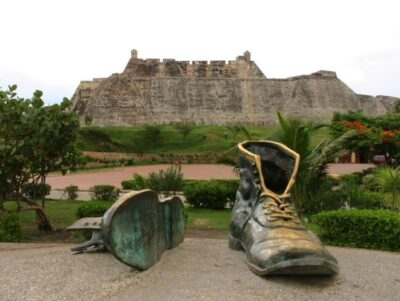
Fort of San Felipe de Barajas: What Included Guided Entry Changes
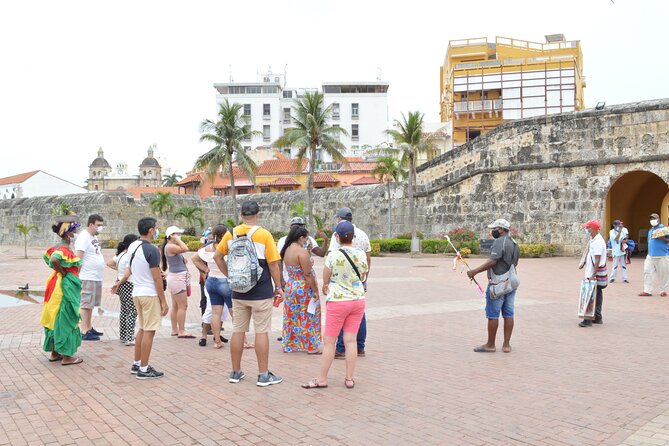
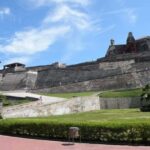
Then you climb into the highlight: the Fort of San Felipe de Barajas, built in 1657 during the Spanish colonial era. It sits on a hill called San Lázaro, and it is widely considered one of Colombia’s most important fortifications.
The time here is about 1.5 hours, and the key detail is that entrance is included with a guided tour. That matters more than it sounds. Without a guide, fort visits can turn into impressive walls and confusing angles. With the right narration, you start connecting geography, defense strategy, and the city’s survival instincts.
You are also given specific historical context, including English and French attacks over time. The story even includes the French commander Baron de Pointis, who took the castle in the mid-1697 period. That kind of detail turns the fort from scenery into a real timeline.
What to expect on the ground:
- You will walk around key viewpoints and interior areas as explained by your guide
- You will spend time learning why the hill location mattered
- You will get better photos because you understand what direction to face
If you plan to photograph, wear shoes that can handle uneven surfaces. Fort terrain is not always forgiving.
India Catalina: The Legend That Links Roots to the City
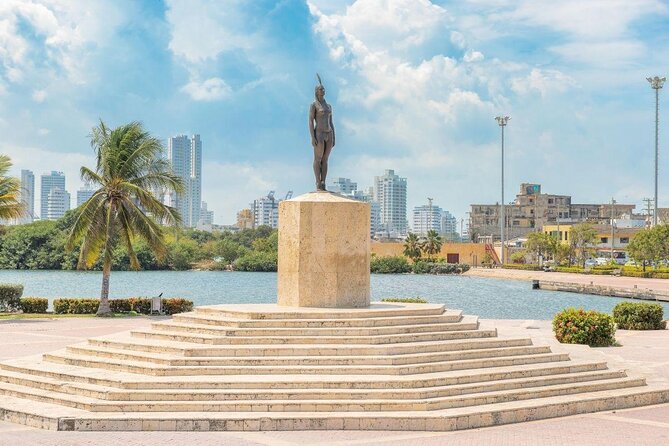
After the fort, the tour passes the Monument to India Catalina, a work by sculptor Eladio Gil. This stop is not long, but it is memorable because the legend and the city identity are intertwined.
The story presented here centers on Catalina as a warrior born in nearby Galerazamba. She was later sold as a slave in Santo Domingo, then brought to Cartagena in 1533 by Pedro de Heredia as an interpreter. The monument frames her as a key figure connected to miscegenation and Spanish settlement in the region.
Even if you already know some Cartagena history, this is a clean way to connect the human story to the stone and seawalls. It also keeps the tour from becoming purely military focused after San Felipe.
Ending in the Historic Center: UNESCO Streets, Real Walking Time
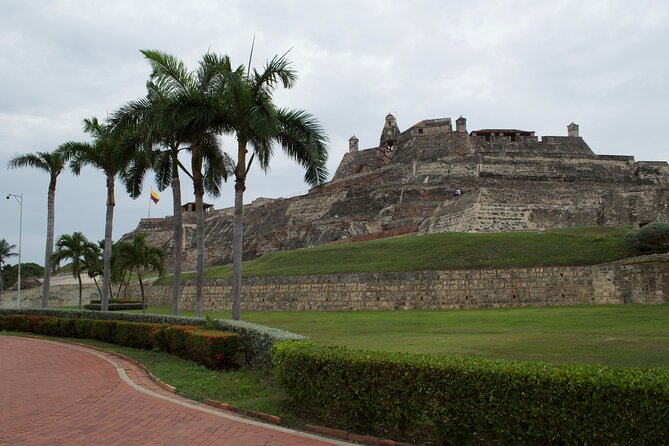
The tour ends with a walking tour of Cartagena’s Historic Center, recognized as UNESCO Cultural Heritage since 1984. This is the payoff area, because once you start walking, you feel the city’s texture: churches, convents, monasteries, squares, colonial buildings, and palace-like facades.
The walking portion is about 30 minutes. That is not enough time to do everything, but it is the right length to get oriented. You will see the kind of streets you want to return to on a second day, the kind you can navigate confidently afterward.
Also, this part is where you will notice shopping energy. Some stops can feel sales-forward, including a jewelry-focused detour mentioned by some visitors. If you want to keep your time focused on walking and photos, keep your expectations clear and do not let anyone rush you into buying something.
Clock Tower Gateway: Puerta del Reloj and the Old City Entry
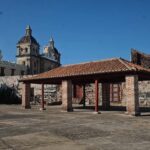
You also stop at the Torre del Reloj, often associated with the Puerta del Reloj or Clock Tower. Historically, it was called Boca del Puente, acting as a main entrance to the Walled City. The side arches were used as a chapel and armament room, and today they are open as walkways.
Later, in 1888, a republican-style tower with a clock was added. So you are not just seeing one era. You are seeing layers of how Cartagena reinvented what it already had.
This stop is short, around 10 minutes, but it is a great anchor because it is so tied to arrival and movement. It helps you understand where the old city begins, which makes your self-guided wandering after the tour much easier.
Price and Value: Why $35 Can Feel Like a Deal
At $35 per person for about 4 hours, this is priced to feel reasonable, especially because it includes transport and an actual ticketed stop.
Here is what you are getting value for:
- Chiva transportation to move between waterfront, monuments, the fort, and the Walled City
- Entrance to Castillo de San Felipe de Barajas plus a guided tour inside
- A certified guide to connect history to what you are seeing
If you tried to assemble this on your own, you would spend money on transport plus the fort visit, and you would still need someone to explain the significance in a way that makes the fort worth your time. For many visitors, that guided fort piece alone makes the price feel fair.
One cost to plan for: bottled water is not included. Also, you may want snacks or drinks during the walk, and Cartagena heat can make that feel necessary fast.
Heat, Crowds, Sound Quality, and Other Real-World Notes
This tour is very doable for most people, but a few physical and comfort points come up in real feedback.
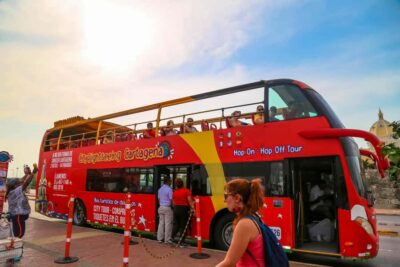
First, the Chiva ride itself can be rough in the heat. Some visitors specifically mention no air-conditioning and no fans. If you are sensitive to hot sun, start early in the day when possible and bring sunscreen.
Second, there is a boarding factor. You may have to climb up, with a ladder-style entry mentioned by visitors (including about three rungs). That makes it less ideal if you have trouble climbing steps.
Third, the audio can be hit-or-miss. Some comments point to sound quality issues during explanations, especially later in the walking portion. You can reduce frustration by positioning yourself well, keeping your ears open during transitions, and asking your guide to repeat when you need it.
Finally, the shopping interruptions can eat time. In at least one case, there is mention of a jewelry stop framed as a sales pitch. If you want maximum sightseeing, treat these as quick browse options, not as required detours.
English Support: The One Factor You Should Check
One of the most important practical details is language. The tour runs with certified guides, and some guides have done excellent English translation for visitors, including names like Caesar, Herman, and Martin who were praised for details and attentiveness.
But not every guide may speak English. One visitor said the guide did not speak English, which made the experience less enjoyable if you cannot follow Spanish.
My advice: if you care about understanding every story, confirm language support ahead of time and go with a flexible attitude if you end up relying on translation part of the day.
Who This Tour Fits Best
This is a strong choice if:
- You are visiting Cartagena for the first time and want an efficient route
- You like guided history, especially at Fort San Felipe
- You want a mix of monuments, bay views, and city-center orientation
- You are fine with a short walking finish in the Walled City
You might skip or choose another option if:
- You need air-conditioned transport
- You dislike shopping-style stops or sales pitches
- You cannot climb ladder-style entries or handle uneven fort areas
- You need 100 percent English without any gaps
Should You Book This Chiva City Tour?
If you want a fun, story-driven way to cover Cartagena’s big scenes in half a day, I think this tour is worth booking. The best value is the combination of transport, included guided access at Fort San Felipe, and an ending that drops you into the Historic Center so you can keep exploring right after.
Just go prepared. Bring water, protect yourself from sun, wear comfortable shoes, and be ready for a lively ride that prioritizes movement over quiet. If you do that, you will leave with the city’s main landmarks connected in your head, not just lined up on a photo roll.
FAQ
What is included in the tour price?
The price includes private transportation, private transport in a Chiva, a tour guide, and entrance to the Castillo de San Felipe de Barajas with a guided tour.
How long is the tour?
The tour lasts about 4 hours.
What is the main historical highlight?
The Fort of San Felipe de Barajas is the major historic stop, with included entrance and a guided visit.
Is bottled water included?
No. Bottled water and soda are not included.
Is the tour done on a Chiva bus?
Yes. Transportation is provided in a Chiva.
How big is the group?
This tour has a maximum of 30 travelers.
Is there an English-speaking guide?
A certified guide runs the tour, and English translation support has been praised in some cases. In other cases, the guide may not speak English, so it is wise to plan for potential translation limits.
Does the tour include any walking?
Yes. The ending includes a walking tour of the Historic Center.
Can I cancel for a full refund?
You can cancel for a full refund if you cancel at least 24 hours in advance of the experience start time.
Everything Else We Reviewed in Cartagena




Cartagena City Routes
The Chiva Goes Out Again


Just added to our Cartagena shelf
- White Night Boat Party: Dinner Buffet, Dancing and Open Bar
★ 4.6 · 3 reviews - The best sunset tour in the bay: Open bar party & fun
★ 5.0 · 3 reviews - Tayrona Park adventure in Santa Marta: Cabo San Juan from Cartagena
★ 3.8 · 3 reviews - Cartagena: Rosario Islands Private Boat Tour
★ 4.8 · 3 reviews - Mud Volcano Tour in Cartagena with Lunch
★ 3.4 · 3 reviews
Chiva Party Bus & Night Rumba, compared.
 ★ 4.9Bogota Food Tour with over 12 Tastings & TejoFrom $56454 reviews
 ★ 4.2Cartagena: Pub Crawl with Dancing Lessons and Free ShotsFrom $20211 reviews
 ★ 4.5City Tour Medellin with a Chiva or a thematic vanFrom $31155 reviews
 ★ 4.5Medellin: Party Bus with DJ & Street Food TastingsFrom $36112 reviews
 ★ 4.5Medellin: Rooftop Bar Crawl with VIP Access & Hidden Clubs86 reviews
 ★ 4.5Party Bus TourFrom $2077 reviews
 ★ 4.5Nightlife Medellin, Rooftops, bars and ClubsFrom $3569 reviews
 ★ 5.0Pub Crawl in BogotáFrom $4966 reviews
Where else this tour turns up