
REVIEW · COLOMBIA
Do Not Say That Name
A street-level Medellín story, minus the tourist gloss. I love the mix of real places tied to the Escobar era with the city’s survival-and-rebuilding angle in Comuna 13. What also clicks for me is that you get a private, bilingual guide with transport, so you are not just hopping between spots on your own. One thing to consider, though: the Escobar-specific stops can feel brief, and the Comuna 13 portion may be the stronger payoff depending on your guide’s style and language comfort.
This is a tour you should book if you want context, not just names. You will visit memorial sites, a cemetery stop, and a couple of public landmarks where the guide explains how Medellín changed as the violence shifted. If you expect hours of Pablo Escobar scenes and filming locations, go in with a flexible mindset, because the route is more about the city’s history and transformation than a deep reenactment of one man’s story.
In This Review
- Quick hits on this Medellín Escobar and Comuna 13 route
- First stop: Parque Memorial Inflexión and why this spot matters
- The middle rhythm: shrine stop and Cementerio Jardines Montesacro
- Parque San Antonio: where your guide explains the war’s shift
- Comuna 13: escalator views, cable ride, and community change
- How the guides shape the tour: Juan Carlos, Hector, and Nicolas Zapata as examples
- Price and value: what $78 buys you in Medellín
- Logistics that matter: duration, private format, and comfort
- Should you book Do Not Say That Name in Medellín
- FAQ
- How long is the Medellín Pablo Escobar and Comuna 13 tour?
- Is this tour private or shared with other groups?
- What is included in the price?
- Are there admission fees for the stops?
- Is food and drinks included?
- Can I choose a morning or afternoon tour?
- What is the cancellation policy?
Quick hits on this Medellín Escobar and Comuna 13 route
- Parque Memorial Inflexión at the former Edificio Mónaco lot, with free entry and a heavy topic kept human
- A brief, free stop at Cementerio Jardines Montesacro, plus another calm pause at a Virgin Mary shrine
- Parque San Antonio where your guide explains a turning point in the war around Escobar
- Comuna 13 time with Medellín’s famous escalator experience and a public metro cable line ride
- Private format with bilingual guidance, plus medical assistance and private transportation
Not decided yet? These Medellin bookings earned solid marks in our reviews.
- Medellin: Comuna 13 Graffiti Tour, Cable Car & Street Food★ 4.8 · 9,046 reviews
- Medellín: The Real Pablo Escobar Tour★ 4.8 · 3,205 reviews
- Medellín: Comuna 13 True Story and Street Food Tour★ 4.9 · 1,779 reviews
- Medellín: Comuna 13 District Tour with Cable Car Ride★ 4.8 · 1,467 reviews
First stop: Parque Memorial Inflexión and why this spot matters
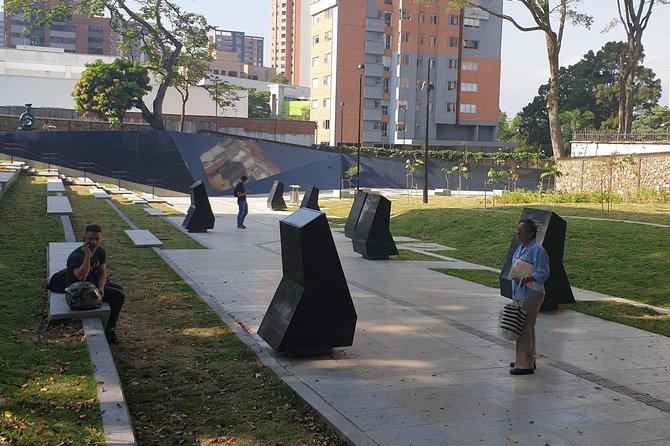
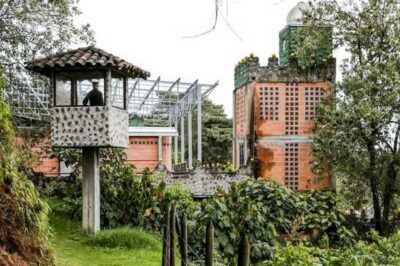
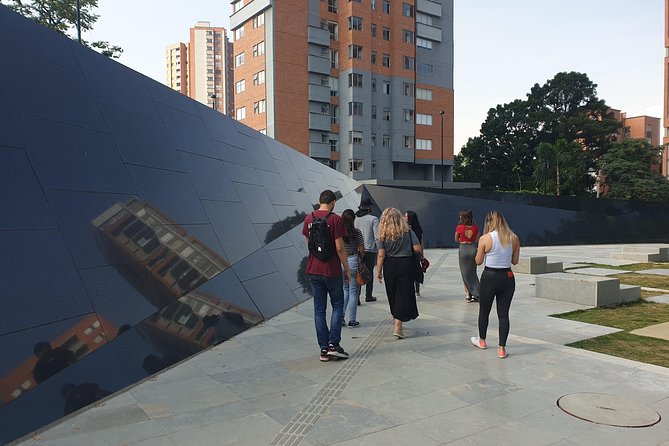
You start where the story is written in concrete and land use. Parque Memorial Inflexión is built on the lot connected to the old Edificio Mónaco, once an icon of pain and violence and also tied to Pablo Escobar’s property. Admission is free, and the stop is short, about 15 minutes. That timing is important. You are not coming here to stare quietly for an hour, you are coming to anchor the rest of the tour in a real place.
The value here is how your guide frames why a site like this still gets remembered in public space. Medellín did not sweep the past away. It marked it. That is one of the reasons this tour works better than a quick Instagram loop. You get a chance to understand the city’s own approach to trauma, commemoration, and accountability, without turning it into a lecture that drags.
A practical note: because the stop is brief, your best move is to pay attention early. If you want more detail about Escobar’s role, ask one clear question right as you arrive. Guides tend to answer best when you are standing in the exact location they are explaining.
What could be a drawback? If you are expecting a museum-level experience at this stop, you may feel the pacing is fast. The memorial is one piece in a wider route, not the entire meal.
The middle rhythm: shrine stop and Cementerio Jardines Montesacro
After the memorial, the tour slows down into a quieter rhythm. There’s a stop at a Virgin Mary shrine, where pilgrims ask for miracles. You do not need to be religious to appreciate what this shows you about daily life in Medellín. When people ask for miracles, they are often asking for a future that violence or hardship threatened.
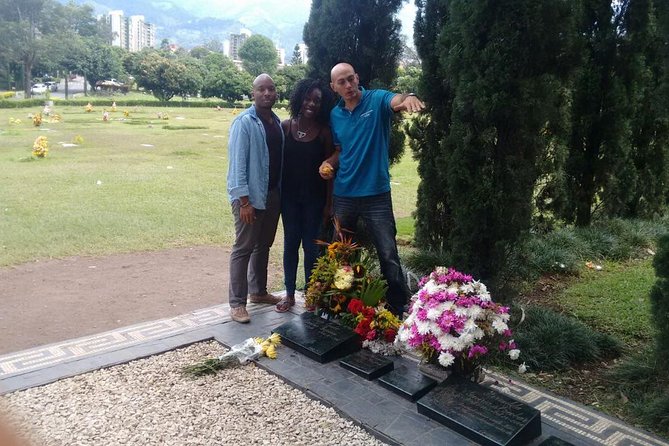
Then comes the cemetery. Cementerio Jardines Montesacro is another free admission stop, and it is designed to be short, around 20 minutes. A quick grave visit can feel abrupt, especially if you want a longer story arc, but it also prevents the tour from turning into a long, heavy watch session with no breaks. In a tour like this, pacing is part of how you keep your head clear.
The cemetery stop also gives your guide a chance to connect names and consequences. Even without going deep into genealogy, you learn how the city remembers people tied to the conflict, including figures that became infamous. The key is your guide’s framing: do they connect it to the social ripple effects, or do they just toss names at you?
If you are the kind of person who likes historical chronology, this is where you should listen for the timeline your guide is building. If the story feels jumpy, ask for one anchor point, like how the conflict shifted over time.
Parque San Antonio: where your guide explains the war’s shift
Parque San Antonio is another short, free stop, about 15 minutes. This one is about the change in the war against Escobar. That phrasing matters because it tells you what the guide is aiming to do across the route: show movement, not just static locations.
In plain terms, this stop is your chance to understand that Medellín’s violence was not frozen in one phase. As pressure mounted and strategies changed, the city’s day-to-day life changed too. Your guide should help you see that transition, and that is what turns these locations into more than a checklist.
A good way to use this stop: treat it like a mid-tour checkpoint. If you have been wondering whether the route is too Escobar-focused or not focused enough, this is where you can reset your expectations with one question. For example, you can ask what changed, politically or socially, that made the city’s trajectory look different after that turning point.
If you are a Netflix fan of Narcos, you might still be tempted to compare what you remember on screen. Try to shift the goal. Your goal here is not to prove what show writers got right or wrong. Your goal is to understand how Medellín itself explains the turn from one kind of conflict to another.
Comuna 13: escalator views, cable ride, and community change
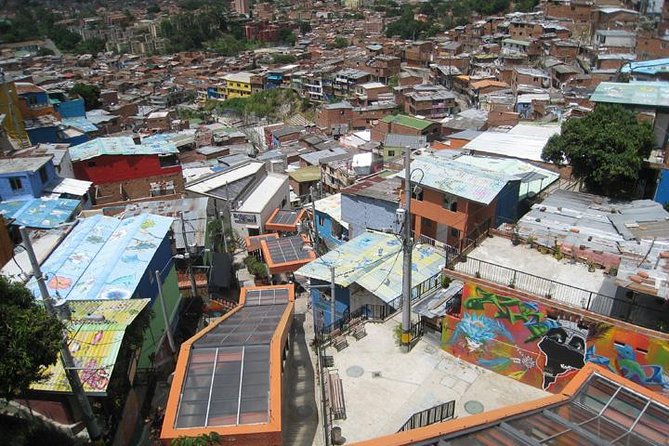
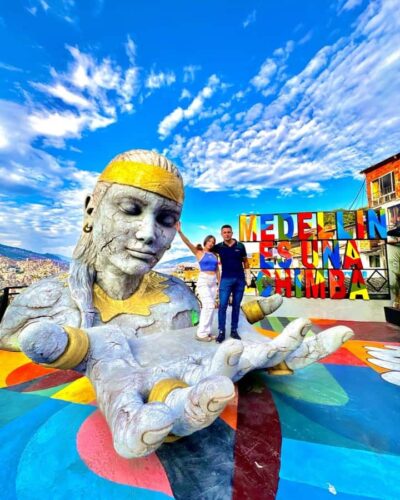
Most people remember Comuna 13 longer than the memorial stops. It is the part where the city’s physical changes become visible fast. You get time for the famous escalator experience and the metro cable line, a ride that moves along the hillside like a ski lift. Even if your head is still processing the darker parts of the day, the views and the movement help you understand why Medellín is the way it is.
This portion is also where the tour can feel the most personal, because your guide is not just translating history. They are showing how the city built new connections after violence. One review noted how the escalator gave a visceral look at how it transformed community life, and that idea is a big part of why Comuna 13 matters.
In Comuna 13, you are also likely to hear about the electric stairs and why the area was dangerous before transformation. You might catch local stories about daily rules, curfews, and the restrictions people lived with during the height of the conflict. On the lighter side, there are murals and small tributes, and the route can include a ride or walkthrough that passes by community-made art.
A few things can affect your experience here:
- If your guide (or the local guide who joins for this sector) is confident in English, the story lands easier for non-Spanish speakers.
- If they are more focused on the physical sights, you may still see the escalator and murals, but you may not get as much detail on the why behind the transformation.
- If you like a strong narrative, you should ask one direct follow-up question while you are in the neighborhood. A simple one like how the area changed day to day after the new infrastructure helps your guide stay on track.
Comuna 13 is also where you may notice the commercial side that comes with visibility. You can expect craft and souvenir stops, like hats, food, and items tied to local artwork. That is normal for a place that now attracts visitors. If you want to spend less, set a spending limit before you start browsing.
How the guides shape the tour: Juan Carlos, Hector, and Nicolas Zapata as examples
This tour is only as good as the person steering it. The good news is that the format is set up for quality: you get a bilingual guide included, plus private transportation. The private setup also means your questions do not vanish into a crowd.
From the guidance stories people shared, guides such as Juan Carlos and Hector have been praised for enthusiasm and for bringing Medellín pride into the conversation. That pride shows up in the way they explain what you are looking at, not just what happened years ago. A guide who talks with energy can turn a short route into a coherent experience.
At the same time, there are hints that not every departure hits the same note. One set of comments described an English gap, scattered narration, and missing details, which is a reminder that bilingual does not automatically mean your guide speaks at the exact level you want. Another comment praised the city and Comuna 13 but said the Escobar portion felt thinner than expected, especially for people who wanted more direct Escobar facts.
So here is the practical advice: before you go, decide what you want most.
- If you want the deepest Escobar-centered facts, ask your operator how the story will be handled and what parts get extra emphasis.
- If Comuna 13 transformation is your main goal, you are in the right place and you can treat the earlier stops as the context that frames it.
- If you are traveling as a family or with teens who follow Narcos, ask your guide to connect the show’s themes to what the city did next, so it feels less like TV plot and more like real cause and effect.
Price and value: what $78 buys you in Medellín
At $78 per person for about 4 hours, the value comes from what is included, not just the sites. You are paying for a bilingual guide, private transportation, and medical assistance. Also, multiple stops list free admission, so you are not stacking extra ticket costs on top of the tour price.
Compare that to a self-guided day. You would still need transport in Medellín’s hills, and you would need to do the research yourself to understand what you are seeing. This tour gives you interpretation on the spot, which is the part most visitors struggle to replicate without spending time reading and cross-checking.
Is it a bargain? It can feel like one if:
- your guide clearly explains the war timeline and the role of Medellín’s rebuilding,
- you make it through the entire route without feeling rushed,
- and Comuna 13 is a priority for you.
Could you feel like you overpaid? Yes, if you arrive wanting a long Escobar-focused sequence and you get a route where the Escobar connection feels brief. The price will still be fair, but your personal expectations might not match the tour style.
Also, plan on feeding yourself. Food and drinks are not included unless specified. Bring water and eat before you meet up if you can. If you do end up snacking during the Comuna 13 portion, you are doing it on your own dime.
Logistics that matter: duration, private format, and comfort
The tour duration is listed as about 4 hours. Some real-world descriptions run closer to 5 hours, so I would plan for a longer window rather than a tight schedule.
It is private for your group, meaning you are not trading comfort for cost. That matters in a neighborhood like Comuna 13 where the timing of conversations and viewpoints affects how much you understand. Private format also makes it easier to ask questions in the moment, which is where history trips can either become boring or become memorable.
The tour is described as near public transportation, which is useful if you want flexibility. And it says most travelers can participate. You should still think practically. This is Medellín, and you will be moving between points. Comfortable walking shoes help, especially if your route includes steps or longer stretches.
One more detail: confirmation is received at booking. That can matter if you are coordinating with flights. If your schedule is tight, build in buffer time around the tour end.
Should you book Do Not Say That Name in Medellín
Book this tour if you want:
- A guided, bilingual explanation of Medellín’s Escobar-era turbulence, with a focus on what changed afterward
- A strong chance to experience Comuna 13 in a structured way, including the escalator and the metro cable line
- A half-day format that combines serious memorial context with a hopeful look at community rebuilding
Skip or adjust expectations if you want:
- A long, Escobar-only itinerary where every stop is an unmistakable Escobar location with lots of screen-to-street matching
- A deep museum-style experience at a single site, because several stops are intentionally short
My final take: this tour is at its best when you treat it like Medellín learning, not like a scavenger hunt. If you show up curious and ask clear questions, you will come away with a better sense of why the city remembers, and how it rebuilt.
FAQ
How long is the Medellín Pablo Escobar and Comuna 13 tour?
It lasts about 4 hours (approx.). Some departures may run a bit longer, so plan for a half-day time block.
Is this tour private or shared with other groups?
It is a private tour/activity. Only your group participates.
What is included in the price?
The tour includes a bilingual guide, private transportation, and medical assistance.
Are there admission fees for the stops?
The listed stops include free admission tickets, including Parque Memorial Inflexión, Cementerio Jardines Montesacro, and Parque San Antonio.
Is food and drinks included?
No. Food and drinks are not included unless specified.
Can I choose a morning or afternoon tour?
Yes, you can choose between a morning or afternoon tour.
What is the cancellation policy?
You can cancel for a full refund if you cancel up to 24 hours in advance of the experience start time. If you cancel less than 24 hours before, the amount paid is not refunded.
The Rest of Our Medellin Reviews

Just added to our Medellin shelf
- Tour to Río Claro and La Caverna del Cóndor
★ 5.0 · 3 reviews - Tour Medellín: Pablo Escobar and Commune 13
★ 5.0 · 3 reviews - Shared Tour Medellin’s Violence & Post-conflict after Pablo
★ 4.1 · 3 reviews - Medellin: Coffee Farm Tour & Spa with Overnight Glamping
★ 4.5 · 3 reviews - Medellin: Traditional Food Tour
★ 4.9 · 3 reviews