
REVIEW · ESCOBAR ERA HISTORY TOURS
Shared Tour Medellin’s Violence & Post-conflict after Pablo
Medellín has a way of teaching you street by street. This Violence & Post-conflict walk focuses on the city’s shift from cartel-era terror to post-conflict memory, with objective context and clear storytelling about how war reshaped everyday life. I especially like how it is not a Pablo Escobar tour, and I like the way the guide connects social and cultural consequences to real neighborhoods. The main thing to weigh is the topic, it is heavy, and it is not designed for kids or anyone who needs a light, casual outing.
I like that the format is practical. You meet at Parque San Antonio by the Botero birds, walk through downtown with frequent context stops, and end at Museo Casa de la Memoria, so the history has a beginning, middle, and reflection point. In recent tours, guides such as Miguel and Sebastian have been praised for being thorough and engaging, which matters on a subject like this. If you come with questions and a calm mindset, you get a lot out of the 150 minutes without feeling rushed.
In This Review
- Key things I’d bet you will remember
- Parque San Antonio to Museo Casa de la Memoria: the walk with a built-in story
- What you learn about narcos-war conditions, not just the headlines
- Urbanization of war: guerrillas, paramilitarism, and drug traffic in the city
- The process of changing bullets for words and ideas
- After the Medellín Cartel: Donbernabilidad and why the past still shows up
- Resistance and memories along an ongoing conflict
- Peace agreements and reconciliation in an urban context
- Price and value: why $13 can make sense in Medellín
- Tour pace, group vibe, and what to bring for a 5 km history walk
- Who this tour is best for, and who should skip it
- Guide quality matters: Miguel and Sebastian as examples
- Final call: should you book the Violence & Post-conflict tour?
- FAQ
- How long is the Violence & Post-conflict tour in Medellín?
- Where do I meet the tour?
- Is the tour guided in English?
- Is this a Pablo Escobar tour?
- What’s included in the price?
- Are tickets or museum entrances included?
- Is transportation from my hotel included?
- What should I bring?
- Are video or audio recordings allowed?
- Who is this tour not suitable for?
Key things I’d bet you will remember
- Parque San Antonio to Museo Casa de la Memoria gives the story a clear route and emotional arc.
- Not a Pablo Escobar tour means you get the broader system, not one headline character.
- War becomes city life is the core idea, guerrillas, paramilitarism, and drug traffic in an urban setting.
- Peace as a practical, local struggle shows up through strategies, heroes, and community change.
- Bullets for words and ideas frames reconciliation as something people worked for, not something that just happened.
Other history walks covering the same difficult years
- Medellín: The Real Pablo Escobar Tour★ 4.8 · 3,205 reviews
- Medellín: Pablo Escobar Tour with beer included★ 4.7 · 612 reviews
- Medellin: Guatapé Day Trip & Boat to Pablo Escobar’s Estate★ 4.7 · 365 reviews
- Medellín: Private Pablo Escobar and Comuna 13 Tour★ 4.9 · 233 reviews
Parque San Antonio to Museo Casa de la Memoria: the walk with a built-in story
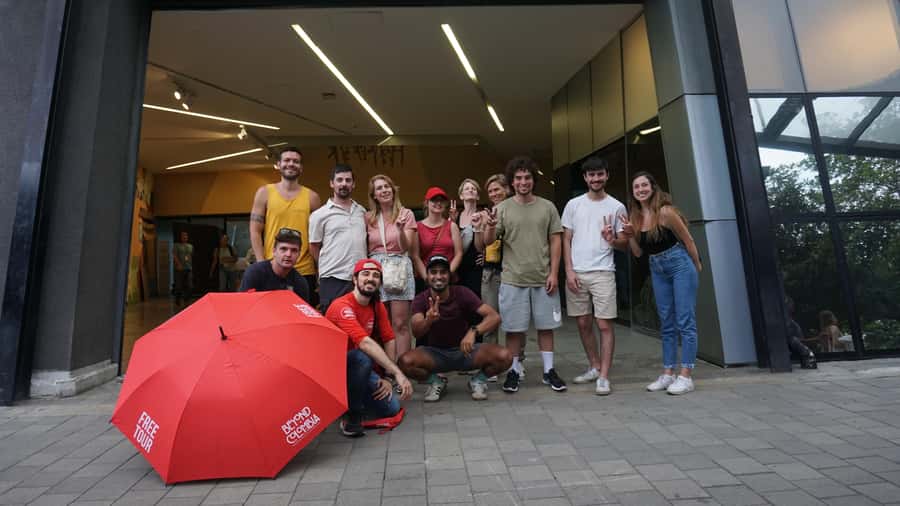
This tour is built around one simple advantage: you are moving. Starting at Parque San Antonio, right by the Botero birds with Beyond Colombia’s red umbrellas, you get the feel of central Medellín as a living place, not just a set of photos. The route then threads through downtown, and the tour finishes at Museo Casa de la Memoria, which is a strong close because it shifts from events to memory and reflection.
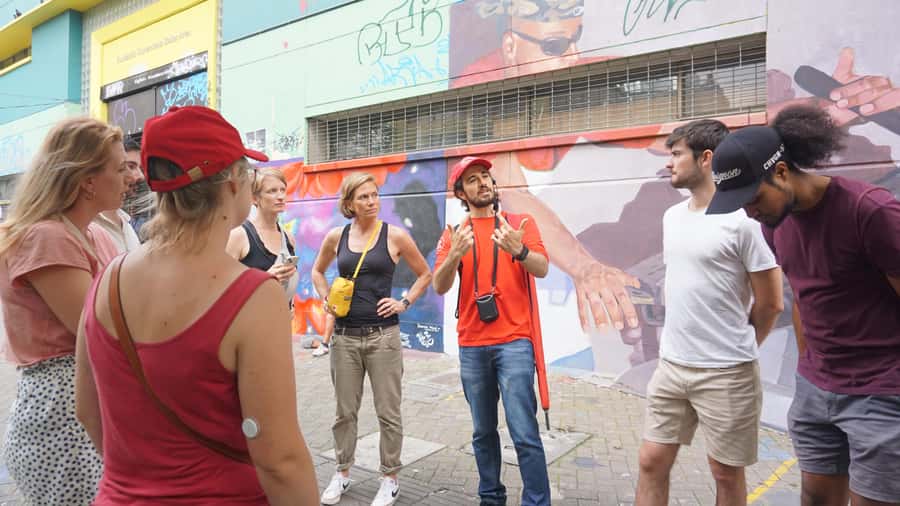
The walking style also matters. This is a shared tour with a set duration of about 150 minutes, roughly three hours, and you’ll cover around 5 km with resting stops. That pace is “active but doable” for most people who can handle comfortable shoes. You are not stuck on a bus, so you see how the city’s layout, public space, and street-level realities shape the story.
One more practical point I appreciate: you aren’t charged extra for sights or entrances. The tour description says it avoids sudden ticket costs, which is a big deal when you are doing a focused history walk and still want to spend your money on the rest of your trip.
What you learn about narcos-war conditions, not just the headlines
The tour’s main promise is understanding the narcos-war period: how it emerged and what it did beyond violence. You’ll look at the conditions that allowed the conflict to grow, and you’ll connect that to cultural, social, and economic consequences in Medellín. That matters because it shifts the conversation away from “who was powerful” and toward “how did people live when power was violent.”
Instead of treating violence like a random storm, the tour links it to everyday systems. You’ll hear how the conflict affected communities, daily routines, and the local economy, and you’ll see how those pressures can turn into long-term effects. When a tour does this well, it helps you make sense of why certain places and institutions still carry weight today.
Also, the tour is careful about framing. The included description emphasizes accurate and objective knowledge, with a promise not to take sides. That doesn’t mean the guide sounds neutral in tone, it means the tour tries to explain dynamics rather than push a single political conclusion. For many visitors, that approach reduces confusion, especially if you have only heard Medellín through pop culture or one or two viral stories.
Urbanization of war: guerrillas, paramilitarism, and drug traffic in the city
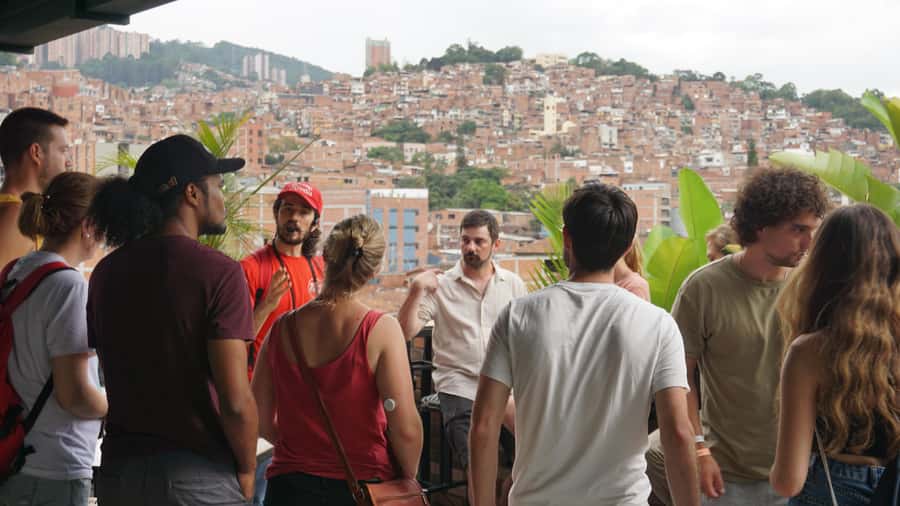
A key section of this experience is the urbanization of war. The tour looks at guerrillas, paramilitarism, and drug traffic as forces that shaped neighborhoods in real spatial ways. You are not just learning names, you’re learning how conflict gets “built into” city life when violence stops being a distant event and becomes part of the urban fabric.
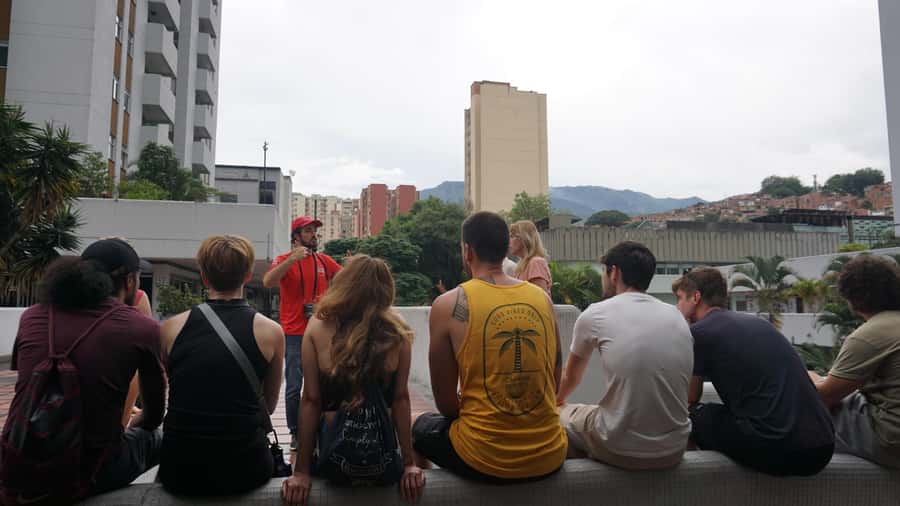
This is where the route through central Medellín helps. As you move between places, the guide can connect what you see to the idea that war was not confined to the countryside. The city became a stage for competing strategies and control, and that control came through fear, influence, and social disruption.
If you want the short version of why this is valuable, it is because it teaches pattern recognition. Once you understand how urban conflict operates, you can look at a city map and sense why certain zones, institutions, and public spaces gain symbolic importance during and after a war.
The process of changing bullets for words and ideas
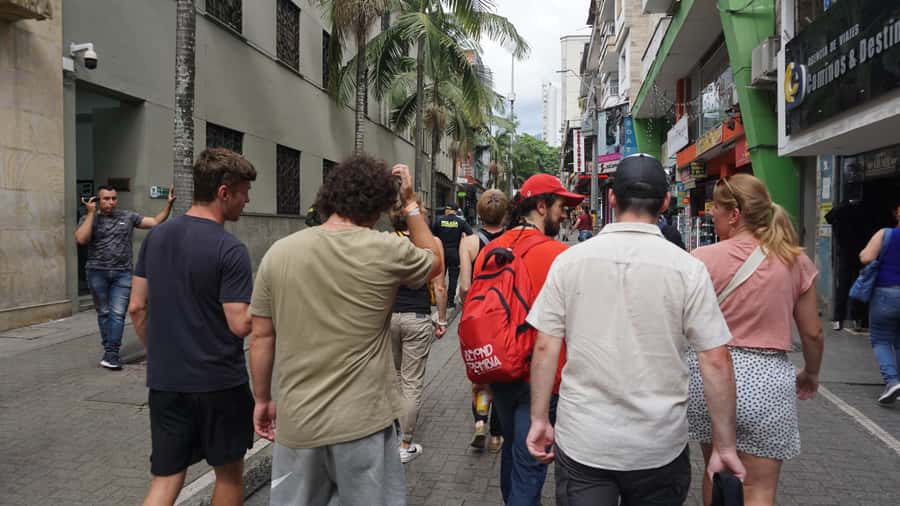
One of the tour’s standout themes is the shift from bullets to words and ideas. That is not a vague slogan here. The tour focuses on the process of replacement, how people and institutions try to exchange violence-driven solutions for social struggle through dialogue, organizing, and cultural memory.
You’ll also hear about strategies, heroes, and communities in the pace making and social struggle of Medellín. The word pace making is important, because it suggests the city’s change is not just one big official turning point. It’s people pushing, negotiating, resisting, and building structures for a different future.
This is one of the most hopeful parts of the experience, but it stays grounded. The idea of peace is treated as something you fight for in an urban context, not something that magically arrives when the shooting stops.
After the Medellín Cartel: Donbernabilidad and why the past still shows up
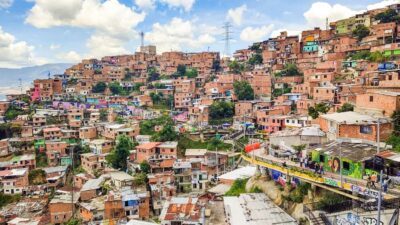
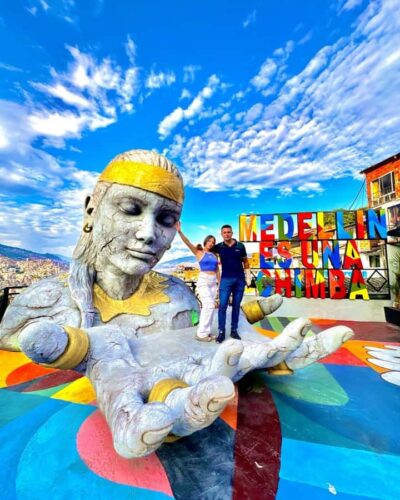
The tour explicitly includes what happened after the Medellín Cartel, including the period described as Donbernabilidad. That phrase is worth paying attention to because it signals a shift: when one form of power breaks, other forms often take over, sometimes with similar effects on ordinary life.
What you get from this section is context for why post-conflict does not mean “everything is fine.” Even when violence changes shape, the city carries it. The tour frames the past as present, through memories and the ongoing dynamics you can still feel in Medellín today.
This part is especially useful if you want to understand modern Medellín without treating it as a clean break from the past. It also helps you connect current cultural life with earlier conflict conditions, so you can see why certain spaces and stories matter so much.
Resistance and memories along an ongoing conflict
Finishing at Museo Casa de la Memoria gives this tour a strong emotional landing point. By the time you reach the museum stop, the tour has already prepared you to look at memory as part of the city’s ongoing story, not just a lesson from the past.
The transformation of the city is presented as resistance and memories happening side by side, even while conflict dynamics continue in different forms. You’ll be guided through how people preserve narratives, honor experiences, and push for reconciliation in a place where history is still emotionally close.
I like how this section avoids pretending the story has a simple ending. It treats remembering as action, and it treats reconciliation as work.
Peace agreements and reconciliation in an urban context
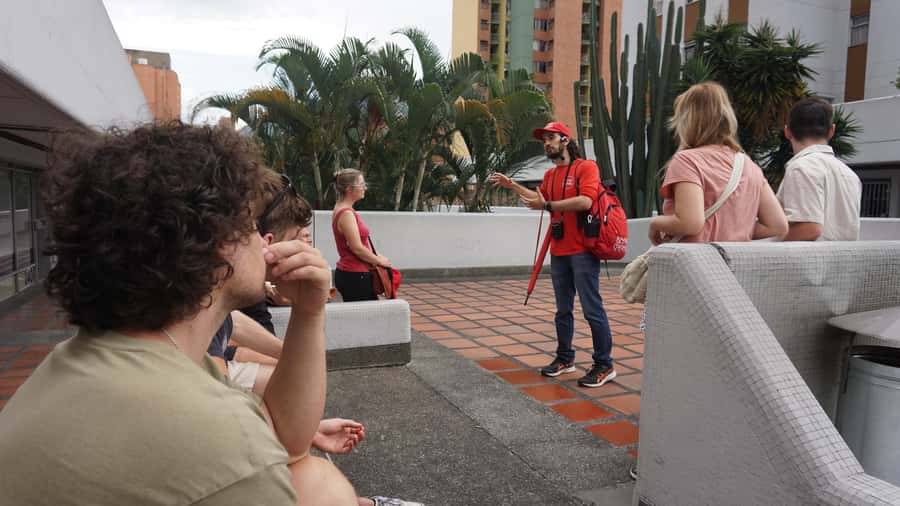
The tour includes twenty first century peace agreements and reconciliation, but again, in a way that stays tied to Medellín’s reality. The key framing is reconciliation in an urban context, which is different from reconciliation in theory or in rural conflict zones.
In cities, reconciliation often means rebuilding trust in everyday spaces. It can mean shifts in institutions, public conversations, and how communities claim their right to safety and memory. By highlighting this, the tour helps you understand why urban post-conflict can be complicated and slow.
This is also where the guide’s balance shows. The tour says it aims not to take sides, and that helps keep the discussion focused on mechanisms and outcomes, not on turning the walk into an argument.
Price and value: why $13 can make sense in Medellín
At about $13 per person for roughly 150 minutes, the math is pretty friendly for what you’re getting: an English-speaking guide, a structured route through central Medellín, and recommendations for material and cultural offers. The fact that it includes sightseeing stops but does not include extra entrance fees is part of the value too.
This is the kind of tour where you can easily spend more money on “basic sights” and still leave with less understanding. Here, the payoff is interpretation. You’re paying for context, for connecting the city’s nickname Medellín and its “Medallo” identity to conflict and post-conflict evolution, and for getting a guide who can handle difficult questions without rushing.
If your budget is tight and you want something that improves how you read the city for the rest of your trip, this is one of the more efficient buys at this price point.
Tour pace, group vibe, and what to bring for a 5 km history walk
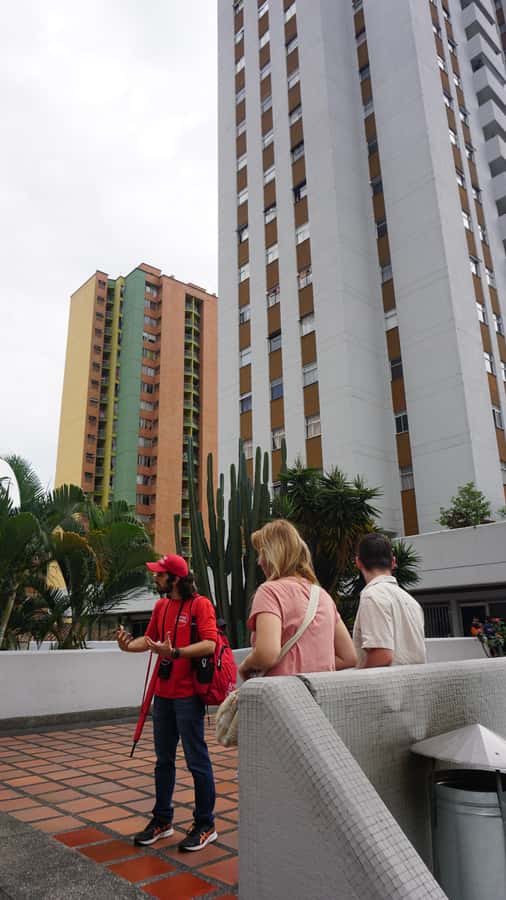
Expect a walking tour with rest stops and lots of listening. The tour description says you’ll walk about 5 km, so treat it like a normal city day, not a quick stroll. Comfortable shoes are not optional advice here.
For gear, the tour asks you to bring a rainproof coat. It specifically says umbrellas or capes are not recommended, so plan for weather like a local: light layers, packable outerwear, and good grip shoes. Add sunblock, because you’ll be outside, and water or whatever hydration you prefer. Mosquito repellent could be useful in the rainy season, March to June.
There are also smart behavior rules. Alcohol and drugs are not allowed. Video and audio recording are not allowed, which keeps the experience focused for everyone listening. Party groups also aren’t the right fit.
One safety note that’s also practical: you’ll visit crowded areas, so keep your belongings close. That’s not fear-mongering, it’s basic city sense.
Who this tour is best for, and who should skip it
This tour is a strong match if you want a realistic Medellín experience grounded in history, memory, and reconciliation. You’ll get the most out of it if you come with an open mind, and you’re willing to ask questions about difficult topics.
It also helps if you like learning how cities work socially, not just how they look. This tour centers on social struggle, community change, and institutional shifts, so it suits people who enjoy cause-and-effect thinking.
It is not suitable for wheelchair users, and it is not designed for children under 18. The tour also notes it’s not suitable for people over 70. If that affects you or someone in your group, it’s worth choosing a different activity that better matches mobility needs.
Guide quality matters: Miguel and Sebastian as examples
While I can’t promise you a specific guide on your date, the available feedback points to a couple of names that stand out for how the tour is delivered. Miguel has been praised for being super thorough and for sharing informative context that fills gaps in what visitors often think they know. Sebastian was recognized for an engaging, fun way of explaining.
That matters because history tours succeed or fail on clarity. On a subject like Medellín’s violence and post-conflict transformation, a guide who can keep complex ideas understandable can turn a hard topic into a meaningful one.
Final call: should you book the Violence & Post-conflict tour?
Book this tour if you want Medellín with context. You’ll get a structured walk from Parque San Antonio to Museo Casa de la Memoria, a careful look at narcos-war origins and consequences, and a city-focused explanation of how conflict becomes urban life. The objective approach and the focus on peace, resistance, and memory make it more than a lecture, and the $13 price is unusually reasonable for that kind of guidance.
Skip it if you want a light, entertainment-first outing. This is for people who can handle serious themes and prefer learning through listening and walking rather than passive sightseeing. If you’re looking for that kind of thoughtful, practical understanding of Medellín, this is a tour worth your time.
FAQ
How long is the Violence & Post-conflict tour in Medellín?
The tour lasts about 150 minutes, roughly 3 hours.
Where do I meet the tour?
Meet at Parque San Antonio next to the birds of Botero, with Beyond Colombia’s red umbrellas.
Is the tour guided in English?
Yes, it is an English-speaking tour guided by a live local guide.
Is this a Pablo Escobar tour?
No. It is explicitly described as not a Pablo Escobar tour, with focus on violence dynamics and post-conflict change.
What’s included in the price?
You get an English-speaking guide, sightseeing of important places in central Medellín framed in conflict and reconciliation, and recommendations for material to keep yourself informed plus suggestions for Medellín’s cultural offer.
Are tickets or museum entrances included?
No. Tickets or entrances are not included, and the tour says it won’t take you to places with sudden extra charges.
Is transportation from my hotel included?
No. Transportation to and from your hotel is not included. The tour is walking with rest stops.
What should I bring?
Bring comfortable shoes and clothes, water or preferred hydration, sunblock, and a rainproof coat. Mosquito repellent can be useful in the rainy season (March to June).
Are video or audio recordings allowed?
No. Video recording and audio recording are not allowed.
Who is this tour not suitable for?
It is not suitable for wheelchair users, children under 18, or people over 70.
The Rest of Our Medellin Reviews

Everything Else We Reviewed in Medellin
The Escobar Years, Told Plainly
Just added to our Medellin shelf
- Tour to Río Claro and La Caverna del Cóndor
★ 5.0 · 3 reviews - Tour Medellín: Pablo Escobar and Commune 13
★ 5.0 · 3 reviews - Shared Tour Medellin’s Violence & Post-conflict after Pablo
★ 4.1 · 3 reviews - Medellin: Coffee Farm Tour & Spa with Overnight Glamping
★ 4.5 · 3 reviews - Medellin: Traditional Food Tour
★ 4.9 · 3 reviews
Escobar Era History Tours, compared.
 ★ 4.8Medellín: The Real Pablo Escobar TourFrom $423,205 reviews
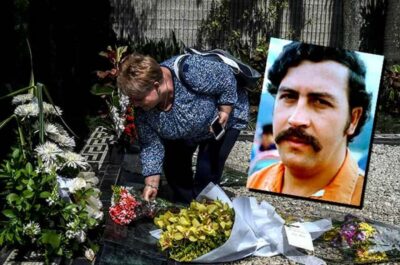 ★ 4.7Medellín: Pablo Escobar Tour with beer includedFrom $31612 reviews
 ★ 4.7Medellin: Guatapé Day Trip & Boat to Pablo Escobar’s EstateFrom $64365 reviews
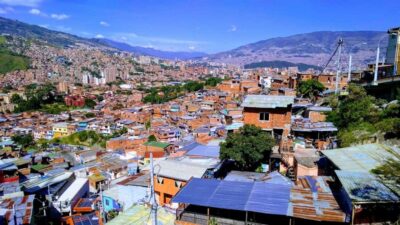 ★ 4.9Medellín: Private Pablo Escobar and Comuna 13 TourFrom $81233 reviews
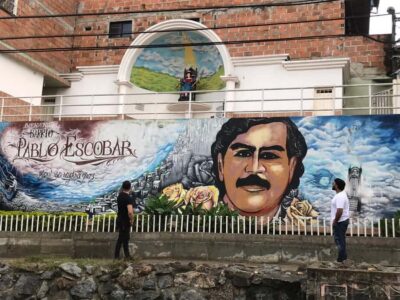 ★ 4.8Medellín: Private Pablo Escobar Tour with Cable Car RideFrom $73228 reviews
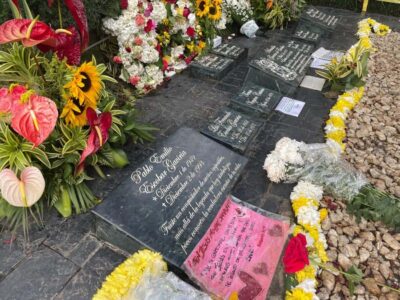 ★ 5.0Pablo and the drug trafficking worldFrom $50129 reviews
 ★ 4.9From Medellín: Private Pablo Escobar History TourFrom $6384 reviews
 ★ 4.8Medellin Pablo Escobar TourFrom $5581 reviews
Where else this tour turns up