
REVIEW · COMUNA 13 & GRAFFITI STREET ART WALKS
Historical Shared Tour Salsa, Graffiti & Resistance in Cali
Cali hits you in the ribs, not just the eyes. This 3-hour shared walk stitches together salsa culture and street art, with stops that connect composers, neighborhoods, and the idea of music as community power. I love that the route is built around real landmarks and song references, not just random photo spots, and I especially like the way the guide brings the story to life with dance basics and high-energy context.
There is one tradeoff to plan for: the schedule moves fairly fast, with about 18 minutes at each stop, and the whole thing is outdoors. If you want slow, long museum-style time, this is more of a walk with meaning than a sit-and-stare experience.
In This Review
- Key highlights worth your time
- How this salsa and graffiti walk feels in real life
- Price, time, and what $14 actually buys you
- Meeting point to finale: your route from murals to a dance bar
- Stop 1: Plazoleta Jairo Varela, salsa on the wall
- Stop 2: Parque de las Piedras, music lovers in a sculpted pause
- Stop 3: Departmental Institute of Fine Arts, art meets sound
- Stop 4: La Curva del Boulevard, murals plus typical eats
- Stop 5: Edificio Boulevard del Río Emcali, city view and river context
- Stop 6: La Calle del Sabor, the heart of Caleña salsa
- Stop 7: Beneficencia del Valle del Cauca, colonial roots and culture spaces
- Stop 8: Calle de la Escopeta, urban art with a local edge
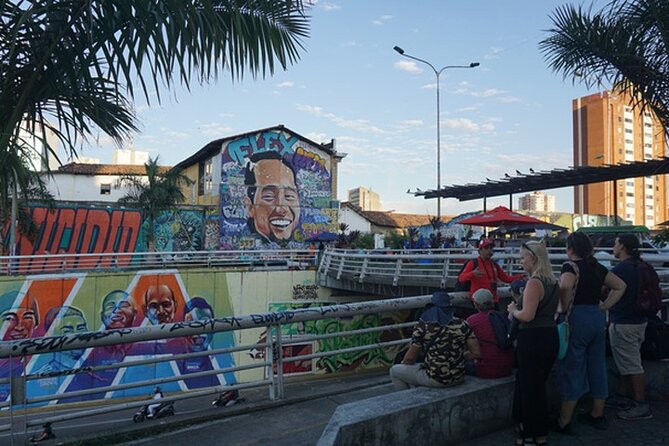
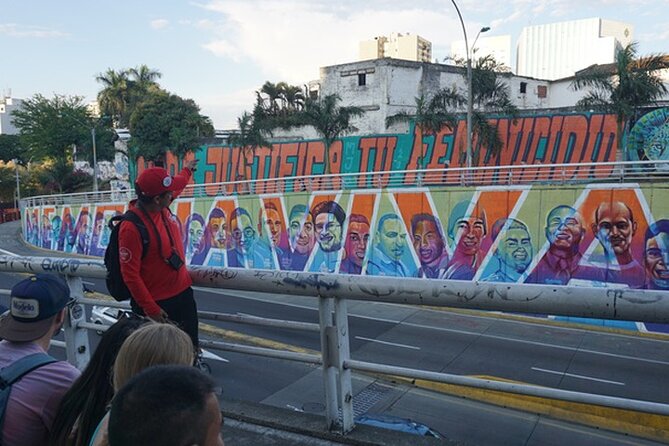
- Stop 9: Túnel Mundialista, murals, sports culture, and the walk-through effect
- Stop 10: Cimarrón Salsa Bar, where the night turns into your memory
- Who this tour suits best
- What to do before you go, to get more out of it
- Should you book this Salsa, Graffiti & Resistance in Cali tour?
- FAQ
- How long is the Salsa, Graffiti & Resistance in Cali tour?
- How much does the tour cost?
- Is the tour fully guided?
- Where does the tour start and end?
- Are there entry fees for the stops?
- Is food or drinks included?
- How big is the group?
- What happens if the weather is bad?
- Is free cancellation available?
Key highlights worth your time
- Cali salsa, mapped through murals: each stop links a place in the city to a beat, a moment, or a movement.
- Certified Spanish guide: expect a focused explanation of Cali salsa and the popular cultural revolution.
- Dance moments included: the tour has been praised for teaching steps, not only explaining history.
- Street art plus context: you are not just looking at graffiti, you are learning what it communicates.
- Finish at a real dance bar: end at Cimarrón Salsa Bar, where the night energy is part of the payoff.
- Great value for $14: free entry at stops, guide-led route, and added partner discounts.
Other guided walks through the painted stairways
- Cali: Comuna 20 Siloé Street Art Tour★ 5.0 · 4 reviews
How this salsa and graffiti walk feels in real life
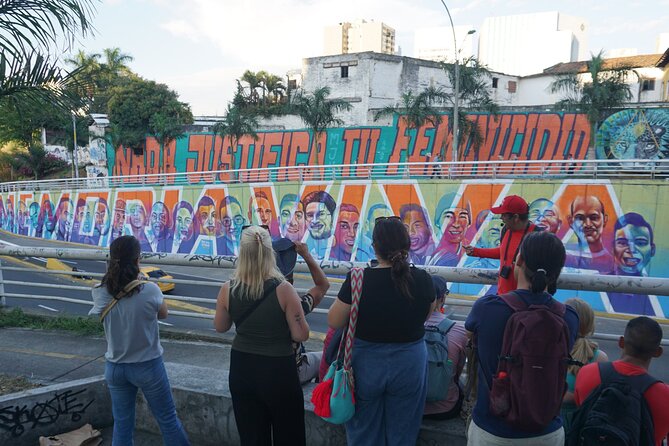
This is a group walking tour designed to help you understand Cali fast, without needing days of research. You are guided through a string of culturally important sites, and the thread is the same throughout: salsa is not only music, it is identity, creativity, and sometimes resistance that shows up on walls.
At a typical pace, the tour runs about 3 hours, with roughly 18 minutes at each of the 10 stops. That means you get enough time to take pictures, read the vibe, and hear the story, but you will not linger forever. The good news is that the route is paced like a playlist. Each chapter flows into the next, so by the time you reach the salsa bar at the end, the city’s rhythm makes sense.
And yes, you get dance and rhythm education. Several guides on this tour are praised for teaching steps and even adding lively extras like a hands-on feel for music. One guide name you will likely hear is Cristian, and other reports mention Juliana as well. Either way, the emphasis is on keeping it fun while staying informative.
Price, time, and what $14 actually buys you
$14 per person for about 3 hours is solid value in a city where guided experiences can easily cost more. Here’s why that price works.
You are paying mainly for a certified guide in Spanish plus a curated route that hits key salsa landmarks and active street art areas. The tour also notes free admission for the stops, so you are not paying extra just to enter places. And the provider includes recommendations from salsa-focused bars, which can save you time later when you decide where to go after the tour ends.
What is not included is what most walking tours do not include: drinks, food, and souvenirs. Plan to buy your own water, and if you want a meal, you may do it on your own schedule along the way. The good part is that the itinerary includes areas known for nightlife and eating, like La Curva del Boulevard and Calle del Sabor, so you are not walking through dead zones.
Bottom line: if you want an efficient, story-led introduction to Cali’s salsa culture, this is one of the more budget-friendly ways to do it.
Meeting point to finale: your route from murals to a dance bar
The tour starts at Plazoleta Jairo Varela in Granada, Cali, and ends at Cimarrón Salsa Bar (Cl. 4 #1-113, Normandia Sebastián de Belalcazar, Cali). It is near public transportation, and the group size caps at 30 travelers, which usually keeps things from feeling chaotic.
The total route is a mix of squares, parks, cultural buildings, and street-art lanes. Most stops are labeled with free admission and a short time window. Think of it like a guided circuit, not a one-stop attraction.
If you hate rushing, you might still enjoy it if you come with a plan: pick a few stops you want to photograph more and let the rest be about listening. The tour’s strength is the explanations and the way the guide connects places.
Stop 1: Plazoleta Jairo Varela, salsa on the wall
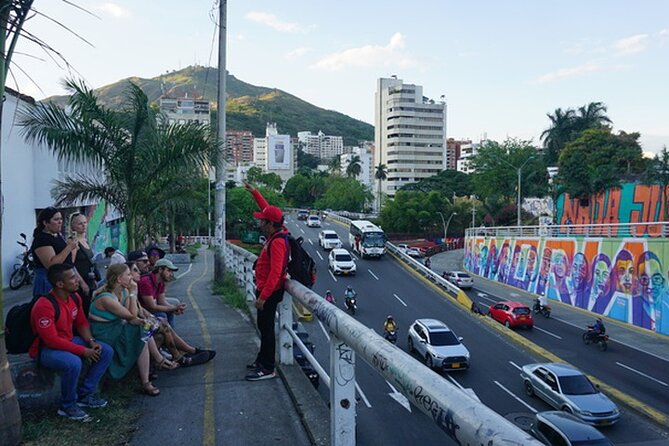
You begin at Plazoleta Jairo Varela, a tribute to one of Cali’s greatest salsa composers. Expect murals celebrating his life and work, plus that immediate feeling that the city has salsa built into its public spaces.
This stop matters because it sets the theme: you are not learning salsa in isolation. You are learning it in a place that keeps the composer’s legacy visible. Even if you only know salsa basics, this is a powerful way to get oriented. You can treat it as your mental “starting beat.”
Practical note: come ready for walking right away, and give yourself enough time to look around. The point here is atmosphere, not speed.
Other nights and other days in the Valle



Stop 2: Parque de las Piedras, music lovers in a sculpted pause
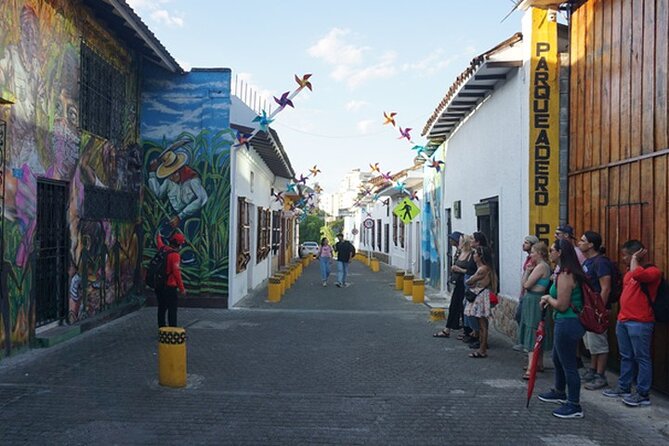
Next is Parque de las Piedras (Parque de las Piedras / Parque de las Piedras area). The setting is described as spacious, with fountains and sculptures, plus murals reflecting cultural diversity.
This stop works as a breather. After the first energized square, you get a moment to reset, listen, and absorb the public-art environment. It also helps you appreciate how Cali’s salsa culture shows up beyond the dance floors. The murals are part of everyday life here.
One consideration: because it is a park setting, weather can affect comfort. If rain hits, you may have to adjust your camera plans.
Stop 3: Departmental Institute of Fine Arts, art meets sound
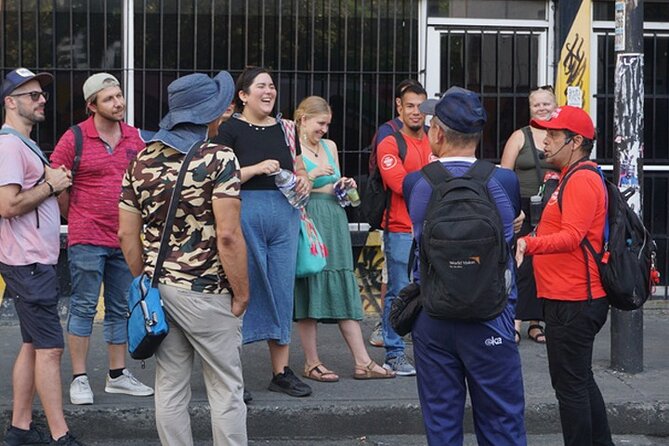
Then you visit the Departmental Institute of Fine Arts, a cultural center with exhibitions of painting, sculpture, and photography.
This is a smart stop because it broadens the frame. Salsa is music, but the tour treats it as a cultural system that spills into other creative forms. You will likely connect what you see in murals and streets to what you might find in exhibitions, even if you are only here briefly.
You should use this stop to notice how art and music share the same language: emotion, protest, celebration, and memory.
Stop 4: La Curva del Boulevard, murals plus typical eats
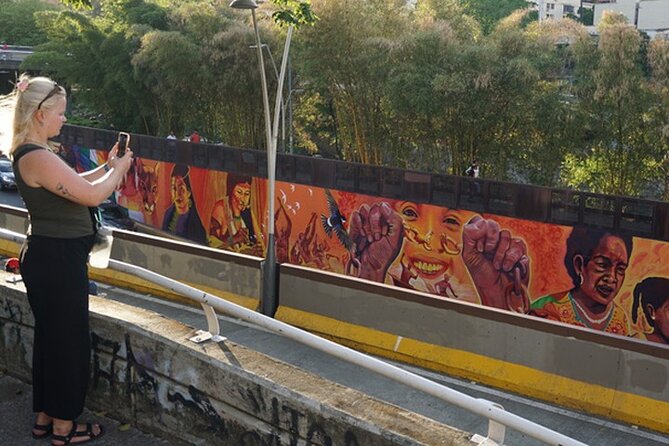
La Curva del Boulevard is described as a landmark tied to Cali nightlife and dining options. The tour offers time to enjoy a typical dish while you take in the mural-covered facades.
This is where your practical vacation brain should kick in. You are building a mental map of where to eat and where to go later. If you want to extend the night, this area is exactly the kind of neighborhood that makes it easy.
Because this is also a nightlife zone, expect it to feel lively. If you are sensitive to noise, keep that in mind. But if you like atmosphere, this stop delivers.
Stop 5: Edificio Boulevard del Río Emcali, city view and river context
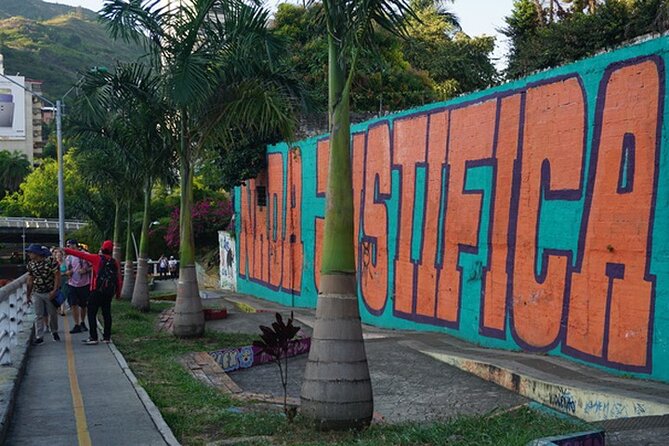
At the Edificio Boulevard del Río Emcali, you get modern architecture and a panoramic view of Cali plus the Cali River.
This is a “zoom out” moment. Salsa can feel like pure rhythm, but city views help you understand scale and layout. You get a sense of where neighborhoods sit and why the social energy in Cali has room to spread.
Bring your phone or camera settings ready. Lighting can change quickly, especially if the route is on foot and you move between open and shaded areas.
Stop 6: La Calle del Sabor, the heart of Caleña salsa
La Calle del Sabor is the heart of Caleña salsa. The tour describes bars, restaurants, and theme shops, with murals that tell stories of musicians, dancers, and popular culture.
This stop is about connection. By this point you have heard the names, seen the art themes, and learned how the city’s identity shows up in murals. Here, you see the living version of that story: places where the music is part of the daily scene.
One small caution: this is a good area to browse, but it is also easy to lose time if you wander off for too long. If the group moves, try to stay with the guide so you catch every beat of the tour.
Stop 7: Beneficencia del Valle del Cauca, colonial roots and culture spaces
Next is BENEFICIENCIA DEL VALLE DEL CAUCA, described as a historic building with colonial architecture that now houses cultural spaces.
This stop adds depth to the idea of cultural life in Cali. It suggests that the city’s creativity is not only street-level. Cultural presentations and exhibitions are woven into older architectural bones too.
For me, this is where the tour becomes more than sightseeing. It starts to feel like a story about how people keep making culture, even as the city modernizes around them.
Stop 8: Calle de la Escopeta, urban art with a local edge
Calle de la Escopeta is famous as a reference of urban art, with colorful facades covered in murals.
This is another “read the walls” stop. If you like graffiti and street art as communication, this is where it clicks. The guide’s explanations help you understand what the murals are doing: telling stories, showing community pride, and expressing resistance or identity.
Time here is short, so pick your favorite mural and focus on the details rather than trying to see everything.
Stop 9: Túnel Mundialista, murals, sports culture, and the walk-through effect
Then comes Túnel Mundialista, decorated with murals celebrating football and local culture.
A tunnel changes how you experience art. You see it while moving forward, and the space affects sound and pacing. It is a memorable transition toward the tour’s finish because it feels like stepping into a painted corridor of local passions.
If you are a football fan, this stop may land extra well. If not, the art and the local cultural themes still come through.
Stop 10: Cimarrón Salsa Bar, where the night turns into your memory
The tour ends at Cimarrón Salsa Bar, described as an emblematic place to dance salsa until dawn, with live music, dance shows, and strong energy.
This finale is practical and smart. You finish where you can immediately use what you learned, with live rhythm right there. It is also a good “final filter” moment. If you are feeling salsa energy, you stay. If not, you still leave with the cultural context.
If you want to keep the night going, ask your guide for salsa club recommendations. The tour includes recommendations from cult salsa bars, so you are not stuck guessing what is worth your time.
Who this tour suits best
This walking tour is ideal if you want:
- A fast, guided way to get your bearings in Cali.
- A salsa-focused route with murals and street art that have meaning.
- Dance basics and rhythm lessons, not just a lecture.
- A final stop at a place where you can turn knowledge into action.
It is also a great option for solo travelers who want a group vibe, couples who want something cultural with energy, and anyone who likes urban art and music.
If you dislike walking, or you want slow, long museum time, the 18-minute stop rhythm may feel tight.
What to do before you go, to get more out of it
Even with a strong guide, your experience improves if you show up ready. Here are smart prep ideas that match this kind of tour.
- Wear comfortable shoes. You are walking from stop to stop for most of the 3 hours.
- Bring a light rain layer or plan for weather changes. The tour requires good weather.
- If you care about photos, think about which murals you want first. The tour moves quickly, so you will not get infinite re-takes.
- Come with at least a basic openness to dancing. The tour includes steps, and that is part of the charm.
Should you book this Salsa, Graffiti & Resistance in Cali tour?
If you are short on time and you want a salsa-first introduction to Cali that also respects the city’s street art and social meaning, I would book it. For $14, you get a Spanish guide, a structured route with free admission stops, and a finish at a dance bar that ties the story to real nightlife.
Skip it only if you dislike walking, want long stops, or you get uncomfortable with fast pacing. Also note the outdoor nature of the tour, since good weather matters.
Overall, this is the kind of tour that makes you feel like Cali has a soundtrack and you finally understand why.
FAQ
How long is the Salsa, Graffiti & Resistance in Cali tour?
It is listed as approximately 3 hours.
How much does the tour cost?
The price is $14.00 per person.
Is the tour fully guided?
Yes, it includes a certified guide in Spanish.
Where does the tour start and end?
It starts at Plazoleta Jairo Varela (in Granada, Cali) and ends at Cimarrón Salsa Bar in Normandia.
Are there entry fees for the stops?
The stops listed include free admission tickets.
Is food or drinks included?
No. Drinks, food, and souvenirs are not included.
How big is the group?
The tour has a maximum of 30 travelers.
What happens if the weather is bad?
The tour requires good weather. If it’s canceled due to poor weather, you will be offered another date or a full refund.
Is free cancellation available?
Yes. You can cancel up to 24 hours in advance for a full refund.
Cali and Its Past


Cali Keeps Dancing



Comuna 13 and the Painted Stairs

Just added to our Cali shelf
- Cali: Two hours walking Cali City discovery tour
★ 5.0 · 3 reviews - Cali: Three hours walking Cali City discovery tour
★ 4.7 · 3 reviews - Cali: Comuna 20 Siloé Street Art Tour
★ 5.0 · 4 reviews - Cali: Hummingbird Watching & Photography Tour
★ 5.0 · 7 reviews - Cali: TRES CRUCES – Cali’s most popular hike and monument
★ 4.9 · 19 reviews
Comuna 13 & Graffiti Street Art Walks, compared.
 ★ 4.8Medellin: Comuna 13 Graffiti Tour, Cable Car & Street FoodFrom $189,046 reviews
 ★ 4.9Medellín: Comuna 13 True Story and Street Food TourFrom $141,779 reviews
 ★ 4.8Medellín: Comuna 13 District Tour with Cable Car RideFrom $271,467 reviews
 ★ 4.9Medellín: Private City Tour with Metrocable and Comuna 13From $76330 reviews
 ★ 4.9Medellín: Comuna 13 Tour with Snacks And Your Own GraffitiFrom $11311 reviews
 ★ 4.5City Tour + Commune 13 MedellinFrom $37295 reviews
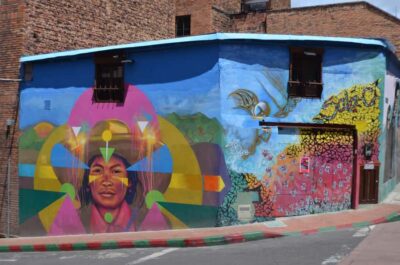 ★ 4.7Bogotá: La Candelaria Graffiti & Urban Art Guided TourFrom $16250 reviews
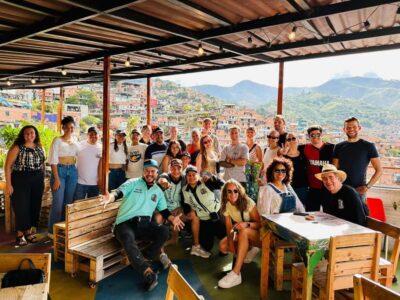 ★ 4.9Medellín: Comuna 13 and Graffiti Guided Tour with a LocalFrom $16239 reviews
Where else this tour turns up