
REVIEW · COMUNA 13 & GRAFFITI STREET ART WALKS
Bogotá: La Candelaria Graffiti & Urban Art Guided Tour
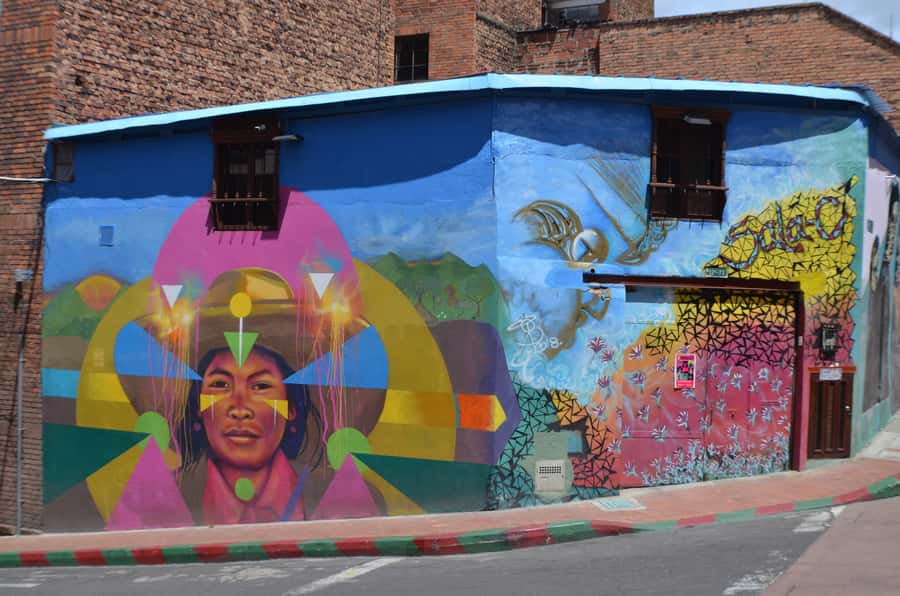
Street art in Bogotá reads like a newspaper, and this guided walk helps you decode it. I especially like the socio-political context the guide brings, with real-world explanations that make murals feel less like decoration and more like communication, guides such as Myra and Juana are repeatedly praised for this kind of clarity. I also like the small group setup, limited to 10 people, so you can actually ask questions instead of waving at a wall from the back of the crowd.
My other big favorite is the mix of art you would not easily spot on your own. You’ll pass murals tied to artists such as 3 Manos and Ledania, then widen the lens to indigenous ancestry themes and the role women play in the scene, including artists like Bastardilla, Vera, and more names the guide points out as you go.
One consideration: the tour can run in English and Spanish at the same time, depending on the group. If you’re sensitive to mixed-language audio, plan to lean on photos and the guide’s explanations rather than trying to follow every word.
In This Review
- Key things to know before you go
- Entering La Candelaria Through Street Art, Not Postcards
- Getting Oriented at Chorro de Quevedo (The Easiest Start in the City)
- La Candelaria Murals: How Artists Retell Indigenous Ancestry and City Politics
- La Concordia Market Stop: Where Ideas Mix
- Journalists’ Park: Reading the City Like a Headline
- Seeing the Women Street Artists, Including Bastardilla and Vera
- The 30-Minute Photo Stop in La Candelaria: Turn Learning Into Photos
- Café Herencia and Coca Leaf Tea: A Calm Finish With Artist Support
- Price, Group Size, and What You Really Get for $16
- Who This Tour Fits Best (And Who Might Skip It)
- Should You Book? My Simple Decision Guide
- FAQ
- Where does the tour start?
- What time does it run?
- How long is the tour?
- What languages are offered?
- What is included and not included?
- How big is the group?
Key things to know before you go
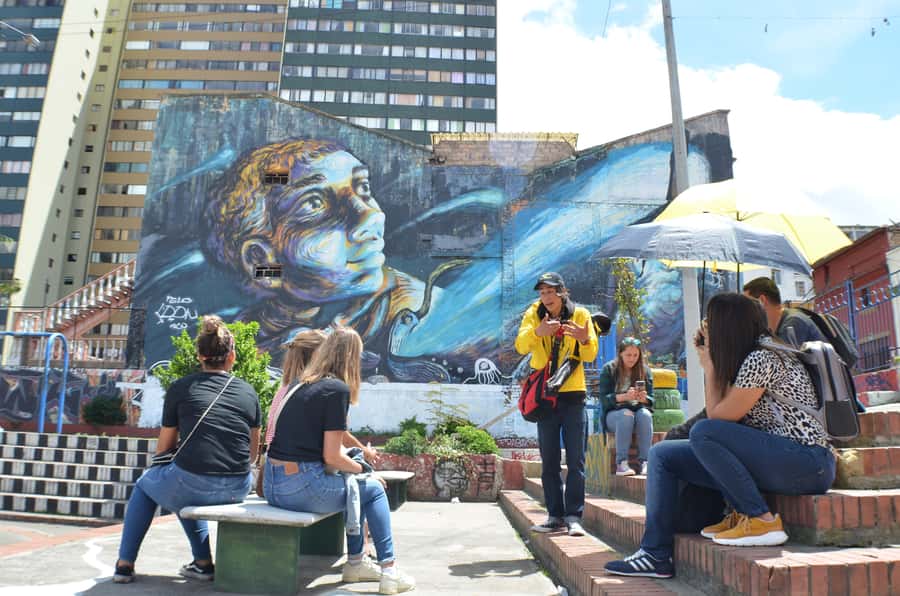
- Guides explain the why behind the walls, not just what you’re looking at
- You see downtown stopping points like La Concordia’s market area and Journalists’ Park
- Artists are named as you walk, including 3 Manos, Ledania, Carlos Trilleras, and others
- Women artists get real attention, with examples like Bastardilla and Vera
- A coca leaf tea moment ends the tour, served at Café Herencia
Other guided walks through the painted stairways
- Bogotá: La Candelaria Graffiti & Urban Art Guided Tour★ 4.7 · 250 reviews
- Fun Graffiti Workshop: The Art of Aerosol and Color★ 5.0 · 73 reviews
- Graffiti Tour in La Candelaria Bogotá with Transportation★ 5.0 · 68 reviews
- Bogotá: Graffiti Tour el mejor recorrido de arte urbano★ 4.7 · 41 reviews
Entering La Candelaria Through Street Art, Not Postcards
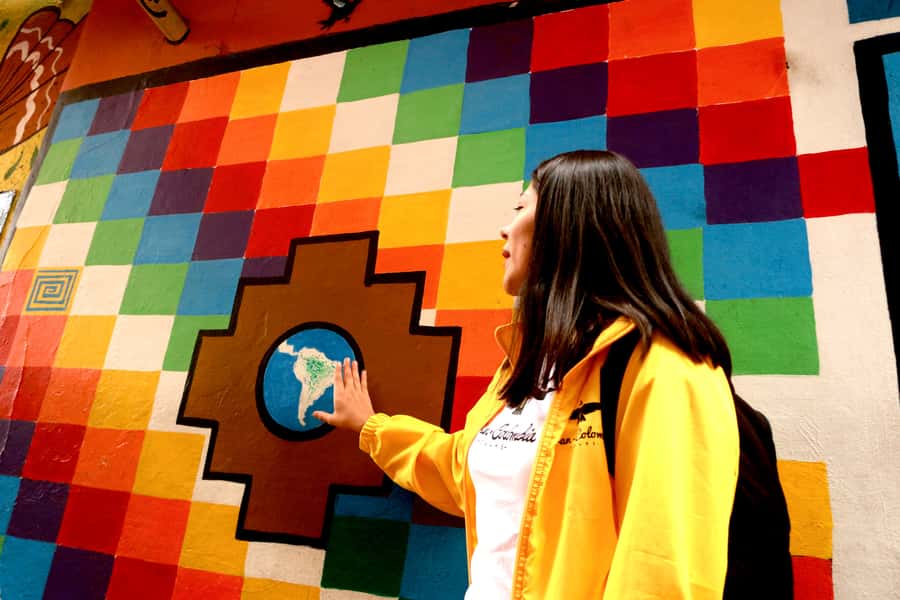
This tour is built for people who want more than photos of colorful walls. In Bogotá’s La Candelaria district, street art is a kind of public storytelling, and the best part is that you don’t just look at it, you learn how to read it. The guide gives a short introduction to the social and political context of graffiti production, so symbols, style choices, and even who is painting can make sense as part of the city’s conversation.
What makes it work well is the pacing. It’s a 150-minute walking tour, but it’s broken up into clear areas, and you get time at each one to absorb what’s in front of you. You’re not sprinting from mural to mural. You’re collecting clues as you move through downtown streets.
And because it’s a small group (10 participants max), you’ll usually feel like the tour is listening back to you. Many guides have been described as patient and engaged, and that matters when you’re trying to understand why a certain piece shows indigenous ancestry themes, or why a mural might reflect current issues.
Getting Oriented at Chorro de Quevedo (The Easiest Start in the City)
Your tour begins at Plazoleta del Chorro de Quevedo, next to the fountain by the yellow umbrella. That detail sounds simple, but it saves you time when you’re in a new neighborhood. The meeting point is very specific, and it’s offered twice daily, at 10am and 2pm.
This is also a smart way to start because the area gives you momentum right away. You begin in a central downtown space, then transition into the heart of La Candelaria. If you’re someone who likes to get your bearings fast, you’ll appreciate how quickly the guide moves from introduction to actual street-level viewing.
Practical tip: start the tour with comfortable shoes and water in your daypack. The included umbrella helps if it rains, but you still want to be able to walk comfortably in both sun and sudden drizzle.
La Candelaria Murals: How Artists Retell Indigenous Ancestry and City Politics
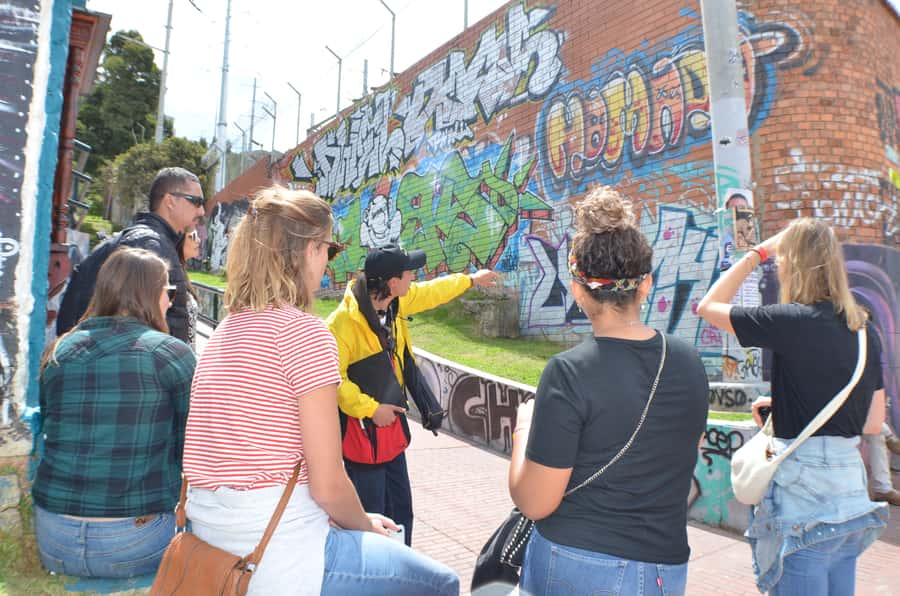
Most of the tour lives in La Candelaria, and that’s where you’ll spend the most time. The guided portion runs about an hour, then there’s an additional 30-minute photo stop later. That structure is great, because you get two chances to focus. First you learn, then you photograph.
Here’s what you’re really looking for. Bogotá is known in the world of street art and spray painting, and La Candelaria is one of the areas where that reputation comes alive. The guide will walk you through iconic works and explain why graffiti can become a public platform, not only for style, but for political messaging and identity.
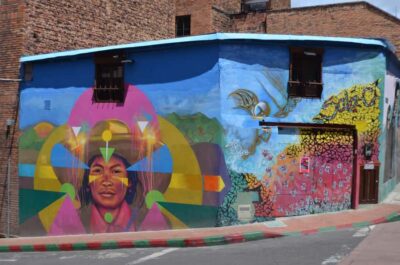
A key theme you’ll hear about is how artists retell stories of indigenous ancestry and connect that heritage to the city. When you understand that link, murals stop looking random. You start noticing how certain figures, patterns, and color choices can point toward ancestry, memory, and belonging.
You’ll also get a guided tour of specific artists’ work, with names you’ll likely recognize as the tour moves along, including Carlos Trilleras, Wosnan, Ocio 4, 3 Manos, and Ledania. Having those names matters, because it turns your photos into something you can later research, instead of just images with no starting point.
One nice bonus: at least one guide has shared supplemental videos during the tour. That’s not listed as a universal feature, but it’s been part of the experience for some groups. If you see any short video clips, treat them like study notes. They’re there to make the murals feel more connected, not more complicated.
La Concordia Market Stop: Where Ideas Mix
After the first stretch in La Candelaria, you’ll head to La Concordia Market for a shorter, 15-minute guided stop. Even though it’s brief, it’s not filler. It’s a chance to understand the neighborhood as a meeting point, not just a gallery.
The guide points out how this area has been a melting pot of ideas and influences that shaped downtown identity, and it helps explain why street artists show up where they do. Market zones are social engines. People pass through, talk, argue, share news, and pick up cultural references. Street art often grows in that same atmosphere.
What you might take away here is that graffiti is not created in a vacuum. It reacts to daily life. It absorbs the rhythm of the streets. That’s why a quick look at the market context makes the murals you saw earlier land more strongly.
If you want a souvenir snack or just a slow glance at stalls, keep it tight here. You’re not shopping time on this tour. You’re learning the setting so the art has better meaning.
Around La Candelaria and up the hill, other options
Journalists’ Park: Reading the City Like a Headline
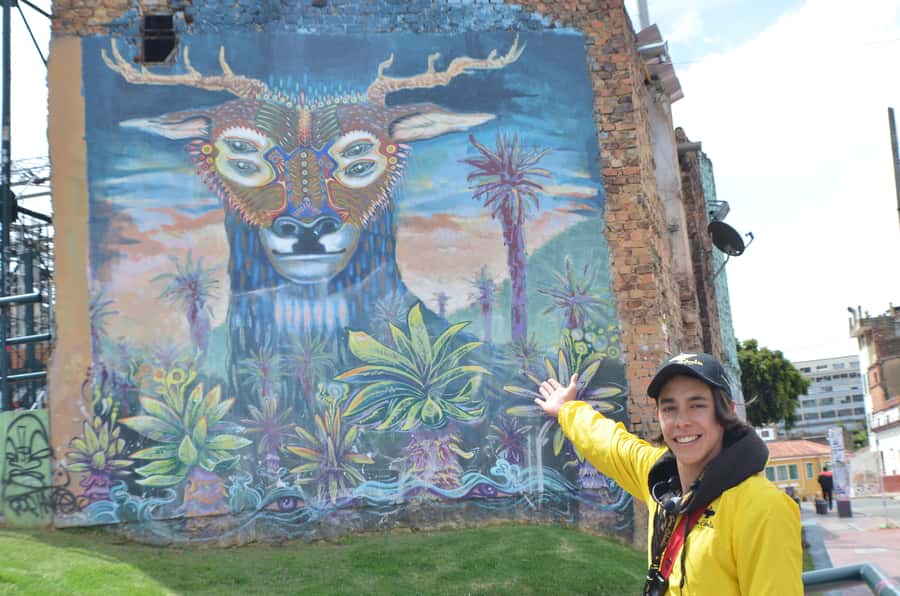
Next comes Journalists’ Park, about an hour on the walking and sightseeing portion. This stop is especially useful for people who love storytelling, because it connects the murals to the way public ideas travel through space.
This is where you’ll likely slow down and look longer. A park stop gives you a natural pause in the tour rhythm. It also helps you see how street art functions as commentary and memory, not only as decoration.
You’ll hear thoughtful local insight into murals that you might otherwise miss. That wording matters: the guides are there to redirect your attention. You’ll learn what to look for and why, such as symbolism, the message behind a tag, or how different styles reflect different approaches in the scene.
And because this tour focuses on the socio-political context of graffiti production, you’re not just learning about art techniques. You’re learning about the social pressures and the public conversations that street art can carry.
Seeing the Women Street Artists, Including Bastardilla and Vera
One of the most praised aspects of the experience is its willingness to go beyond the usual street art roster. You’ll see graffiti authored by women and learn about their role in the propagation of this art, with examples including Bastardilla, Vera, and Ledania.
This matters for your understanding. If you only look for famous names, you can miss how a movement actually spreads. When women artists are part of the story, you get a fuller picture of community, mentorship, and creative visibility.
The guide also helps you connect artist identity to the themes on the walls. If a mural is about indigenous ancestry, city politics, or current issues, the message lands differently when you know who is making it and what role they play.
In reviews, many people highlight how guides are friendly, patient, and eager to answer questions. That attitude helps you ask the practical stuff, like how to read a symbol or why one style might communicate differently from another.
The 30-Minute Photo Stop in La Candelaria: Turn Learning Into Photos
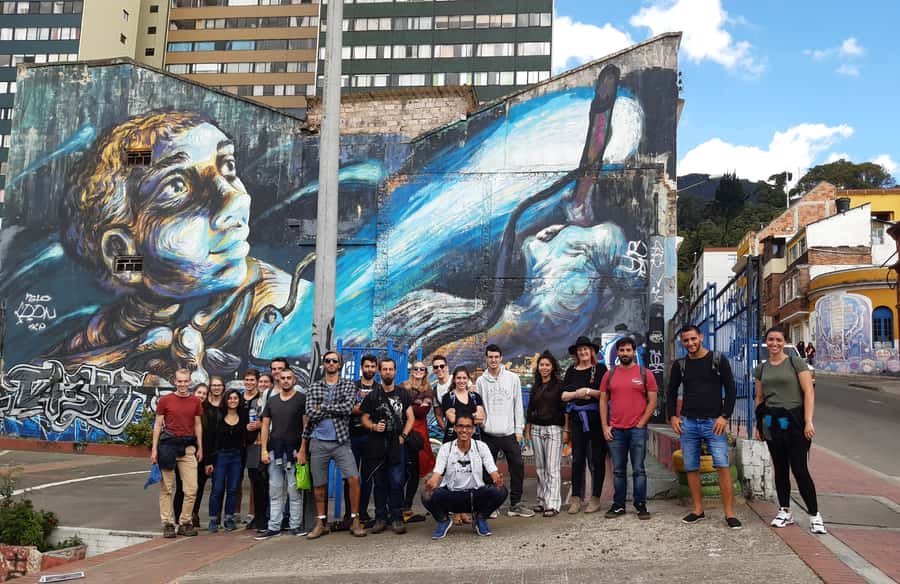
Later in the tour you return to La Candelaria for a 30-minute photo stop. This is your chance to turn everything you learned into images you can actually use later.
The best approach for this part is to look first, then shoot. Try to capture context, not only close-ups. A wide shot can show you where a mural sits in relation to streets and storefronts. Then do the detail shots for the symbols the guide explained.
Bring your camera and sunscreen. You’ll likely be out in the open areas of downtown, and light can change quickly in the afternoon. Water helps too, especially on longer city walks.
If the group has moved at a slower pace earlier, the photo stop is where that pacing pays off. You’ll have fewer half-glimpsed murals and more intentional photos.
Café Herencia and Coca Leaf Tea: A Calm Finish With Artist Support
You end at Café Herencia, where you’ll taste coca leaf tea. This final stop is more than a snack break. It’s part of the tour’s theme of connecting art to everyday life.
Coca leaf tea is the local treat at the end, and the café setting reinforces the idea that street art is not only on the street. The café works and supports local artists, so you leave with a sense that the creative community extends beyond walls you can photograph.
In several accounts, this tea tasting is described as a nice way to land the experience. After walls full of symbols and messages, a warm drink gives you a reset. You can also ask last questions while you’re sitting, which is often when it all clicks.
Price, Group Size, and What You Really Get for $16
At $16 per person for 150 minutes, this tour is priced like a practical add-on to your Bogotá plan. It’s not a short walk, and it’s not a fly-by mural viewing. You’re getting a guided explanation of the socio-political context, named artists, multiple downtown stops, and a coca leaf tea tasting.
The small group size of up to 10 people is a big value driver here. You’ll get more interaction with the guide than you would on a larger bus-style tour. That matters because the experience depends on context. If you’re just watching walls, you could do that on your own. The guide is what helps you interpret.
Also included is all risk insurance and an umbrella in case of rain. Those are the unglamorous benefits, but they do make a difference on a walking tour day.
Not included is transportation. That’s normal, but you should plan your day so you can comfortably reach and depart from Plaza del Chorro de Quevedo on your own.
Who This Tour Fits Best (And Who Might Skip It)
This is a great fit if you want street art with meaning. If you like understanding why people paint what they paint, this tour gives you the background to connect visuals with identity and current issues.
It also fits well if you’re in Bogotá for a short time. The route focuses on a single area, so you spend your limited hours where the murals and context are concentrated.
I’d skip it or at least think twice if you strongly prefer quiet, self-guided wandering. This is a guided walking tour, and the guide will be pointing things out and explaining context throughout. Also keep in mind the bilingual mix possibility. If your Spanish is weak and you need full English-only instruction, you may want to check how the group is formed that day.
If you enjoy photography, it’s also a good match. You’ll get multiple chances to stop and take pictures, including a dedicated photo stop.
Should You Book? My Simple Decision Guide
If you’re coming to Bogotá specifically because you want to see street art, I think this tour is a smart booking. For $16, you get named artists, a real explanation of the socio-political context, multiple downtown stops, and a coca leaf tea finish at a local artist-supporting café.
If you’re the type who tends to walk past murals without noticing the details, this tour is the fix. You’ll leave with better questions, better photos, and a clearer sense of how Bogotá uses street art to talk to itself.
If mixed-language instruction might frustrate you, check with the provider before you go. Otherwise, this is one of the more thoughtful ways to experience La Candelaria, especially if you want the story behind the spray paint.
FAQ
Where does the tour start?
You meet at Plazoleta del Chorro de Quevedo, next to the fountain by the yellow umbrella.
What time does it run?
It runs every day at 10am and 2pm.
How long is the tour?
The duration is 150 minutes.
What languages are offered?
The live tour guide offers Spanish and English.
What is included and not included?
Included are the Gran Colombia Tours guide, socio-political context of street art, visits to graffiti in downtown Bogotá, coca leaf tea tasting, all risk insurance, and an umbrella if it rains. Transportation is not included.
How big is the group?
The group is small, limited to 10 participants.
Someone Guiding You in Bogota
La Candelaria, Then Up Monserrate
Comuna 13 and the Painted Stairs
Just added to our Bogota shelf
- Fun Graffiti Workshop: The Art of Aerosol and Color
★ 5.0 · 3 reviews - From Bogota: White Water Rafting Experience
★ 4.4 · 3 reviews - From Bogota: Excursion to Jaime Duque Park
★ 5.0 · 3 reviews - Bogotá: La Candelaria Food Tour with Tastings
★ 4.2 · 3 reviews - Walking tour José Celestino Mutis Botanical Garden 3 hrs
★ 5.0 · 3 reviews
Comuna 13 & Graffiti Street Art Walks, compared.
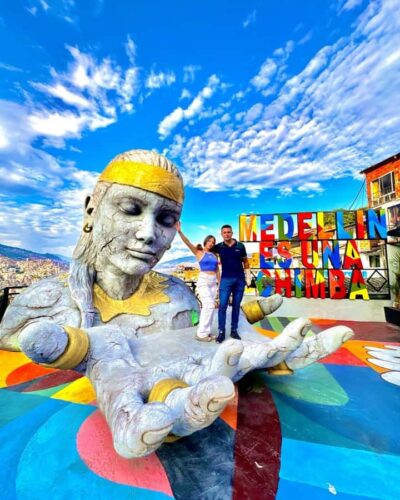
 ★ 4.8Medellin: Comuna 13 Graffiti Tour, Cable Car & Street FoodFrom $189,046 reviews
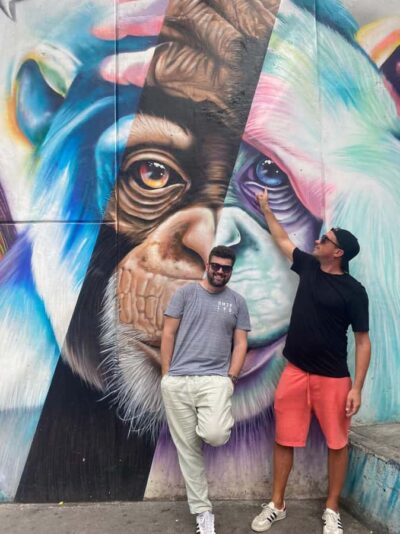
 ★ 4.9Medellín: Comuna 13 True Story and Street Food TourFrom $141,779 reviews
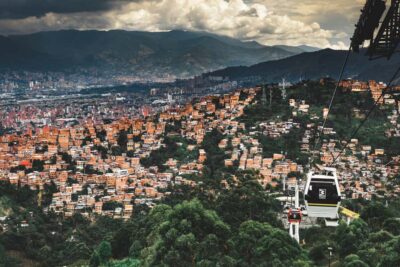
 ★ 4.8Medellín: Comuna 13 District Tour with Cable Car RideFrom $271,467 reviews
 ★ 4.9Medellín: Private City Tour with Metrocable and Comuna 13From $76330 reviews
 ★ 4.9Medellín: Comuna 13 Tour with Snacks And Your Own GraffitiFrom $11311 reviews
 ★ 4.5City Tour + Commune 13 MedellinFrom $37295 reviews
 ★ 4.9Medellín: Comuna 13 and Graffiti Guided Tour with a LocalFrom $16239 reviews
 ★ 4.9Medellín: Private Pablo Escobar and Comuna 13 TourFrom $81233 reviews
Where else this tour turns up