
REVIEW · CARTAGENA WALLED CITY & GETSEMANí WALKS
Shared Old Cartagena & Getsemani Tour with Wireless System
Cartagena gets louder on foot. This 2 hour shared walk links the UNESCO walled center to Getsemaní, with wireless audio so you catch every story in busy streets. I like that the route focuses on real places, not just photo stops, from the Clock Tower to the murals. One thing to keep in mind: you cover about 8 km, so comfortable shoes matter.
A big plus is the storytelling. The guide Beyond Colombia leads a lively route, and one praised guide named Louis Carlos is noted for staying clear and accurate while connecting pirate era battles, colonial politics, and what certain plazas and buildings are really telling you.
Possible drawback: it is a shared tour, so the pace follows the group. If you prefer slow wandering or quiet viewpoints for long stretches, you might wish you had more time on your own.
In This Review
- Key points to know before you go
- Walking Cartagena in Two Hours, Old City to Getsemaní
- The Santo Domingo start, meeting point and first impressions
- Plaza de la Proclamación and Plaza Bolívar, politics shown in stone
- Santuario de San Pedro Claver and Plaza de la Aduana, colonial corners with meaning
- Plaza de los Coches, then the Clock Tower, the instant Cartagena entrance
- City Walls and the Santo Domingo bastion viewpoints
- Camellón de los Mártires, Parque Centenario, and the smaller street chapters
- Crossing into Getsemaní: Plaza de la Trinidad as the social center
- Calle de la Sierpe and Getsemaní street art you can actually read
- Callejón Ancho and Holy Trinity Square, finishing where the energy continues
- Wireless audio makes the tour easier, and also more respectful
- Walking distance, what to wear, and how to stay comfortable
- Price and value: why $13 feels reasonable here
- Who this tour suits, and who should choose another plan
- My booking checklist for a smooth day
- Should you book this Old Cartagena and Getsemaní tour?
- FAQ
- Where do I meet the tour group?
- How long is the tour, and how much walking is involved?
- What languages are offered?
- Is the tour wheelchair accessible or stroller friendly?
- Is food or drinks included?
- Are video or audio recordings allowed?
Key points to know before you go
- Wireless audio receivers help you hear clearly while you move through crowded areas
- Clock Tower entrance gives you an instant sense of how the walled city protects Cartagena
- Santo Domingo Square and nearby plazas connect local life with colonial power
- City walls viewpoints add perspective, and the guide ties them to pirate era defense stories
- Getsemaní street art shows identity in color, especially around Calle de la Sierpe
- Finish in Getsemaní so you can keep exploring the neighborhood after the tour
Inside the walls, a few more reviewed walks
- Cartagena: Historic Center and Getsemaní Shared Walking Tour★ 4.9 · 2,716 reviews
- Cartagena de Indias: 2-Hour Sunset Cruise★ 4.7 · 1,105 reviews
- Cartagena: Panoramic City Tour, Monuments, Walls, Castle★ 4.0 · 636 reviews
- Cartagena: Guided Tour, with La Popa Convent, and San Felipe★ 4.4 · 599 reviews
Walking Cartagena in Two Hours, Old City to Getsemaní
This tour is built for travelers who want Cartagena to make sense fast. You start inside the UNESCO listed historic center, then you cross into Getsemaní, a neighborhood locals often describe as the heart of the people. The payoff is that you get two sides of the same city experience: the official power center behind the walls, and the daily life and street culture that grew alongside it.
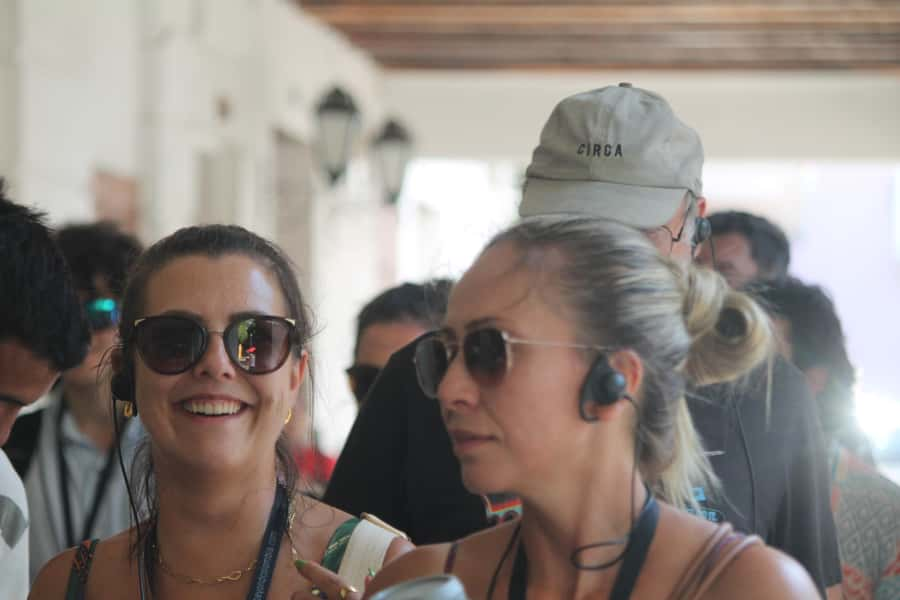
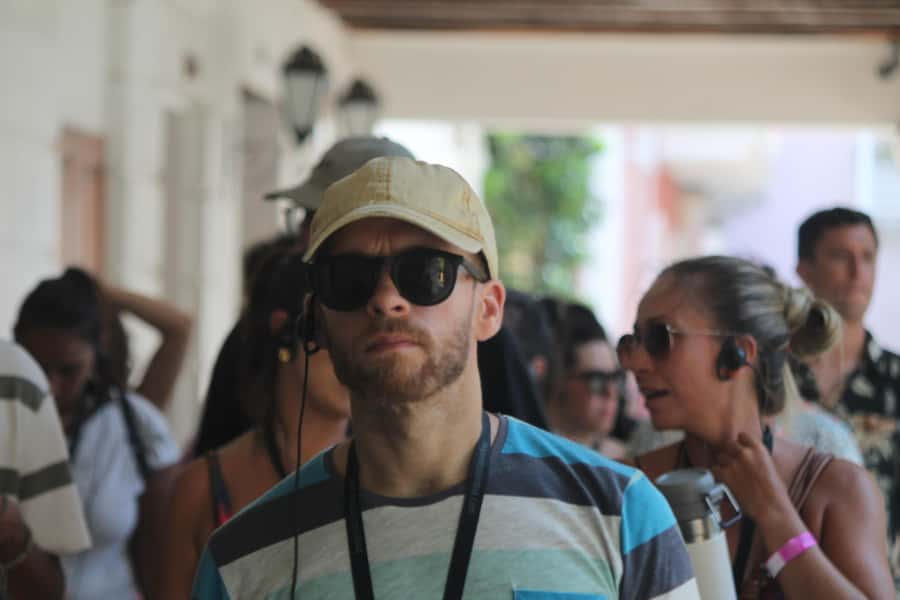
It is also a smart choice if you hate getting lost in translation. A guide is on the ground speaking Spanish and English, and you also get audio receivers in both languages. That means you can keep up without craning your neck or guessing what the guide is saying over street noise.
Because it is a shared tour, you will walk in a group and stop for listening points. The route is not about racing through checkpoints. It is about timing your attention to the places where the guide’s explanations actually click.
The Santo Domingo start, meeting point and first impressions
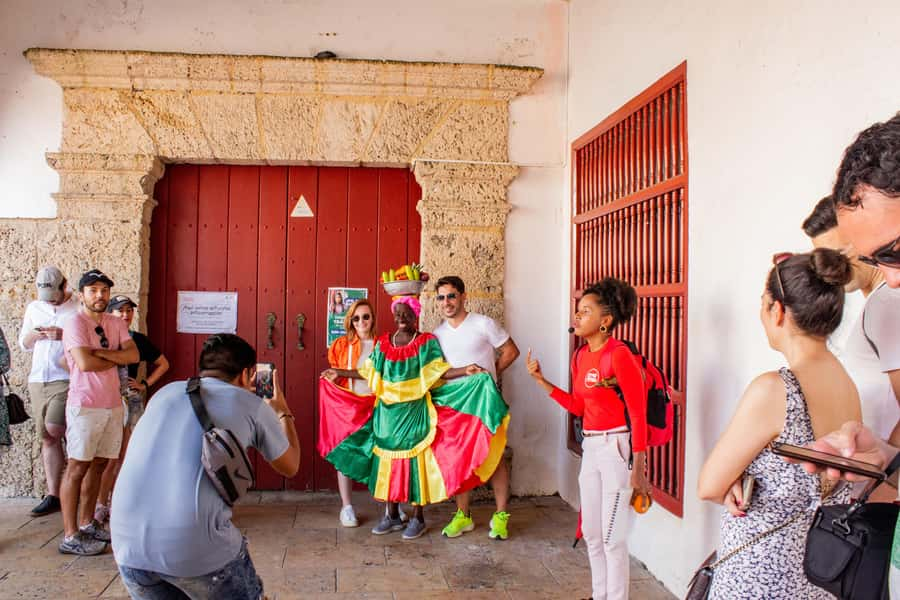
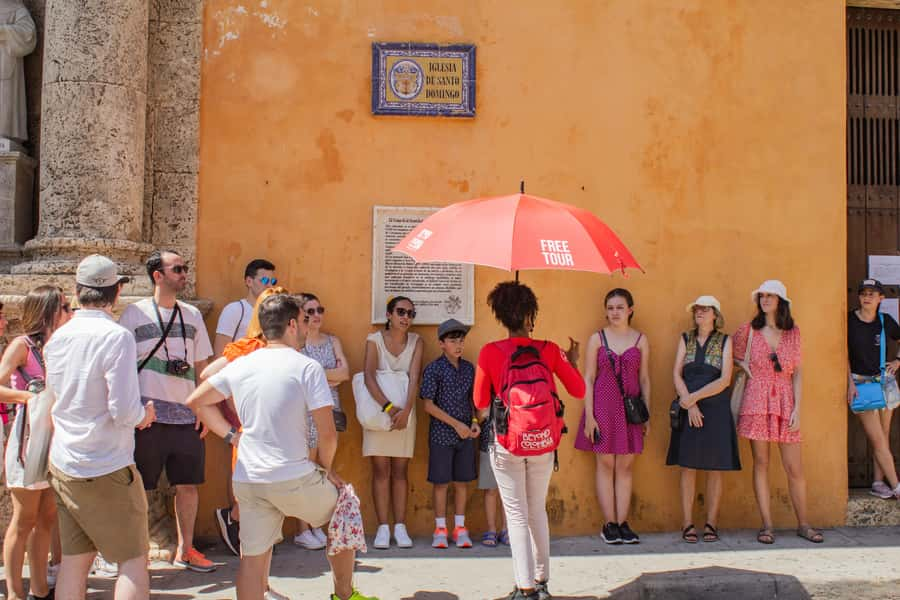
You meet at Plaza de Santo Domingo next to Botero sculpture Gertrudis, under red umbrellas with Beyond Colombia. Get there about five minutes early so you can grab your wireless audio system and settle your earphones before the group moves.
Why this start works: Santo Domingo Square sits in the thick of the old center, surrounded by colonial scale buildings and squares. It is the kind of spot where you can feel the city’s layers quickly, even before you hear the story. Once the group assembles, the guide typically sets the tone right away by connecting what you see in the plazas to what the city had to defend, control, or rebuild.
Practical tip: this is also where you can do a quick reality check for your day. If your shoes are not broken in, you will feel it later. If you have hydration, you will feel better throughout.
Plaza de la Proclamación and Plaza Bolívar, politics shown in stone
From the start, you move through key plazas that help you read Cartagena like a map. Plaza de la Proclamación is a short guided stop that helps frame the colonial-era feel of the center, then you head toward Plaza de Bolívar, another listening checkpoint.
What I like about this style of walking is how the guide connects the human layer to the architecture. You do not just hear that Cartagena was important, you hear what that importance cost, and how public spaces were used. The guide points to hidden symbols in architecture and plazas, and you start noticing how buildings and layouts could communicate power.
If you like history that has consequences, this is your lane. The stories here include pirate attacks and heroic defenses, plus references tied to the Inquisition, not as random facts but as context for why Cartagena’s built environment looks the way it does.
Small caution: plazas are open. Sun can hit hard. If you are the type who gets thirsty quickly, plan to carry water with you, since this is a walking route and you may feel thirsty.
Santuario de San Pedro Claver and Plaza de la Aduana, colonial corners with meaning
Next comes Santuario de San Pedro Claver, with a guided stop built into the flow of the walk. After that, you move to Plaza de la Aduana.
These are not long stops, but they matter because they break the route into readable segments. The guide uses moments like this to connect the city’s religious and civic spaces to the larger story of control, trade, and identity. If you enjoy learning why a place is where it is, you will appreciate how the guide keeps returning to how Cartagena functioned day to day.
One benefit of a guide here is accuracy. A knowledgeable guide is helpful, but the bigger win is clarity. When the guide keeps the details straight, the city stops feeling like a string of landmarks and starts feeling like a system.
Again, you are walking. So think of these stops as short chapters, not museum time.

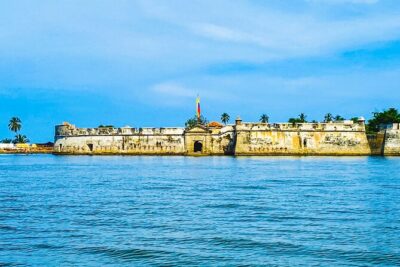
Plaza de los Coches, then the Clock Tower, the instant Cartagena entrance
Plaza de los Coches is another guided pause that sets you up for one of the most recognizable Cartagena entrances: the Clock Tower Monument.
This is a highlight for a reason. The Clock Tower is an iconic symbol tied to the walled city, and it also works as a psychological checkpoint. After you’ve been walking through plazas and corridors, seeing the Clock Tower helps you understand you are entering a protected world with strict boundaries and strategy.
The guide’s stories in this section tend to emphasize defense and threat. The city walls come up later with panoramic views, but you get the foundation here so the walls make more sense.
Photo tip: the Clock Tower area gives you strong visual anchors. With wireless audio, you can keep listening while you frame shots, instead of turning your headphones off every time you want a picture.
City Walls and the Santo Domingo bastion viewpoints
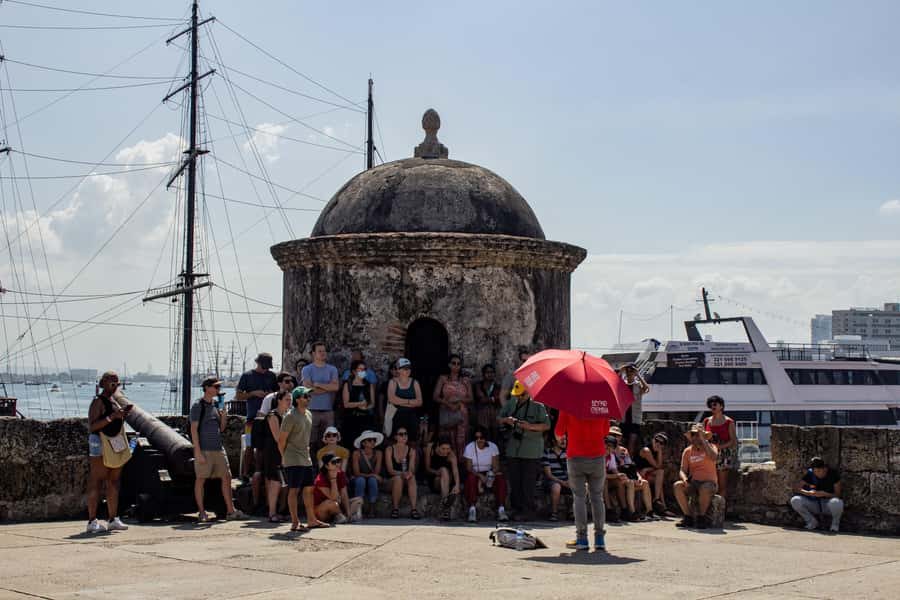
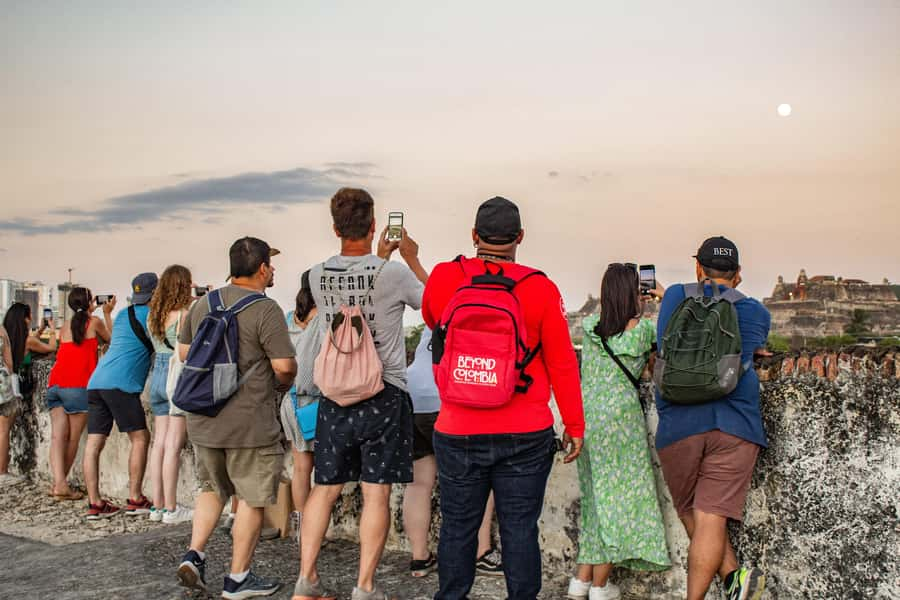
After the Clock Tower, the route leads you to the city walls. You’ll get guided explanations along the way, with a special focus on views from the Santo Domingo bastion.
This is where the tour becomes more than words. From the walls, you can see the layout and scale in a way street-level walking cannot. The guide ties the view to pirate-era stories and the logic of fortifications, so you are not just looking at scenery. You are looking at decisions made in the past.
If you like “why did they build it this way” questions, this part delivers. The walls are a physical answer. And because the explanation is timed with the viewpoint, you get a quick lesson in reading Cartagena’s defensive thinking.
Drawback to consider: viewpoints can be crowded. Even with audio, you might want to keep an eye on your personal space and belongings, especially near busy edges.
Camellón de los Mártires, Parque Centenario, and the smaller street chapters
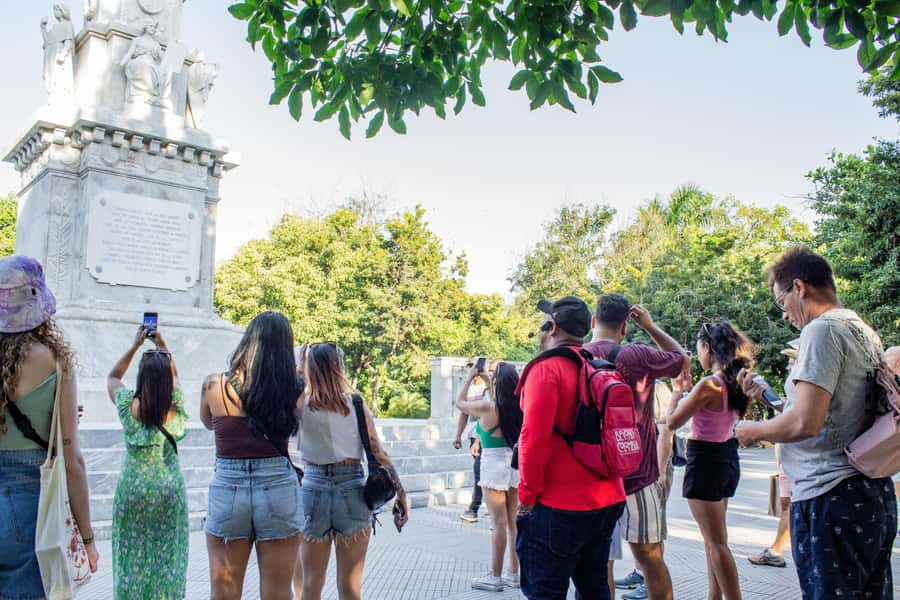
In between the big showstoppers, you move through streets and pauses that keep the story moving. Stops like Camellón de los Mártires, Parque Centenario, Calle de la Magdalena, and Calle del Guerrero are shorter guided segments, roughly 10 to 20 minutes each.
How to think of these parts:
- They connect major landmarks without making you wait around.
- They provide listening points where the guide can explain hidden symbols and architectural details.
- They help you understand how neighborhoods are stitched together, not separated into neat boxes.
The practical reason these matter is that Cartagena can feel like it repeats itself. Narrow streets, pastel walls, balconies, and corners can start to blur. These smaller stops help you remember what you’re seeing and why it matters.
Crossing into Getsemaní: Plaza de la Trinidad as the social center
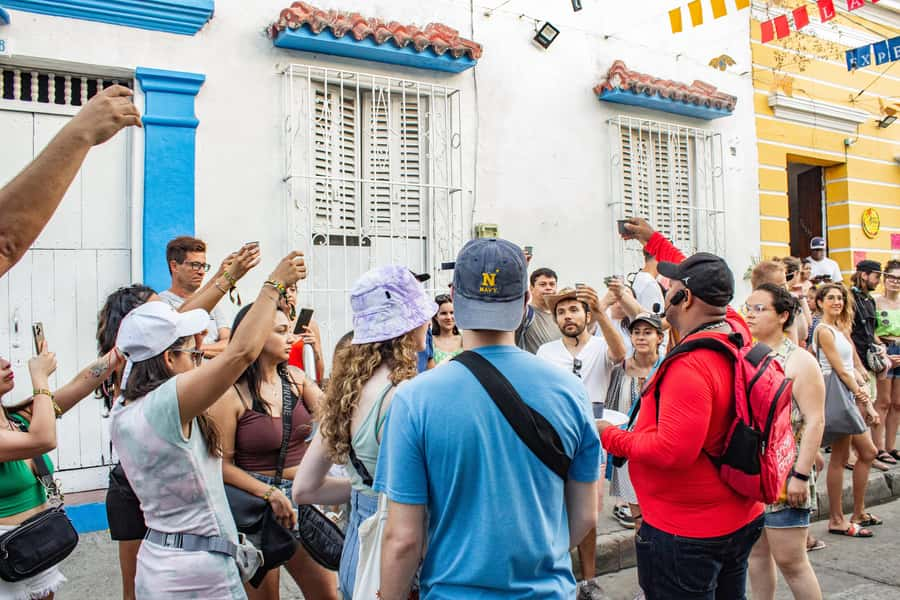
Once you leave the most controlled feel of the walled center, you step into Getsemaní. This section is often the emotional shift of the tour.
You focus on Plaza de la Trinidad, described as the social and historic heart of Getsemaní. This is where local life shows up in a visible way. The guide frames the neighborhood as a place locals call the heart of the people, and you experience that through the street rhythm and community energy you can feel while walking.
If you are hoping to go beyond postcard Cartagena, this is the payoff area. The guide’s theme becomes resistance, pride, and dreams, tied to independence and daily life. You also get more of the Afro-Caribbean soul in the way stories are told and the way the neighborhood expresses itself.
Practical reminder: Getsemaní can be lively and sometimes crowded. Keep your stuff close and keep your eyes up.
Calle de la Sierpe and Getsemaní street art you can actually read
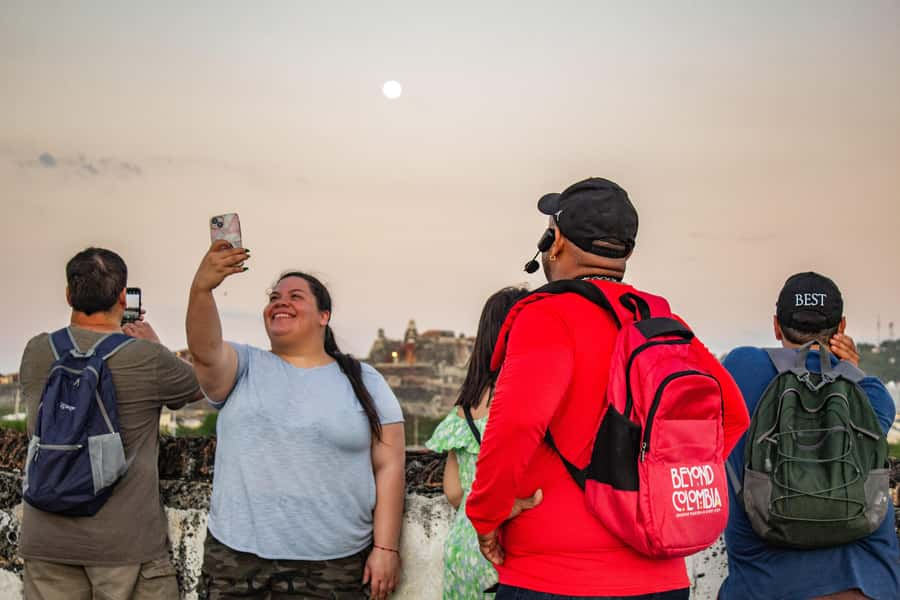
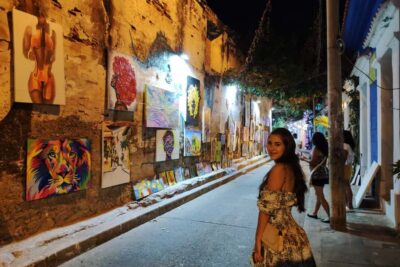
One of the strongest highlights is Getsemaní street art, especially around Calle de la Sierpe. This is where the tour slows down a touch in meaning, even if the total route stays time efficient.
Murals here are not random decoration. The guide points out how they reflect local culture and identity. If you care about contemporary storytelling, this makes the history part feel alive. You are not just hearing about the past. You see how that past gets turned into public art and street language.
I also like that you can take photos while listening because of the wireless system. You are not forced to choose between capturing images and following the story.
One caution: murals and streets can be busy. Watch your footing and give space to other people stopping to shoot photos.
Callejón Ancho and Holy Trinity Square, finishing where the energy continues
As you move toward the end of the route, you pass Callejón Ancho and Holy Trinity Square, then finish in Getsemaní near Av. Pedregal #27-137 a 27 1.
Ending in Getsemaní is a good design choice. Instead of dropping you back at the walled city and sending you away, it lets you keep your momentum. You can look for lunch, coffee, or just keep wandering the neighborhood streets on your own terms.
You also get a wristband at the end with benefits and discounts at recommended partners. The details of those partners are not something you should count on blindly, but it is a nice extra if you want to try local food or buy souvenirs through their suggestions.
Wireless audio makes the tour easier, and also more respectful
Cartagena streets are noisy, and crowds can be unpredictable. This is where the wireless audio system earns its keep.
You receive professional wireless audio receivers, so you can hear the guide clearly even while the group moves through busy streets. This matters in two ways:
- You miss fewer details, so the stories connect from stop to stop.
- You do not have to stand perfectly still to keep up.
And there is a nice side effect: you can take photos without turning your attention fully off. If you have ever been on a group tour where you miss half the commentary because someone blocks your view, this setup helps fix that.
One rule to note: video recording and audio recording are not allowed. That is worth remembering before you raise your phone to record.
Walking distance, what to wear, and how to stay comfortable
This is a walking tour. You cover about 8 km, and it lasts around 2 hours with listening stops.
What to bring and wear:
- Comfortable shoes, because the streets are not forgiving
- Comfortable clothes
- Water or your preferred hydration
Not everyone wants a long stroll. If you’re sensitive to heat or crowd noise, consider timing your day so you are not already exhausted. The route includes resting stops, but it still requires steady walking.
Age note: the tour is not suitable for children under 6, and it is also not suitable for people over 65. If you’re traveling with someone whose mobility is limited, you’ll want to look for a different pace option.
Price and value: why $13 feels reasonable here
At about $13 per person for a 2 hour shared guided walking tour, the value comes from what’s included, not just the guide.
You get:
- A certified tour guide (Beyond Colombia)
- Sightseeing of essential places in both the walled city and Getsemaní
- Recommendations for lunch, coffee, souvenirs, and more
- A wireless audio system
- Wristband benefits and discounts with recommended partners
The biggest value lever is audio. Many walking tours in historic centers rely on you straining to hear over noise, and that makes them less useful. Here, sound quality is built into the experience.
Also helpful for value: tickets or entrances are not included because you are not taken into places where sudden extra charges apply. That keeps the day from turning into surprise fees.
Could it be overpriced if you hate walking? Yes. But if you can do 8 km at a moderate pace, you are paying for structure, stories, and convenience.
Who this tour suits, and who should choose another plan
This tour is a good fit if you want more than photos. You want to understand how Cartagena worked, why certain spaces matter, and how modern identity shows up in Getsemaní street art.
You will also like it if you enjoy guided storytelling that ties big themes together:
- pirate era defense and conflict
- colonial architecture and symbols
- plazas as social stages
- Afro-Caribbean rhythms and neighborhood life
- murals as modern messages
It is less ideal if you want silence, long stays in one place, or a slow pace that lets you drift without group coordination. It is also not the right call for children under 6 or for seniors over 65.
My booking checklist for a smooth day
Here’s what I’d do before you go, based on how this tour is set up:
- Wear shoes you can walk in for 8 km
- Pack water, even if you plan to buy some later
- Arrive at the meeting point early enough to get the wireless system
- Bring your curiosity, the guide expects an open mind for the city’s layered past
- Plan to leave with enough energy to keep exploring after you finish in Getsemaní
If your goal is to get oriented quickly, this route does that job. It also gives you a reason to return to specific streets later, because you will know what you’re looking at.
Should you book this Old Cartagena and Getsemaní tour?
I think this is an easy yes if you want a guided route that connects the walled historic center to Getsemaní street life in just 2 hours. The $13 price feels fair because the wireless audio system reduces one of the biggest problems with walking tours, losing the story in the noise.
Book it if you like seeing Cartagena through context: plazas with meaning, city walls with defensive logic, and murals that carry identity. Skip it if you cannot handle about 8 km of walking, or if the shared group pace would stress you out.
If you want one structured day that still leaves room to wander afterward, this tour is a solid bet.
FAQ
Where do I meet the tour group?
Meet in Plaza de Santo Domingo next to Botero sculpture Gertrudis. Look for the red umbrellas with Beyond Colombia. Arrive about 5 minutes early so you can get your wireless audio system.
How long is the tour, and how much walking is involved?
The tour runs about 2 hours and you will walk roughly 8 km, with guided listening stops along the way.
What languages are offered?
The live guide works in Spanish and English. The included audio system also supports Spanish and English.
Is the tour wheelchair accessible or stroller friendly?
The tour is not suitable for children under 6, and it is also not suitable for people over 65. The walking nature and distance are important considerations, so it may not work for limited mobility.
Is food or drinks included?
No. Drinks, food, and souvenirs are not included.
Are video or audio recordings allowed?
No. Video recording and audio recording are not allowed during the tour.
The Rest of Our Cartagena Reviews


Everything Else We Reviewed in Cartagena



The Walled City, Three More Ways
Just added to our Cartagena shelf
- White Night Boat Party: Dinner Buffet, Dancing and Open Bar
★ 4.6 · 3 reviews - The best sunset tour in the bay: Open bar party & fun
★ 5.0 · 3 reviews - Tayrona Park adventure in Santa Marta: Cabo San Juan from Cartagena
★ 3.8 · 3 reviews - Cartagena: Rosario Islands Private Boat Tour
★ 4.8 · 3 reviews - Mud Volcano Tour in Cartagena with Lunch
★ 3.4 · 3 reviews
Cartagena Walled City & Getsemaní Walks, compared.
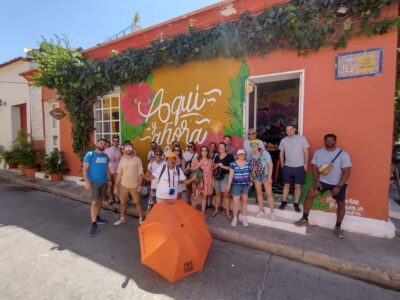 ★ 4.9Cartagena: Historic Center and Getsemaní Shared Walking TourFrom $122,716 reviews
 ★ 4.7Cartagena de Indias: 2-Hour Sunset CruiseFrom $311,105 reviews
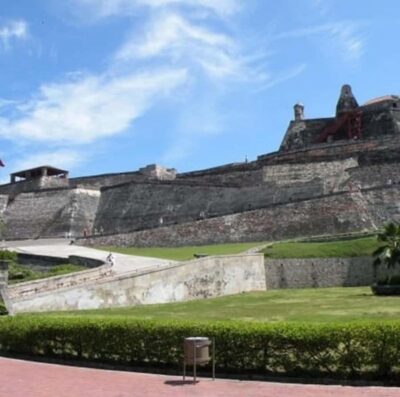 ★ 4.0Cartagena: Panoramic City Tour, Monuments, Walls, CastleFrom $15636 reviews
 ★ 4.4Cartagena: Guided Tour, with La Popa Convent, and San FelipeFrom $45599 reviews
 ★ 4.2Cartagena: BILINGUAL CITYTOUR + SAN FELIPE CASTLE & Old cityFrom $29387 reviews
 ★ 4.5Cartagena: Walled City and Getsemani Shared Walking TourFrom $16352 reviews
 ★ 4.43-in-1 Panoramic city tour Bogotá-beyond the traditionalFrom $42248 reviews
 ★ 4.8Cartagena: Walled City & Getsemani Private TourFrom $69107 reviews
Where else this tour turns up