
REVIEW · CARTAGENA WALLED CITY & GETSEMANí WALKS
Tour Compartido al Castillo San Felipe de Barajas Cartagena
Cartagena has a way of telling stories with stone. This shared tour connects Getsemaní to San Felipe de Barajas through strategy, resistance, and big fortress views. You’ll walk the same kind of route that helped this city survive attackers who thought it was unbeatable.
What I like most is the mix of people and architecture. You get defense stories you can actually picture, then you reach viewpoints like the hill of San Lázaro and see why height mattered.
One thing to consider: it’s a 7 km walk on city streets with rest stops, so bring comfortable shoes and expect some real walking time.
In This Review
- Key points to know before you go
- Getsemaní to San Felipe, the walk that makes Cartagena make sense
- Plaza de la Trinidad: your briefing in Getsemaní
- Getsemaní streets and the symbols of resistance
- The route to the castle, plus a Chocolate Museum pause
- San Felipe de Barajas Fortress: the biggest military stronghold in Cartagena
- Entrance logistics you need to plan for
- Fortress tunnels and the sound-warfare idea
- Hill of San Lázaro: why the city was controlled from above
- Why this tour is worth the time (and who should pick it)
- How the guides can make or break the fortress story
- Should you book this San Felipe de Barajas shared tour?
- FAQ
- Where is the meeting point for the tour?
- What is the tour duration?
- What is included in the $12 tour price?
- Is the castle entrance included?
- Do I need to speak Spanish?
- How much walking is involved?
- What should I bring?
- Is audio recording allowed?
- Is the tour suitable for kids?
- Is the tour wheelchair accessible?
Key points to know before you go
- Getsemaní starts the story at Plaza de la Trinidad, Cartagena’s community heart
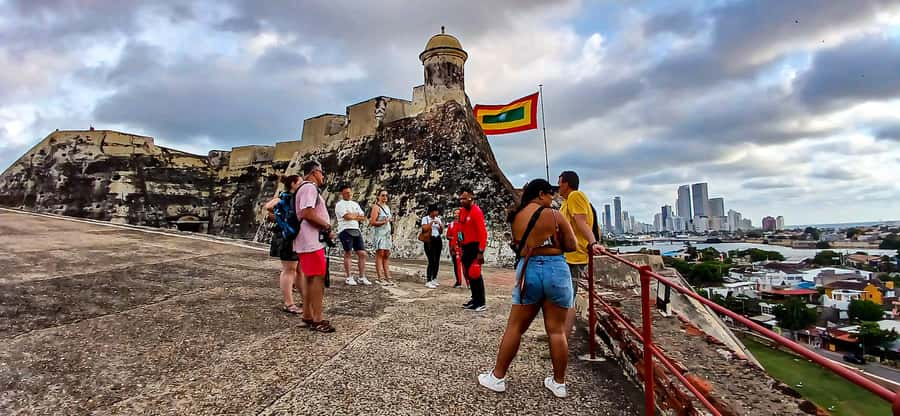
- San Felipe de Barajas is the main act, Cartagena’s biggest military fortress
- Tunnels and sound strategy are a standout, including an acoustic-warfare idea
- Hill of San Lázaro viewpoints help you understand how the city was controlled
- Chocolate Museum stop gives you a quick break plus something to taste
- Entrance is separate, you buy your castle ticket at the official booth
Inside the walls, a few more reviewed walks
- Cartagena: Historic Center and Getsemaní Shared Walking Tour★ 4.9 · 2,716 reviews
- Cartagena de Indias: 2-Hour Sunset Cruise★ 4.7 · 1,105 reviews
- Cartagena: Panoramic City Tour, Monuments, Walls, Castle★ 4.0 · 636 reviews
- Cartagena: Guided Tour, with La Popa Convent, and San Felipe★ 4.4 · 599 reviews
Getsemaní to San Felipe, the walk that makes Cartagena make sense
If you only visit Cartagena’s pretty corners, you miss the engine that drove the city forward. This tour does the opposite. It takes you from the lived-in edge of Getsemaní to the heavy stone of San Felipe de Barajas, the fortress built to protect Cartagena when empires came looking.
The route works because it’s not random sightseeing. Your guide ties neighborhood life, inequality, and rebellion to how the fortress was designed. In other words, you’re not just looking at walls. You’re learning why those walls had to work.
It’s also a shared group format, so it moves at a human pace. You’ll cover a lot ground, but you’re not doing it alone in a hurry. Expect stops for explanations, and a few photo and tasting moments.
Plaza de la Trinidad: your briefing in Getsemaní
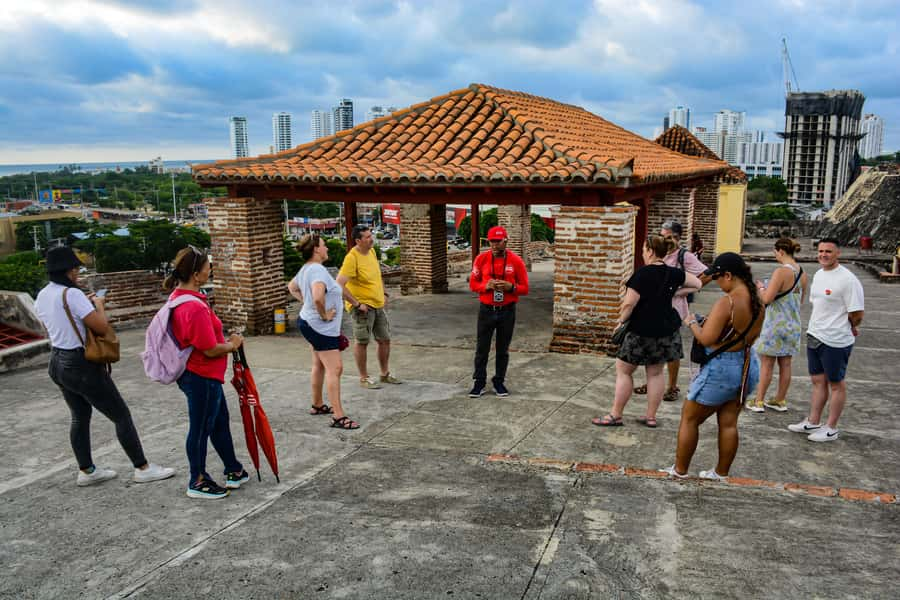
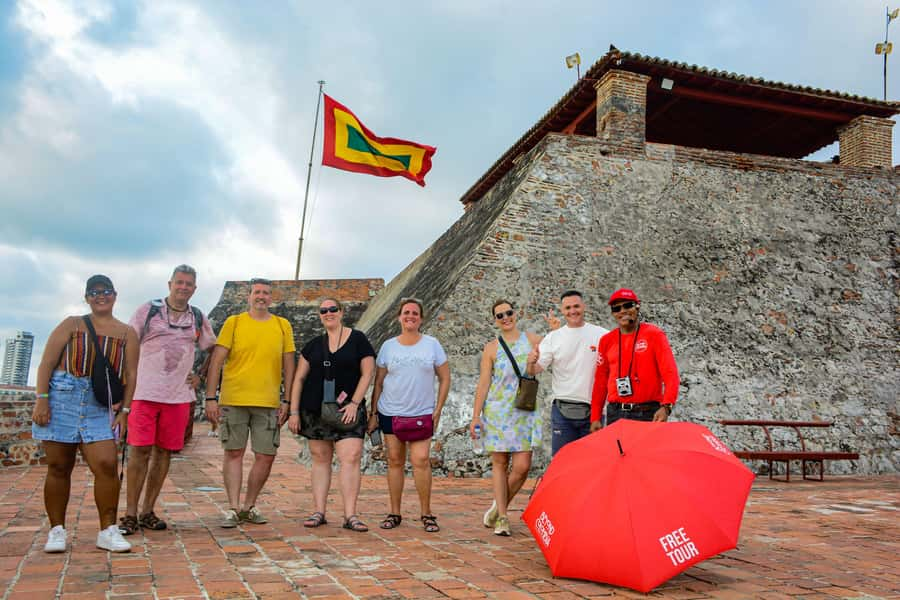
You start in Plaza de la Trinidad in Getsemaní, meeting your guide at a spot marked by red umbrellas. This matters because Getsemaní isn’t just a background neighborhood. It’s where the story begins.
Your guide sets context fast: this was historically home to sailors, artisans, and freed Afro-descendants, with rebels shaping life from the outside while Spanish elites stayed safer behind walls. That contrast becomes the theme of the whole walk, because the fortress story is really about protecting a city, not a building.
I like how this start feels like a street-level lesson. You can actually look around and see why the neighborhood would have pushed back, and why change would have come from people who lived close to risk.
Getsemaní streets and the symbols of resistance
After the square briefing, the tour shifts into walking stories. You’ll learn why Getsemaní became an engine of independence and how music, street life, and resistance formed its identity. This part is where you start connecting everyday culture with big historical stakes.
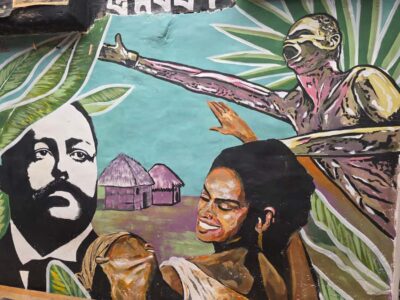
Your guide also points out meaning behind murals and cultural symbols. That’s important because Cartagena’s street art is more than decoration here. It’s a shorthand for memory, pride, and survival.
You’ll also talk about social inequality as a trigger for rebellion. This isn’t taught as a lecture where people in history books made decisions. It’s explained as pressure that built over time, and then moved into action.
One practical note: some areas can be busy, so keep your belongings secure and stay aware while you’re listening.
The route to the castle, plus a Chocolate Museum pause
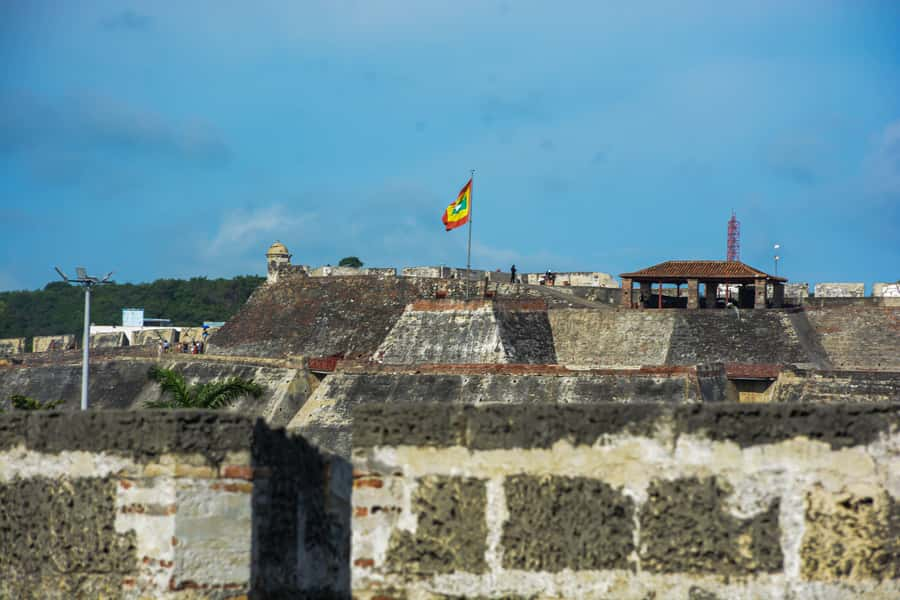
You don’t just teleport from neighborhood to fortress. You walk, including the stretch over Pedro Heredia Bridge, with several rest stops along the way. The tour covers around 7 km total, and the pacing is designed around guided talking and short breaks, not nonstop marching.
The Chocolate Museum stop is a small win inside the bigger history theme. It breaks the walking rhythm, and you get a photo moment plus a tasting. Even if you’re not a chocolate fanatic, it’s a useful breather during a 150-minute tour.
Bring water. Cartagena walking can be dry work, and you’ll be happier if you hydrate before you feel thirsty.

San Felipe de Barajas Fortress: the biggest military stronghold in Cartagena
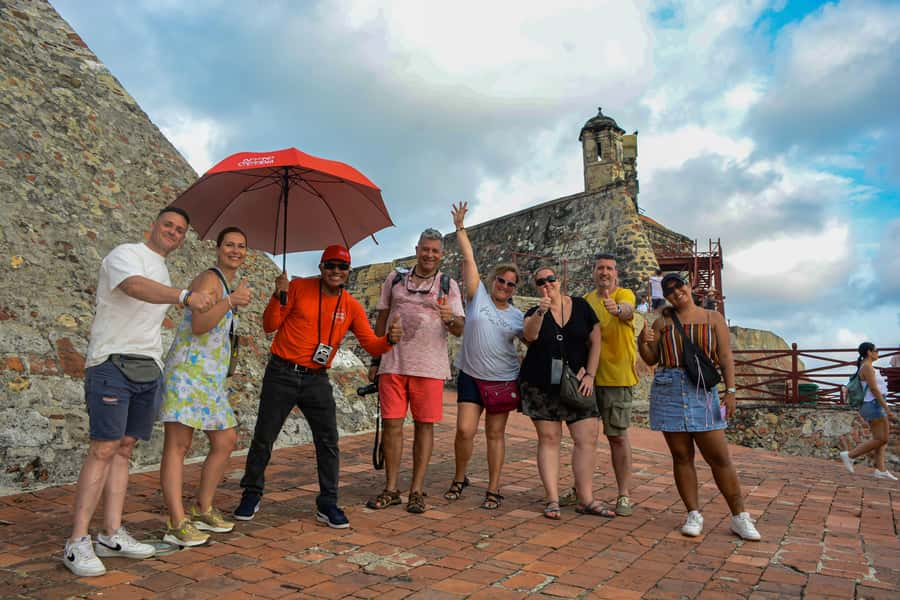
When you finally approach the fortress, you stop thinking like a tourist and start thinking like a strategist. San Felipe de Barajas is described as Cartagena’s largest fortress and military stronghold, and once you’re facing it, that size feels real.
Here’s the value of this stop: the guide doesn’t treat the fortress as one dramatic view and then done. You learn how the design made it hard to conquer, why pirates and foreign empires tried and failed, and how clever military choices shaped the defense.
You’ll also get the name that anchors the fortress narrative: figures like Blas de Lezo. The point of bringing up names like his is to show how courage and planning worked together. You’re seeing a symbol, but you’re also learning why it earned that status.
Entrance logistics you need to plan for
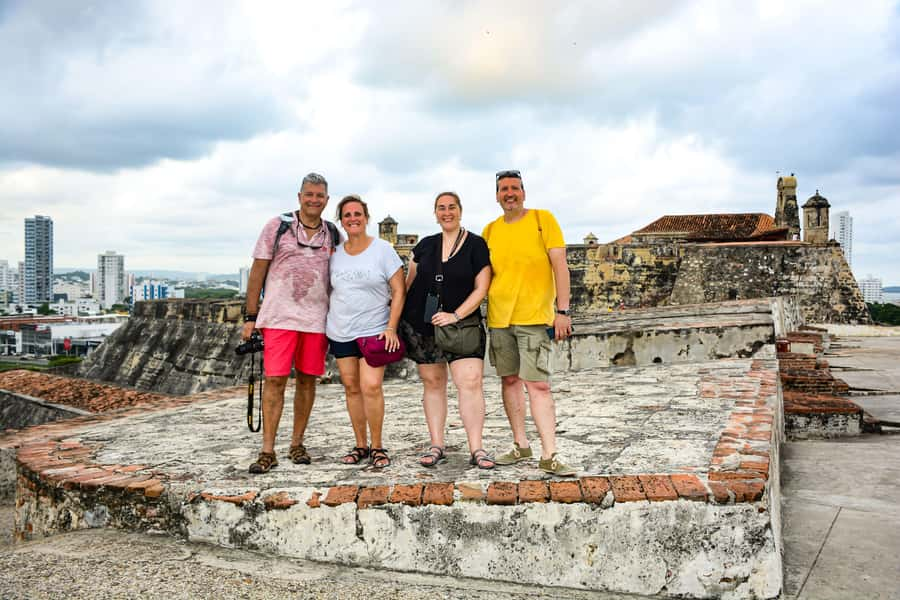
Important: once you reach the fortress entrance, each person must buy their own entrance ticket at the official booth to continue inside.
The listed entrance cost is $33,000 COP per person. If you want to save time and you’re comfortable paying in advance, buying online might be an option, but the key point is the ticket is separate from the $12 tour price.
Plan your budget with this in mind. The tour itself is a bargain if you’re already heading to the area, but the castle entry fee is a real add-on, especially if you’re traveling as a small group.
Also, note that audio recording is not allowed. If you rely on audio notes, be ready to switch to regular photos or handwritten notes.
Fortress tunnels and the sound-warfare idea
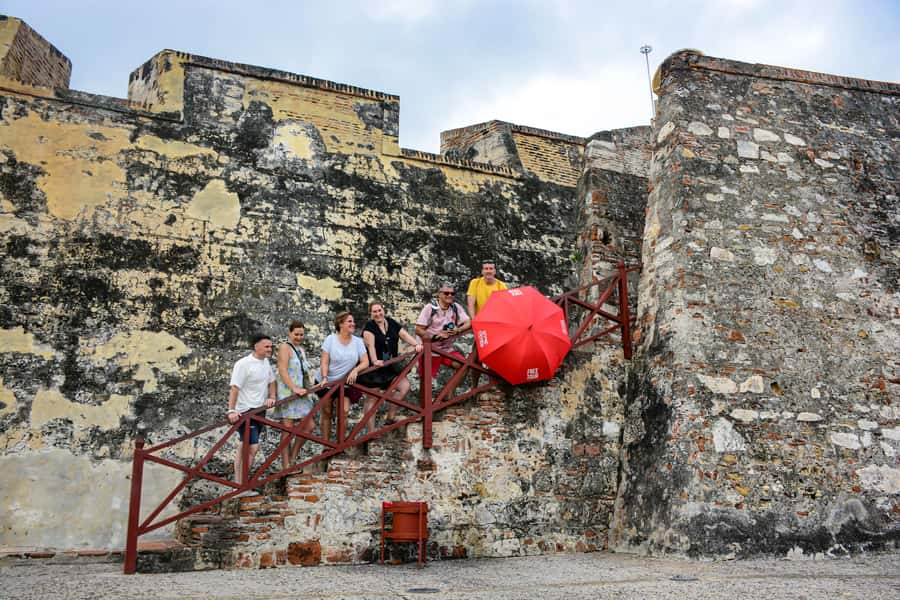
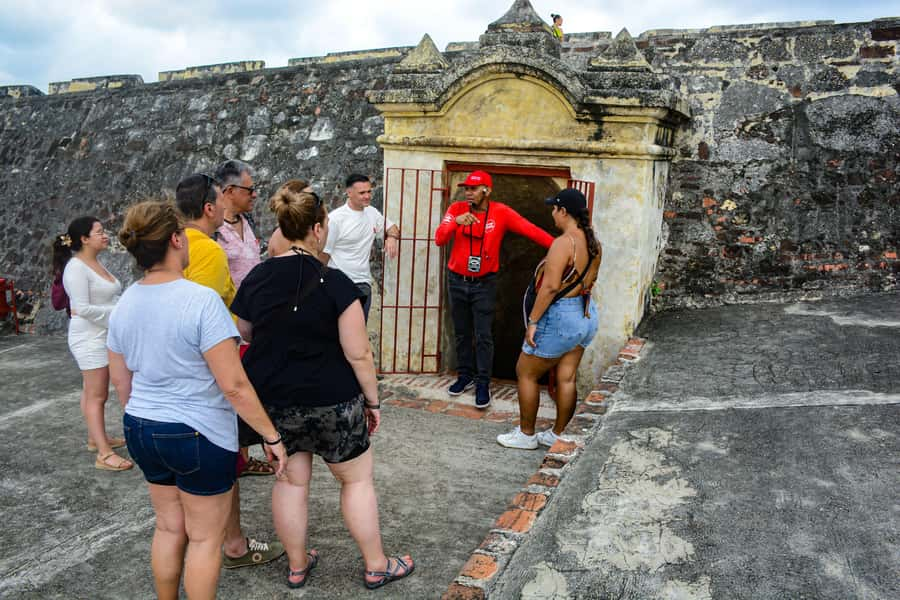
One of the most memorable parts is the fortress tunnels. These are described as strategic passages used for defense and surveillance, designed so soldiers could move and monitor threats.
There’s also a specific standout detail: a secret system of acoustic tunnels. The story goes that defenders could hear enemies walking above while invaders could not hear what awaited them inside. In this tour framing, sound becomes a weapon.
Even if you treat that element as a dramatic historical explanation rather than a science lab, it still teaches you something useful: the fortress wasn’t only about blocking attacks. It was about information and advantage.
And you can feel that idea in how the spaces are explained. The tour helps you imagine the flow of movement and the logic behind being able to sense what’s happening above ground.
Hill of San Lázaro: why the city was controlled from above
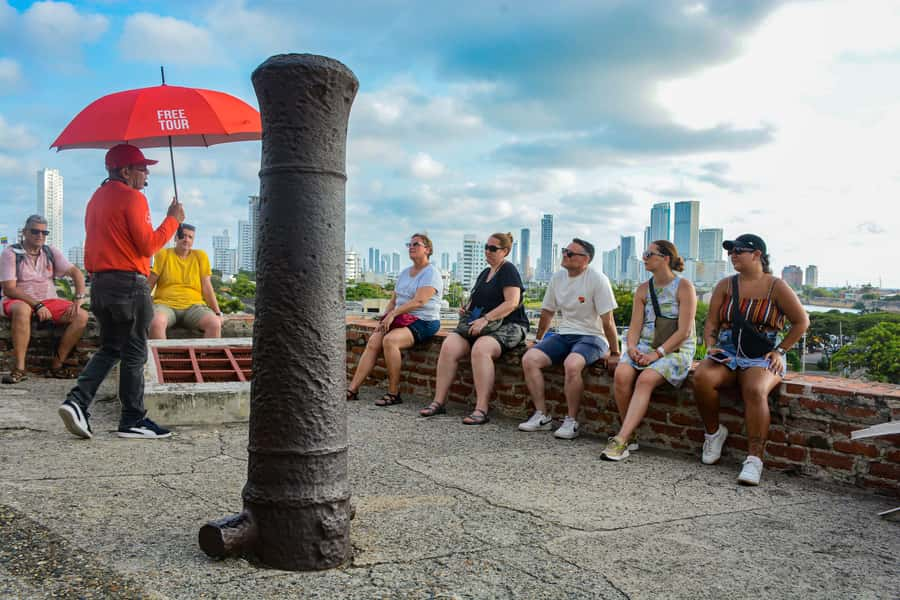
The hill of San Lázaro is another key piece of the puzzle. You learn why it was a key vantage point for controlling all of Cartagena and how being able to see, track, and respond would have mattered during attacks.
This is where the tour shifts into clearer “why” territory. When a fortress and a viewpoint work together, it’s not just about looks. It’s about covering angles, making approach routes riskier for attackers, and keeping defense coordinated.
When you reach the viewpoints, pause for the views and let the guide finish the story. This is one of those moments where the history stops being abstract, because the city’s layout starts to match the explanation you just heard.
Why this tour is worth the time (and who should pick it)
This is a 150-minute shared walking tour that hits a rare combination: street-level culture in Getsemaní, then heavy-duty military architecture at San Felipe de Barajas. For me, that’s the sweet spot. It doesn’t just show you where the fortress is. It shows you why it mattered to the people who lived outside the walls.
The price is the other big reason to consider it. At $12 per person, you’re paying for the guided route, interpretation, the Chocolate Museum stop, and built-in local recommendations and discounts via a Free Tour Map. The only big separate cost is the castle entrance ticket.
Where it may not fit:
- It’s not suitable for wheelchair users.
- It’s not a good fit for children under 10.
- It may be tough for people over 70, since it’s a long walk with steps and busy areas.
- It’s a walking tour, so if you hate walking and long explanations, you’ll feel it.
If you like history you can walk through, and you want Cartagena to feel connected rather than chopped into separate attractions, this is a strong choice.
How the guides can make or break the fortress story
One good thing here is how often the guides get called out for delivery. Depending on the day, you might get names like Ronaldo, Luis Carlos, Luis Fernando, or John Serrato, and the common theme in their approach is clear historical explanation and smooth storytelling.
That matters because a place like San Felipe can feel overwhelming if you’re left with signs only. A good guide turns tunnels, viewpoints, and battle stories into a single line you can follow.
One tip from real-world experience shared with the tour format: pack a small snack or plan to handle hunger. The tour includes a chocolate tasting, but it’s still a walking session, and it’s easier if you don’t arrive hungry.
Should you book this San Felipe de Barajas shared tour?
Book it if you want Cartagena to feel connected, not like a checklist. You’ll get the human side of Getsemaní first, then the strategic side of San Felipe, plus a viewpoint stop that makes the defense logic easier to understand.
Don’t book it if you want a short, low-effort experience. This is a walk, and it’s about history told on the move. Also, budget for the separate $33,000 COP entrance ticket.
If you’re planning to explore Getsemaní anyway, this tour is a smart way to add depth without spending a full day. And if you’re the type who asks why things were built a certain way, you’ll leave feeling like you finally understand why Cartagena called itself La Heroica.
FAQ
Where is the meeting point for the tour?
You meet at Plaza de la Trinidad in Getsemaní, with the tour team using red umbrellas.
What is the tour duration?
The tour lasts about 150 minutes.
What is included in the $12 tour price?
The tour includes the Spanish guide, a guided and safe walk from Getsemaní to the castle, a Chocolate Museum photo and tasting stop, and local recommendations. It also includes discount benefits with recommended local partners via a Free Tour Map.
Is the castle entrance included?
No. Castle entrance is not included. The stated cost is $33,000 COP per person, and you buy your ticket at the official booth when you arrive.
Do I need to speak Spanish?
The live tour guide is Spanish.
How much walking is involved?
You’ll walk around 7 km in total, with several rest stops.
What should I bring?
Bring comfortable shoes and water.
Is audio recording allowed?
No. Audio recording is not allowed.
Is the tour suitable for kids?
It is not suitable for children under 10.
Is the tour wheelchair accessible?
No. It is not suitable for wheelchair users. It also lists people over 70 as not suitable.
The Rest of Our Cartagena Reviews


Everything Else We Reviewed in Cartagena


The Walled City, Three More Ways
Just added to our Cartagena shelf
- White Night Boat Party: Dinner Buffet, Dancing and Open Bar
★ 4.6 · 3 reviews - The best sunset tour in the bay: Open bar party & fun
★ 5.0 · 3 reviews - Tayrona Park adventure in Santa Marta: Cabo San Juan from Cartagena
★ 3.8 · 3 reviews - Cartagena: Rosario Islands Private Boat Tour
★ 4.8 · 3 reviews - Mud Volcano Tour in Cartagena with Lunch
★ 3.4 · 3 reviews
Cartagena Walled City & Getsemaní Walks, compared.
 ★ 4.9Cartagena: Historic Center and Getsemaní Shared Walking TourFrom $122,716 reviews
 ★ 4.7Cartagena de Indias: 2-Hour Sunset CruiseFrom $311,105 reviews
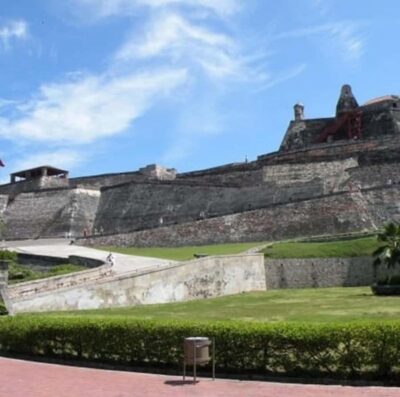 ★ 4.0Cartagena: Panoramic City Tour, Monuments, Walls, CastleFrom $15636 reviews
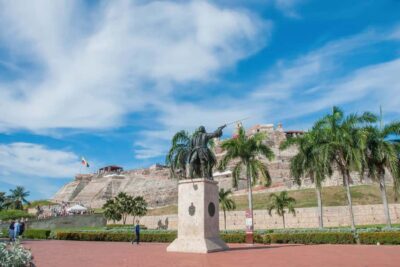 ★ 4.4Cartagena: Guided Tour, with La Popa Convent, and San FelipeFrom $45599 reviews
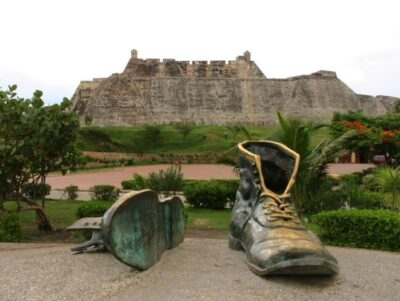 ★ 4.2Cartagena: BILINGUAL CITYTOUR + SAN FELIPE CASTLE & Old cityFrom $29387 reviews
 ★ 4.5Cartagena: Walled City and Getsemani Shared Walking TourFrom $16352 reviews
 ★ 4.43-in-1 Panoramic city tour Bogotá-beyond the traditionalFrom $42248 reviews
 ★ 4.8Cartagena: Walled City & Getsemani Private TourFrom $69107 reviews
Where else this tour turns up