
REVIEW · BOGOTá BIKE & E-BIKE RIDES
Biking in Full Color: Urban Art Bike Tour
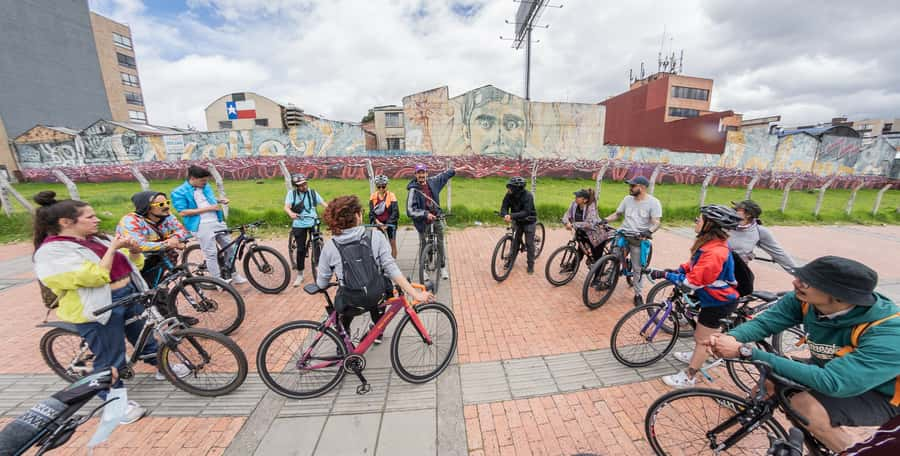
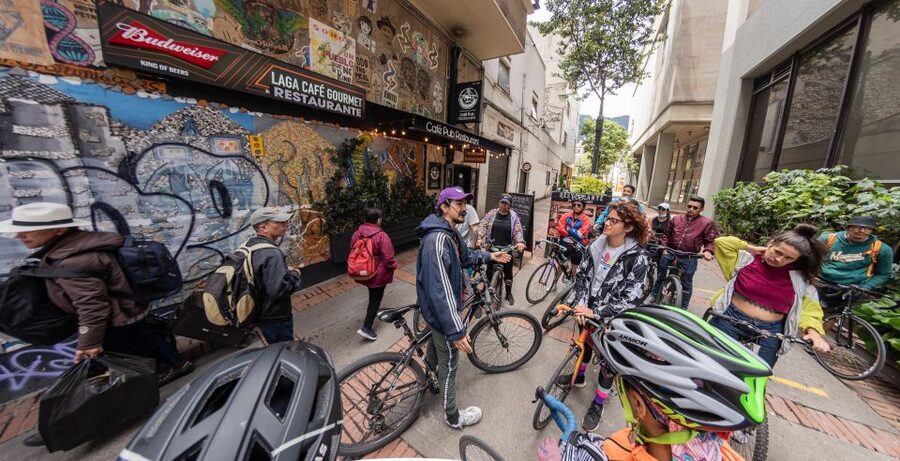
Bogotá graffiti hits harder on two wheels. This urban art bike tour threads 13 km of bike lanes through La Candelaria and three nearby neighborhoods, with stops that focus on street art by female artists and a mural tied to Colombia’s peace and post-conflict story. I like that the route is built for motion, not standing still, so the city feels connected instead of chopped into separate photo stops. One consideration: you’ll be riding through real streets as part of a city tour, so good shoes and basic comfort with cycling help.
The best part is the storytelling. When Diego was the guide on a recent departure, he used the walls as lesson plans, explaining art, graffiti, and context across multiple neighborhoods. Expect a guide who can link what you’re seeing to why it matters in Colombia, including symbolism and the social side of street art. You also get a coffee factory stop and some giant murals, which turns a “street art walk” into something closer to an outdoor history class.
If you’re hoping for a gallery-only experience, this is not that. This tour is hands-on and street-level, and the point is the art movement in the city, not museum curation.
In This Review
- Key Highlights You’ll Actually Remember
- Where The Tour Starts: Find The Big Red Wall in La Candelaria
- The 3-Hour Ride Plan: 13 km, Four Neighborhoods, One Story
- How Ciclovía Sundays and Bike Lanes Change the Experience
- La Candelaria to Centro: Spot the Street Art Movement Fast
- The Female Artists Focus: Why This Lens Matters
- Santa Fe and La Macarena: Giant Murals and Meaningful Walls
- The Peace and Post-Conflict Mural Stop: Art With a Social Job
- The Coffee Factory Stop: Why a Break Fits a Street Art Tour
- Guide Style and What You’ll Learn Along the Way
- Biking Gear, Limits, and Comfort Tips That Matter
- Price and Value: Is $62 Worth It?
- Who This Tour Suits Best
- Should You Book This Bogotá Urban Art Bike Tour?
- FAQ
- What’s the duration of the Urban Art Bike Tour in Bogotá?
- How far do we ride during the tour?
- Where do we meet?
- What should we look for to find the guide?
- What language is the guide available in?
- Does the tour run in rain?
- What should I bring and what is not allowed?
- Is the tour booked per person and can I change plans?
Key Highlights You’ll Actually Remember
- La Candelaria start at the big red wall near Carrera 3#12-52, easy to spot once you know what to look for
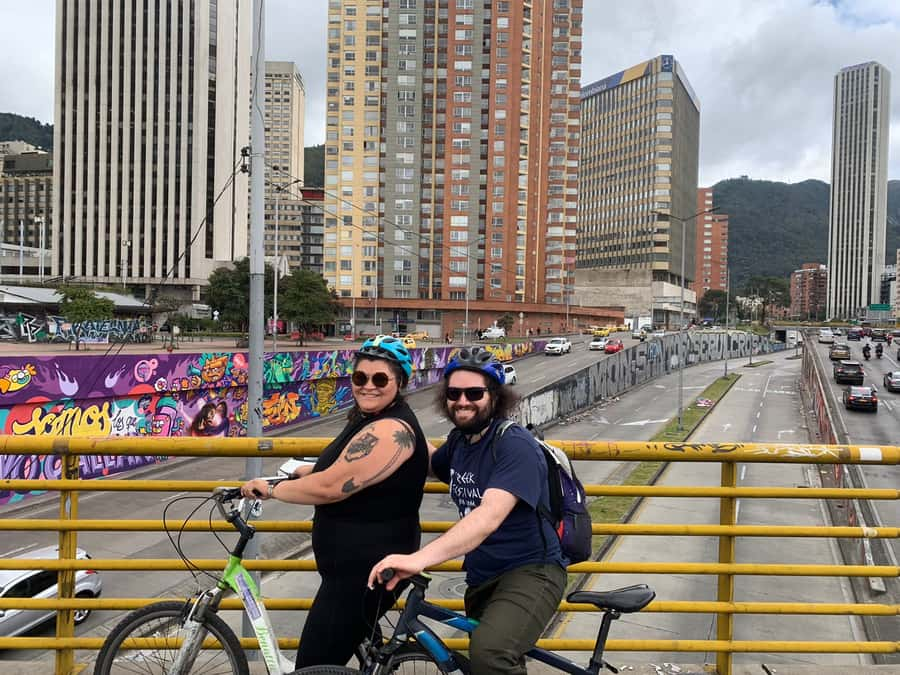
- 13 km by bike through Centro, Teusaquillo, Santa Fe, and La Macarena in about 3 hours
- Street art by female artists, giving you a focused lens on who shapes the wall culture
- A peace and post-conflict mural stop, where the art connects to real social change
- A coffee factory break plus giant murals, so you get both culture and visual scale
- A guide who blends technique, meaning, and neighborhood stories, not just random facts
Two wheels through the city, other routes reviewed
- Bogotá: Shared Bike Tour★ 4.6 · 83 reviews
- Bogotá Private Bike Tour with Transportation★ 5.0 · 65 reviews
- Bogotá Private Bike Tour with Transportation★ 4.6 · 14 reviews
- Biking in Full Color: Urban Art Bike Tour★ 3.2 · 4 reviews
Where The Tour Starts: Find The Big Red Wall in La Candelaria
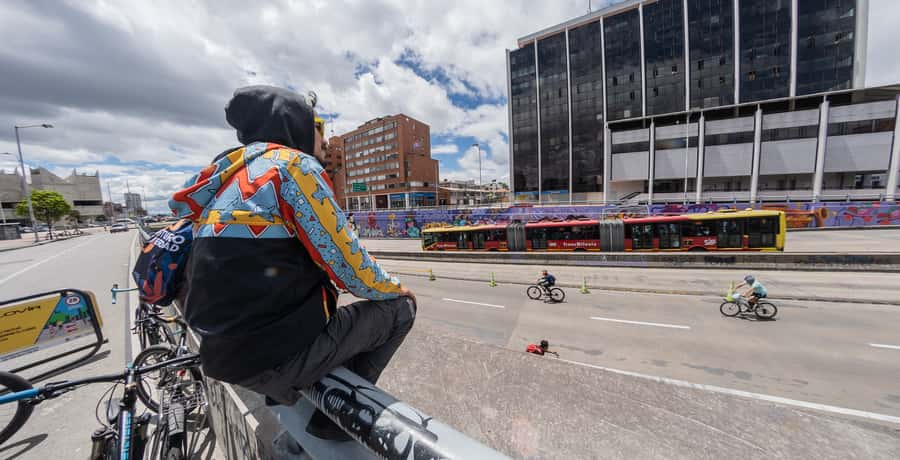
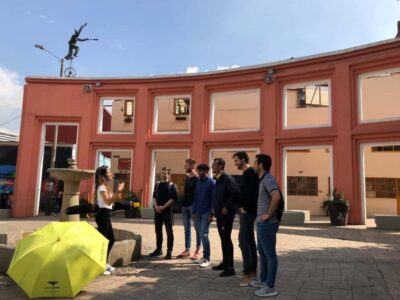
The meeting point is simple once you know the landmark: you’ll meet in front of the big red wall at Carrera 3#12-52 in La Candelaria. Look for your guide wearing a purple hoodie, cap, or umbrella. That last bit matters more than you think, because La Candelaria has lots of walls, signage, and foot traffic.
La Candelaria is a good starting neighborhood for this kind of tour because it’s dense with cues. You can’t miss that the city’s street art scene belongs to everyday life here, not to some separate art district. Starting in this area also sets expectations early: you’ll learn to “read” walls as you move, rather than waiting until the tour is over to understand what you saw.
Practical tip: arrive a little early, not to be punctual for its own sake, but to get your bearings before your group rolls out. You’ll enjoy the ride more when you’re not trying to catch up with the start time.
The 3-Hour Ride Plan: 13 km, Four Neighborhoods, One Story
This is a 3-hour tour built around movement. You’ll cover about 13 km of bike trails as you pass through four neighborhoods: Centro, Teusaquillo, Santa Fe, and La Macarena. The value of that structure is that the art does not stay in one mood. Each neighborhood has its own character, and the murals you see help you notice how the city’s social and political conversations shift from place to place.
Here’s how I’d think about the flow. You start in La Candelaria, where the city’s wall language is easy to spot. Then the tour expands into other areas of the city center zone, so you can compare styles, themes, and what kinds of issues artists choose to put on the street. By the time you hit the last neighborhoods, you’re not just collecting photos. You’re building a map in your mind of how Bogotá talks through walls.
The tour also includes multiple stops, not a single “look, bike, look again” format. That matters because street art is layered. A mural might look straightforward from far away, but a strong guide can show you the symbolism, the method, and the message, which is where the tour becomes more than decoration.
How Ciclovía Sundays and Bike Lanes Change the Experience
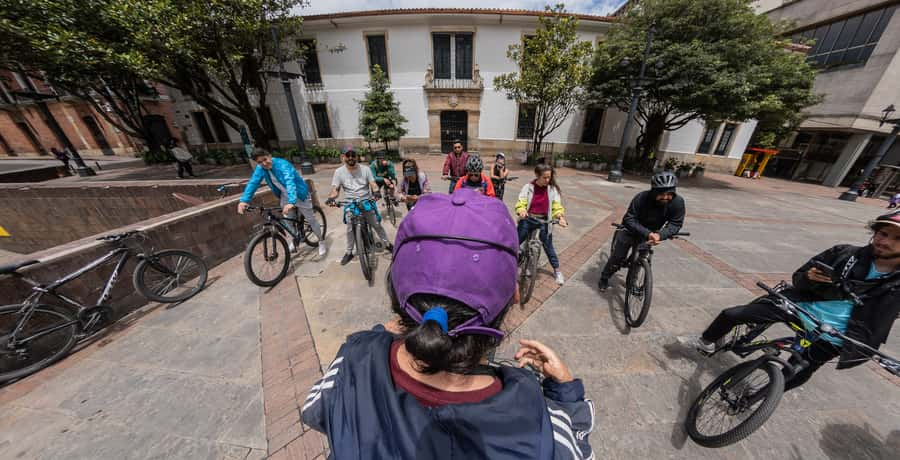
You’ll ride using the city bike lanes, and on Ciclovía Sundays you’ll use the expanded route network that opens up more space for cyclists and cultural activities in the morning. This is more than a technical detail. The roads you get can shape what you notice, how often you stop, and how comfortable it feels to ride between mural clusters.
On days without Ciclovía, you still get a focus on bike-friendly paths, which helps you keep the rhythm of the tour. On Ciclovía days, the city usually feels less like you’re threading through tight lanes and more like you’re part of a larger movement. That can make the tour feel more communal, especially when you’re learning the meaning behind art that’s meant to reach people in public space.
Either way, biking is the trick that makes this format work. You’re not limited to the slow pace of a walking tour, and you’re not stuck with the fast pace of a hop-on bus. You get a middle speed that helps you both see and listen.
La Candelaria to Centro: Spot the Street Art Movement Fast
Your early part of the route is where you start learning the visual grammar. You’ll see murals and graffiti that are part of Bogotá’s street art movement, including work that connects to politics and social life. The tour’s goal here is to help you recognize patterns quickly, like recurring themes, stylistic choices, and how artists use public space to communicate.
In practical terms, this is where you should stay alert even if you think you already understand street art. A good mural can look like color from one angle and become a message from another. When the guide explains what you’re seeing, it helps you spot how the art is constructed, not just what it shows.
This also sets up the later emphasis on female artists. When you learn to read themes early, the tour can make that focus feel intentional rather than random.
The Female Artists Focus: Why This Lens Matters
One of the tour’s highlights is exploring walls adorned with illustrations by female artists. That focus is not just about variety. It changes the questions you ask as you look.
Street art is often discussed in broad strokes, but when you repeatedly encounter women’s work across multiple stops, you start noticing different storytelling choices. You may see themes of identity, power, memory, and community expressed in distinct ways. Even if two murals share similar colors, their messages can land differently based on who is speaking through the wall.
I like this lens because it keeps you from turning the tour into a simple “cool art, next stop” habit. Instead, you’re learning how perspectives shape the messages on the street. That makes your photos better too, because you’re capturing details you actually understand.
Santa Fe and La Macarena: Giant Murals and Meaningful Walls
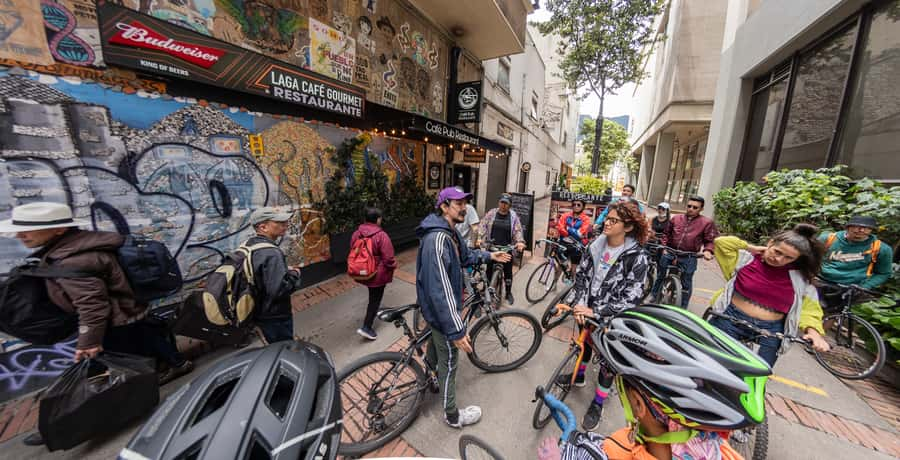
As you move deeper into the route, you’ll hit some of the city’s most giant murals. Scale is part of the experience here. A large wall gives artists room to build scenes, layer symbols, and place characters or text in a way that smaller works cannot. On a bike, you can experience the mural like an environment rather than a flat postcard.
Santa Fe and La Macarena are especially important in this format because they give you contrast. You’re not just moving through space. You’re watching the city’s visual language change, while the guide ties those changes to neighborhood context.
This is where the tour feels like it’s doing double duty. Yes, it’s art viewing. But it also uses art to explain Colombia. You’ll get stories that connect what’s on the walls to local realities, including social struggles and the ways street art has become a communication channel.
The Peace and Post-Conflict Mural Stop: Art With a Social Job
One highlight is a mural symbolizing peace and post-conflict. This is the emotional center of the tour, because street art here is not only aesthetic. It’s part of how communities process change, remember trauma, and talk about what comes next.
When the guide explains this kind of work, it’s worth paying attention to symbolism. Peace murals can include signs, colors, and figures that look simple at first glance. Then the explanation makes the piece feel specific to a time and a conversation. That’s why this stop works within a biking route. By the time you reach it, you’ve already collected the visual context, so the meaning lands harder.
If you care about Colombia beyond its tourist headlines, this part is a real value add.
The Coffee Factory Stop: Why a Break Fits a Street Art Tour
You’ll make a stop at a coffee factory during the 3-hour loop. This isn’t random downtime. It helps break up the intensity of wall-to-wall visuals, and it also grounds the tour in local culture.
Coffee is a shared cultural thread in Colombia, and adding it to a street art bike tour makes the day feel more connected. You’re not only learning art theory and social symbolism. You’re also experiencing something everyday that connects to Colombia’s identity.
Also, the timing works. You get a rhythm of riding, stopping, learning, then a reset. That makes it easier to stay sharp for the later neighborhoods and giant mural stops.
Guide Style and What You’ll Learn Along the Way
The tour’s standout ingredient is the guide. Your guide is passionate about street art and shares the history, techniques, and meanings behind each artwork you see. The company also emphasizes that the guide is a renowned urban artist, and in a tour led by Diego, the group got especially strong art and history explanations across multiple parts of the city.
In my view, this is what separates a good street art tour from a casual one. Anyone can point at a wall and say, That’s a mural. The real value is when the guide helps you understand how artists build their message and how a neighborhood context shapes what ends up painted on public surfaces.
If you like learning, ask questions during the stops. Most guides on this kind of tour are used to that, and it can turn a stop into a conversation instead of a lecture.
Biking Gear, Limits, and Comfort Tips That Matter
The tour asks you to bring sports shoes. That’s a good call for a few reasons. You’ll be moving, stopping, and getting on and off a bike without switching to formal walking shoes that feel stiff or slick.
Not allowed: backpacks and valuables. That’s important for comfort and security. Street art tours involve a lot of stops, and you don’t want your bag bouncing around or forcing you to manage fragile items while you’re paying attention to a mural.
Rain or shine: the tour runs in both kinds of weather, and you’ll get a rain poncho. That means you should plan to wear clothes that can handle a short, wet stretch without ruining your day. If you get cold easily, layering makes sense.
If you’re thinking about camera gear, keep it simple. The tour includes outdoor bike time and stops for mural viewing, so fast access to your phone or camera is better than a complicated setup you have to keep adjusting.
Price and Value: Is $62 Worth It?
At $62 per person for 3 hours, you’re paying for more than a basic walking tour. You’re covering about 13 km by bike, hitting multiple neighborhoods, and getting guided interpretation at each stop. That interpretation is the product, not just the distance.
Here’s where value shows up for me:
- You’re getting art education tied to meaning, not only visuals
- You’re moving efficiently between neighborhoods, which keeps the tour from feeling like a long queue of standing around
- You’re including a coffee factory stop plus giant murals, which adds variety
- You’re getting a focus on female artists and a specific peace and post-conflict mural theme
One more note: the overall rating is 3.2 based on 4 reviews. That’s not a dealbreaker, but it does mean you should treat this as a specialized street art experience. If your main goal is big-name tourist sights or guaranteed “wow” artwork on every stop, you may be happier with a classic highlights tour.
If your goal is to understand Bogotá’s wall culture through context and biking, the price looks more fair.
Who This Tour Suits Best
This is a great fit if you:
- Love street art and want to understand the why, not just the what
- Want a city experience that blends politics, creativity, and everyday life
- Prefer active sightseeing, where you ride between areas instead of only walking
- Like tours with a clear theme, like the focus on female artists and the peace mural
It’s also a smart choice if you’re short on time. In three hours, you get a lot of city feeling, multiple mural stops, and a story-driven route through central neighborhoods.
Should You Book This Bogotá Urban Art Bike Tour?
I’d book it if you’re excited by public art, stories behind murals, and learning how Bogotá uses walls to talk. The biking format is a practical way to cover ground, and the tour’s theme, especially the focus on female artists and the peace and post-conflict mural, gives the experience direction.
Skip it if you dislike city riding, you don’t want to be out in the weather, or you want a mostly passive, low-movement sightseeing day. This tour is built around motion and interpretation, and it works best when you lean into both.
If that sounds like you, this is one of the more memorable ways to see Bogotá’s street art scene without getting stuck doing only one type of sightseeing.
FAQ
What’s the duration of the Urban Art Bike Tour in Bogotá?
The tour lasts 3 hours.
How far do we ride during the tour?
You’ll cover about 13 km of bike trails through four neighborhoods.
Where do we meet?
You’ll meet in front of the big red wall at Carrera 3#12-52 in La Candelaria.
What should we look for to find the guide?
Look for the guide wearing a purple hoodie, cap, or umbrella.
What language is the guide available in?
The live tour guide is available in English, Spanish, French, German, and Italian.
Does the tour run in rain?
Yes, the tour runs rain or shine, and you’ll receive a rain poncho.
What should I bring and what is not allowed?
Bring sports shoes. Backpacks and valuables are not allowed.
Is the tour booked per person and can I change plans?
It’s $62 per person. You can reserve now and pay later, and you can cancel up to 24 hours in advance for a full refund.
Everything Else We Reviewed in Bogota
Ride Bogota
Bogota on Two Wheels
Just added to our Bogota shelf
- Fun Graffiti Workshop: The Art of Aerosol and Color
★ 5.0 · 3 reviews - From Bogota: White Water Rafting Experience
★ 4.4 · 3 reviews - From Bogota: Excursion to Jaime Duque Park
★ 5.0 · 3 reviews - Bogotá: La Candelaria Food Tour with Tastings
★ 4.2 · 3 reviews - Walking tour José Celestino Mutis Botanical Garden 3 hrs
★ 5.0 · 3 reviews
Bogotá Bike & E-Bike Rides, compared.
 ★ 4.9Bogota: Bicycle City TourFrom $192,156 reviews
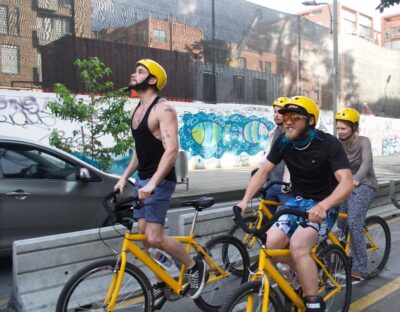 ★ 4.6Bogotá: Shared Bike TourFrom $1983 reviews
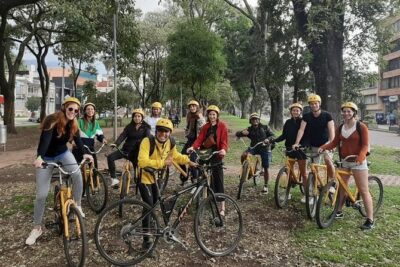 ★ 5.0Bogotá Private Bike Tour with TransportationFrom $4765 reviews
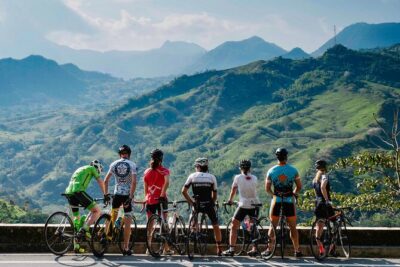 ★ 5.0Colombia cycling tripFrom $2,97463 reviews
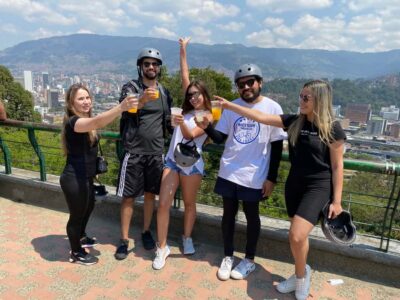 ★ 4.9E-Bike City Tour Medellin with Local beer and SnacksFrom $3655 reviews
 ★ 4.7Bike Tour Medellin with Snacks and Local BeerFrom $3249 reviews
 ★ 4.5Cartagena Bike TourFrom $9037 reviews
★ 4.6Bogotá Private Bike Tour with TransportationFrom $4914 reviews
Where else this tour turns up