
REVIEW · ESCOBAR ERA HISTORY TOURS
Post-conflict Shared Tour (Paul) and Violence Medellin
History here has street-level footprints. This post-conflict Medellín walk turns everyday corners into a clear story about the road from violence toward peace, and it does it in a small group. I like the way each stop has a point, not just a photo-op, and I also like the surprisingly strong value for the price. One drawback to note: a couple locations are more about what you learn than what you see.
You start at San Antonio Park and finish near the Memory House Museum area, with about 8 stops over roughly 3 hours. Expect walking, not museum time, and plan for a steady pace. If you want only dramatic sights, you might feel slightly let down, but if you want context, this format is exactly right.
The best part is the human, story-first delivery from guides such as Paul, Miguel, Daniel, Manuel, Alejandro, and Sebastian, who are repeatedly praised for making the conflict and social dynamics easier to understand. There is also an honest tone to the way they connect history to Medellín today, including the role of education and human rights. (And yes, I appreciate that the tour openly leans into meaning rather than flash.)
In This Review
- Key things you should know before you go
- Entering the story at Parque San Antonio
- Plazuela San Ignacio and why education gets center stage
- Comfama San Ignacio: art, culture, and education in one place
- Torres de Bomboná and the meaning of modern architecture
- Pasaje Cervantes: street art that changes how you see a passage
- Parque de Boston: a breather that also forces reflection
- Simona Duque Park and the human rights legacy
- Bicentenario Park to Memory House Museum: looking forward, then remembering
- Price and logistics: why this is such good value
- What kind of guide makes the difference here
- A realistic drawback: not every stop is visually exciting
- Who should book this Medellín post-conflict tour
- Should you book the Violence and Post-conflict walk?
- FAQ
- What is the duration of the tour?
- How much does it cost?
- When does the tour start?
- Where do we meet and where does the tour end?
- Is the tour group large?
- What is included in the price?
- What is not included?
- Is public transportation nearby?
Key things you should know before you go
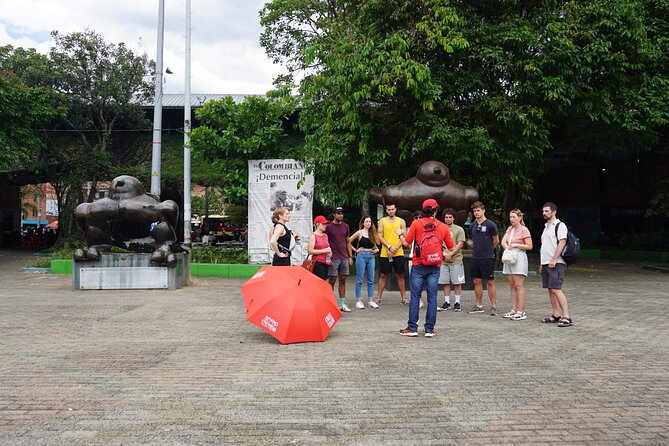
- Small group size (max 10) keeps it conversational.
- Story-first stops mean even simple places make sense once your guide connects them.
- Education is the peacebuilding theme, not just a side topic.
- Public art and architecture matter because they show how the city changed.
- Two end stops may have tickets that are not included, so budget a little extra.
Other history walks covering the same difficult years
- Medellín: The Real Pablo Escobar Tour★ 4.8 · 3,205 reviews
- Medellín: Pablo Escobar Tour with beer included★ 4.7 · 612 reviews
- Medellin: Guatapé Day Trip & Boat to Pablo Escobar’s Estate★ 4.7 · 365 reviews
- Medellín: Private Pablo Escobar and Comuna 13 Tour★ 4.9 · 233 reviews
Entering the story at Parque San Antonio
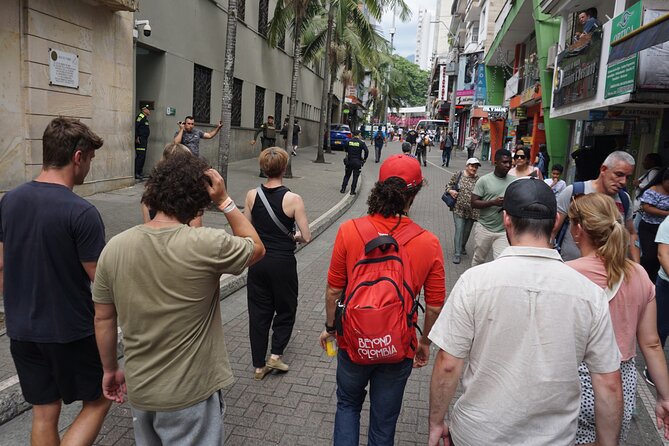
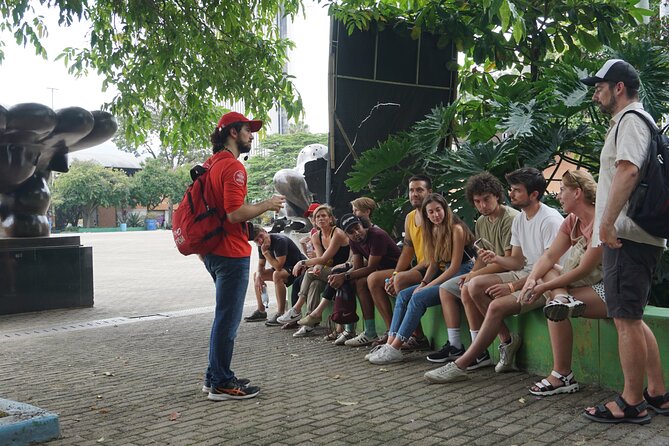
You begin at Parque San Antonio in the La Candelaria area. This is a classic Medellín meeting point and a smart place to start because parks are where daily life happens, and Medellín’s past shows up in how space gets used. Your guide sets the scene: why this park is emblematic, how locals relate to it, and how it has changed over time.
What I like about starting here is the anchoring effect. Before you hit squares and murals, you get a baseline for the city’s transformation, so later details do not feel random. You also get a reminder that post-conflict is not a single event. It’s a long process, visible in public spaces.
This stop is listed as about 22 minutes, and admission is free for this part. In other words, you should not expect a long pause, but you do get time to process what the park represents. If you are the type who hates being rushed, stay attentive early, because your guide’s pacing can help everything click later.
Plazuela San Ignacio and why education gets center stage
Next is Plazuela San Ignacio, a square that turns into a lesson about why education can be a peacebuilding tool. Your guide focuses on the transformation of Medellín and how learning institutions shaped opportunities when the city was dealing with violence and its aftermath.
This is one of those themes that can sound abstract until you hear it explained in real terms. The square becomes a way to understand how a city tries to rebuild trust, skills, and futures, especially for young people. It also gives you a different lens than the usual conflict narration. Instead of only talking about what went wrong, you learn how communities tried to fix what they could.
Admission here is free, and the time is again around 22 minutes. That short window is useful. It keeps you moving, but it also means you should take a moment to ask questions if something lands differently for you. If you are interested in how societies recover, this stop is likely one of your favorites.
Comfama San Ignacio: art, culture, and education in one place
Then you head to Comfama San Ignacio, a cultural center tied to art, culture, and education. This stop is where the tour’s themes feel most practical. You get a sense of how cultural programs support social cohesion and peaceful coexistence, not just as ideas but as ongoing community work.
What I like here is that it connects the city’s transformation to programs, not slogans. A cultural center is also a signal. It says the city is investing in people, and it creates spaces where different groups can share the same room without violence controlling the rules.
Admission for this stop is free, and you will likely spend about 22 minutes. If you want more than one photo, take it, but prioritize listening. The most important part is the programs your guide highlights, because those details explain why these places keep working long after headlines fade.
Torres de Bomboná and the meaning of modern architecture
Next come the Torres de Bomboná, a pair of modern architecture landmarks. Your guide brings in history and then zooms out to the bigger idea: architecture as a tool for urban transformation.
This is where the tour takes on a slightly more reflective tone. Instead of only talking about the conflict past, you consider what kind of city Medellín wanted next. New buildings are not neutral. They reflect planning, politics, economic shifts, and what the city believed would stabilize life.
Admission is free here, and the stop is about 22 minutes. The towers themselves may not satisfy your need for iconic views, depending on what you personally enjoy. But the framing your guide provides is the real value. If you came to understand how Medellín changed its mind, your guide’s explanation of the architecture will make the stop feel worthwhile.
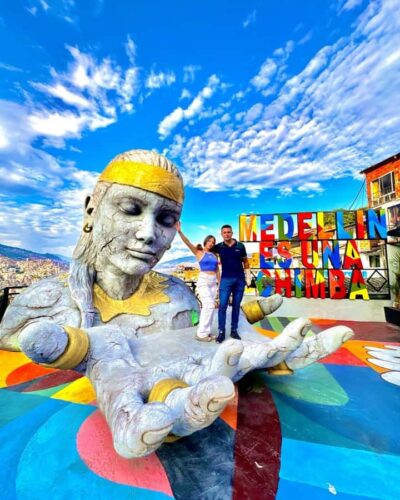
Pasaje Cervantes: street art that changes how you see a passage
After the towers, you walk to Pasaje Cervantes, a passage known for colorful murals and urban art. This stop is the tour’s eye-candy moment, but it is also still tied to meaning. Your guide explains the artists and what their work communicates.
If you care about contemporary Medellín, this part helps you connect the dots between “past violence” and “present identity.” The murals are not decorations. They show how public walls become storytelling spaces, and how creativity can reclaim areas of the city for everyday use.
Admission is free for this stop, and it lasts around 22 minutes. Here’s my practical tip: use this as your reset. Stand back for a second, then look closer. The longer you look at murals, the more the messages start to make sense.
Parque de Boston: a breather that also forces reflection
Then you reach Parque de Boston, a place to rest and reflect. Your guide keeps it interactive, inviting you to share your thoughts on what you have seen and learned so far.
This pause matters more than it sounds. In a 3-hour walk focused on conflict and post-conflict recovery, your brain can get overloaded. A short stop like this gives you a chance to connect the last few themes: parks, education, culture, architecture, and art.
Admission is free here, and the time is about 22 minutes. You do not need to perform during the sharing part. Even quiet participation helps. If you take notes, use this moment to write down what surprised you most. That makes the last stops feel clearer.
Simona Duque Park and the human rights legacy
Next is Simona Duque Park, named in honor of Simona Duque, a woman who dedicated her life to human rights. This stop shifts the tour into a more direct legacy of activism and advocacy.
The value here is that it personalizes the story. Post-conflict talk can stay general, but a human rights figure gives you a concrete entry point. You start thinking beyond political timelines and into people who insisted that dignity should not be negotiable.
Important practical note: admission is marked as not included for this stop. So if you are counting every dollar, set aside a bit for any entry cost. The duration is around 22 minutes.
Bicentenario Park to Memory House Museum: looking forward, then remembering
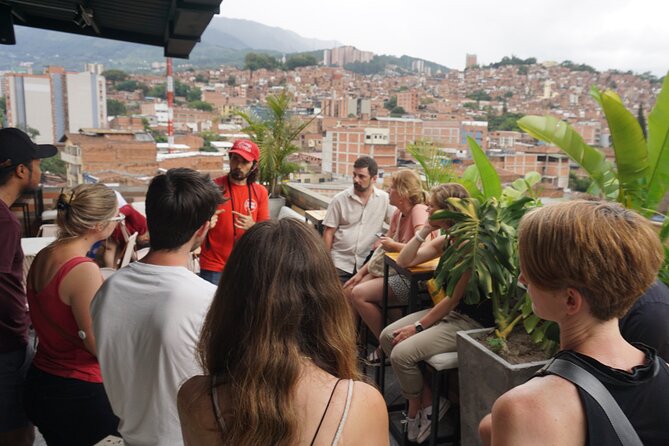
You finish at Bicentenario Park, described as modern and sustainable, representing Medellín’s future. This end stop comes with reflection on challenges and opportunities on the road to peace.
Your tour ends in the Memory House Museum area, which adds emotional weight. Memory matters because peace is not only about reducing violence. It is also about acknowledging harm, understanding causes, and preventing the same cycle from returning.
Admission is marked as not included for Bicentenario Park as well. So treat it as the part of the tour where you may pay an extra ticket fee. The duration is again around 22 minutes, and that final push is usually where you feel the tour’s themes click together.
Price and logistics: why this is such good value
The price is listed at $14.00 per person for roughly 3 hours, in a shared group with a maximum of 10 people. That price point is strong because you get a certified guide and a structured walk across multiple meaningful stops, not a free-form wander.
You should also understand how the pricing works. This tour is part of a free walking tour concept, where the amount you pay in advance matches the suggested tip per person for the guide’s work (minus a platform commission). Translation: you are not paying for a long list of paid attractions. You are paying for interpretation, pacing, and the ability to make the city’s transformation legible.
What is included:
- Certified guide
What is not included:
- Snacks, lunch, and tips
- Admission ticket is not included for Simona Duque Park and Bicentenario Park (other stops are marked as free)
One more logistics note that matters in practice: the start time is 2:00 pm, and the meeting point is San Antonio Park on Cl 44 #50 in La Candelaria. The tour ends around the Memory House Museum area, near Parque Bicentenario on Cl 51 #36-66.
This route is near public transportation, which helps if you are mixing neighborhoods. It is also described as requiring a strong physical fitness level. That does not mean it is a race, but it does mean you should wear comfortable walking shoes and plan for steady movement.
What kind of guide makes the difference here
This is the kind of tour where the guide matters a lot, because the “wow” factor is mostly intellectual and emotional. The strongest guides for this walk, including Paul, Miguel, Daniel, Manuel, Alejandro, and Sebastian, are praised for connecting social dynamics to real places and for answering questions clearly.
I especially value the honest tone highlighted for Daniel and the clarity credited to Miguel. When a guide can explain conflict without sounding rehearsed, the whole walk becomes easier to follow, even if Medellín history is new to you.
Also, the tour tends to feel wholesome, but in a thoughtful way, not fluffy. You learn, then you stop to process, then you keep walking. That rhythm is a big part of the satisfaction.
A realistic drawback: not every stop is visually exciting
Even with strong storytelling, it helps to be honest with yourself. A couple locations can feel underwhelming in pure visual terms, especially if you came expecting landmarks. The value is in the story behind the places, not in the scenery.
If you are the type who needs dramatic sights every few minutes, you might wish for more time at murals or viewpoints. But if you accept that this walk is built for context, it will feel like a smart use of time and money.
Who should book this Medellín post-conflict tour
You’ll get the most out of this tour if you like:
- History that connects to present life
- Social themes such as education and human rights
- City walks that trade crowds for conversation
It is also a great fit if you already did a general downtown walk and want a sharper focus on Medellín’s post-conflict reality. And because the group stays small, it suits visitors who want to ask questions without shouting over a big crowd.
If you are traveling with limited time and want one guided introduction to how the city thinks about peacebuilding, this is a solid choice. At $14 for a certified guide and a tight 3-hour structure, it is hard to beat for value.
Should you book the Violence and Post-conflict walk?
Yes, if your goal is understanding Medellín beyond the postcard. This is not just a tour of places. It is a guided attempt to show how education, human rights, public space, and public art all fit into the long recovery from violence.
Skip it only if you want mostly visual sights, or if you strongly dislike walking and short stops. Also, consider that a small number of bookings have reported no-shows and weak communication. That is not the norm implied by the overall rating, but it is enough to justify a simple habit: confirm your plan the day before and be ready to reach the meeting point on time.
If you come in curious and open to meaning over spectacle, you will leave with a much sharper sense of what Medellín is trying to build.
FAQ
What is the duration of the tour?
The tour is approximately 3 hours.
How much does it cost?
It is priced at $14.00 per person.
When does the tour start?
The start time is 2:00 pm.
Where do we meet and where does the tour end?
You meet at San Antonio Park on Cl 44 #50, La Candelaria, Medellín. The tour ends around Memory House Museum at Parque Bicentenario, Cl. 51 #36-66, La Candelaria, Medellín.
Is the tour group large?
The maximum group size is 10 travelers.
What is included in the price?
A certified guide is included.
What is not included?
Snacks, lunch, and tips are not included. Admission tickets for Simona Duque Park and Bicentenario Park are also not included.
Is public transportation nearby?
Yes, it is listed as near public transportation. Service animals are allowed as well.
The Rest of Our Medellin Reviews
Everything Else We Reviewed in Medellin
The Escobar Years, Told Plainly
Just added to our Medellin shelf
- Tour to Río Claro and La Caverna del Cóndor
★ 5.0 · 3 reviews - Tour Medellín: Pablo Escobar and Commune 13
★ 5.0 · 3 reviews - Shared Tour Medellin’s Violence & Post-conflict after Pablo
★ 4.1 · 3 reviews - Medellin: Coffee Farm Tour & Spa with Overnight Glamping
★ 4.5 · 3 reviews - Medellin: Traditional Food Tour
★ 4.9 · 3 reviews
Escobar Era History Tours, compared.
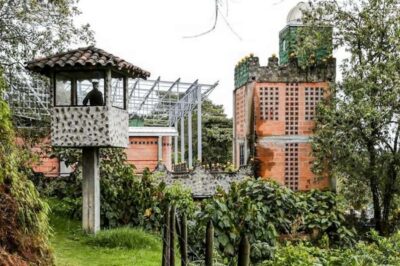 ★ 4.8Medellín: The Real Pablo Escobar TourFrom $423,205 reviews
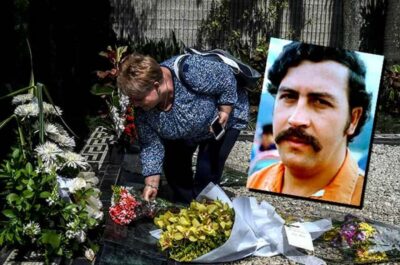 ★ 4.7Medellín: Pablo Escobar Tour with beer includedFrom $31612 reviews
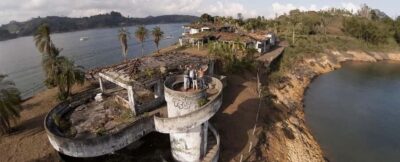 ★ 4.7Medellin: Guatapé Day Trip & Boat to Pablo Escobar’s EstateFrom $64365 reviews
 ★ 4.9Medellín: Private Pablo Escobar and Comuna 13 TourFrom $81233 reviews
 ★ 4.8Medellín: Private Pablo Escobar Tour with Cable Car RideFrom $73228 reviews
 ★ 5.0Pablo and the drug trafficking worldFrom $50129 reviews
 ★ 4.9From Medellín: Private Pablo Escobar History TourFrom $6384 reviews
 ★ 4.8Medellin Pablo Escobar TourFrom $5581 reviews
Where else this tour turns up