
REVIEW · CARTAGENA WALLED CITY & GETSEMANí WALKS
Walking Tour Cartagena Old City with Gold Museum and Plaza de Bolivar
Old City Cartagena works best at walking speed. This 3-hour route lines up Old Town architecture with a ticket to the Museo del Oro Zenu, so you’re not just sightseeing, you’re learning how the city was built.
I like how the guide keeps it practical: church fronts, plazas, and defensive walls come with stories you can actually use while you wander on your own afterward. The tour also feels good for first-timers because it ends where the old city “starts looking like a postcard,” near the Torre del Reloj. The one potential drawback is that it’s a lot of outdoor walking on cobblestones, plus the Gold Museum is closed on Mondays, so the plan can shift.
In This Review
- Key things to know before you go
- Entering Cartagena Old City at human pace
- Las Bóvedas: the start point that sets the tone
- Plaza de Bolivar: where the city’s colonial roles echo
- The Walled City walk: cobblestones with context
- Torre del Reloj: the finishing landmark that clicks everything in place
- San Pedro Church and the Cathedral: when architecture means power
- Museo del Oro Zenu: why the Gold Museum stop is a smart add-on
- Price and value: what you get for $67 in 3 hours
- Guides you might meet, and what they’re praised for
- What to wear, bring, and how to pace yourself
- Who this tour is best for (and who might want something else)
- Should you book this walking tour?
Key things to know before you go
- A bilingual English-Spanish guide means fewer awkward pauses and more time understanding what you’re seeing
- Plaza de Bolivar gets explained beyond photos, including the way colonial-era uses shaped its names
- Walled City bastions and cobblestones help you read Cartagena’s layout instead of guessing your way around
- San Pedro Church and the Cathedral of Cartagena get brought into the story of the city’s design and power
- Gold Museum ticket included, with a Monday exception that may swap museums based on the group’s interest
- Private in the sense that it’s only your group, so you’re not stuck listening to 20 different interests
Inside the walls, a few more reviewed walks
- Cartagena: Historic Center and Getsemaní Shared Walking Tour★ 4.9 · 2,716 reviews
- Cartagena de Indias: 2-Hour Sunset Cruise★ 4.7 · 1,105 reviews
- Cartagena: Panoramic City Tour, Monuments, Walls, Castle★ 4.0 · 636 reviews
- Cartagena: Guided Tour, with La Popa Convent, and San Felipe★ 4.4 · 599 reviews
Entering Cartagena Old City at human pace
Cartagena’s Old City is the kind of place where your first hour can feel like a blur of stone, balconies, and sun. This tour helps you slow down just enough to notice patterns: how buildings face the plazas, how streets funnel you toward walls, and how the city’s waterfront life shaped everything inland.
You’ll be walking for about two hours through the core of the Old Town, then adding the museum stop inside the total roughly three-hour timeframe. The pace is steady rather than rushed, and the guide’s job is to point at the details while you’re still oriented enough to remember them later.
I also like that the experience is built around recognizable landmarks, not a long list of random stops. When you finish, you’ll know why Cartagena’s streets feel the way they do, and you’ll have a mental map you can reuse for the rest of your trip.
Las Bóvedas: the start point that sets the tone
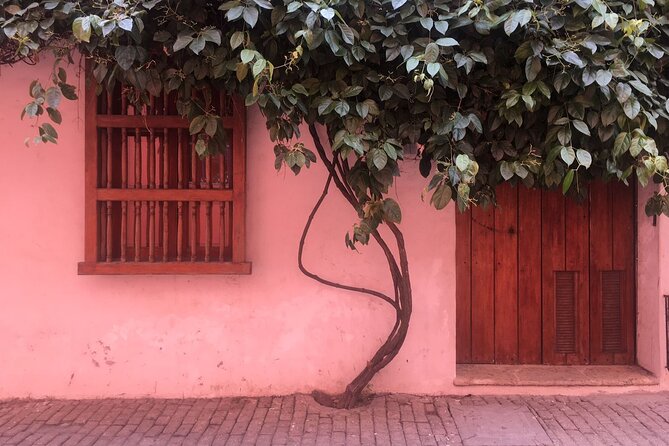
The tour begins at Las Bóvedas, specifically Boveda #1 in San Diego. This area is a strong “welcome to the walls” moment. You’re starting in a part of Cartagena that already carries the city’s military and storage past, so it’s a smart warm-up before you move into the plazas and fortifications.
Expect a quick kickoff and then a walk that builds outward. If you’ve ever gotten to the Old City and felt like you were walking without a plan, starting here helps because it anchors you in the city’s structure from the first minutes.
One practical note: Las Bóvedas is in the core zone where streets can be uneven. Wear shoes you trust, not just “pretty ones.” Your legs will thank you, and you’ll enjoy the viewing time more.
Plaza de Bolivar: where the city’s colonial roles echo
Next up is Plaza de Bolivar. This square is famous in photos, but the value of the tour is that it explains how the plaza functioned over time. Colonial Cartagena used this space for multiple activities, and the changing uses led to changing names through history, including references like Inquisition plaza and Cathedral plaza.
That matters because plazas are never just pretty open space. They’re where authority shows itself, where people gather, and where the city organizes daily life. When you understand that, the churches and facades around the square stop being background and start feeling like part of a system.
You’ll get about half an hour here, which is enough time to look up, listen, and still feel like you’re moving through the city rather than stuck inside a single photo stop.
The Walled City walk: cobblestones with context
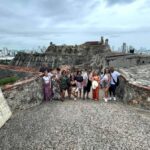
The biggest chunk of time is inside the Walled City of Cartagena. This is where the tour earns its keep. You’ll walk through the walls and bastions, and the guide helps you connect the defensive features to why the city grew the way it did.
You’ll spend about an hour in this section, and the route is designed for you to get “lost a little,” in a good way. You’ll absorb as much as you can at your own pace, but with enough direction to keep the story from turning into random walking.
This is also where Cartagena’s scale becomes clearer. Walls aren’t just scenery, they’re a boundary, a statement of control, and a lens for understanding the city’s layout. Once you’ve walked it with explanations, you can later stand anywhere and more easily picture how the city once protected itself.
If you want a souvenir in your head, this is it: you’ll know how to describe where you are in Cartagena without pulling out a map every ten minutes.
Around La Candelaria and up the hill, other options
Torre del Reloj: the finishing landmark that clicks everything in place
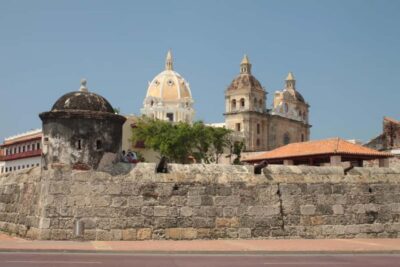
The tour ends at the Monumento Torre del Reloj area, near Boca del Puente in El Centro. Before you get there, you’ll stop at Torre del Reloj itself, the clock tower that acts like a dramatic entry point to the Old City.
You’ll spend around 15 minutes there. It’s a short window, but it works because you’ve already seen how the city’s power and design show up in the walls and churches. So when the tower appears, it feels less like a random landmark and more like a visual summary of the old city’s identity.
If your feet start to feel it, this is a good moment to slow down, take pictures, and just let the tower frame your memory of what you walked through.
San Pedro Church and the Cathedral: when architecture means power
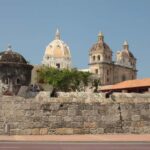
Two church stops are part of the experience: San Pedro Church and the Cathedral of Cartagena. Even if you’re not a church history fanatic, these places make sense in Cartagena because the architecture signals status, community role, and colonial priorities.
The guide explains their histories and architecture. That’s important because “old churches” can mean anything from a quick facade view to a deeper understanding of the choices that shaped the building. Here, the storytelling is meant to help you see what you’re looking at, not just read a plaque.
If you pay attention during the explanations, you’ll start noticing the visual language churches share: how entrances command attention, how facades face public space, and how the surrounding streets and squares support movement toward worship and authority. It’s not only about faith, it’s also about how a city organizes itself.
Museo del Oro Zenu: why the Gold Museum stop is a smart add-on
The Museo del Oro Zenu stop is included, and it’s the kind of museum that plays well right after an architecture walk. You already spent time learning how Cartagena functioned and defended itself. Now you get a chance to understand pre-Colombian cultures through gold and ceramics from the Zenu region.
You’ll have about 20 minutes inside. That’s enough time to see the main highlights without turning the tour into a museum marathon. The display focuses on a stunning collection of gold and ceramics, which is a good fit for many budgets and attention spans.
Two things to keep in mind:
- The Gold Museum is closed on Monday. If you’re visiting on a Monday, the museum visit may be switched to another option based on what the group prefers.
- Because the museum timing is shorter, go in ready to look at the big pieces first. If you’re the type who reads every label, you might want extra time later on your own.
Price and value: what you get for $67 in 3 hours
At $67 per person for about three hours, this isn’t a “bargain bargain,” but it is built for value. You’re paying for a bilingual guide plus entrance fees to the attractions named in the experience. That combo matters in Cartagena because a walk can be cheap, but once you add tickets, guided context, and museum time, the total starts to make sense.
Also, the structure is efficient. You’re not paying just to be carried from place to place. You’re walking the key Old City nodes you’d likely prioritize anyway, then getting the explanation layer that helps you enjoy the rest of the day.
The other value angle is private in the sense that it’s only your group. That can mean less waiting and easier conversation. Guides also tend to tailor explanations when they can focus on a smaller group dynamic, and that shows in the way multiple guides were praised for being friendly, helpful, and easy to ask questions.
Guides you might meet, and what they’re praised for
You may see several guide names associated with this experience, and a clear theme comes through: history talk delivered in a way that feels personal, not like a textbook.
Belkin is described as highly informed, friendly, and helpful, including going beyond the tour by assisting with translation and arranging further transportation. Oralis gets credit for being warm and considerate, with strong explanation style. Inri is singled out for being very good and effective at history-focused walking. Rafael and Sam are also praised for knowledgeable storytelling and making the Old City feel like it has a clear narrative. Martin and Mr. Martim come up as excellent guides for giving an overview that helps you get your bearings fast.
So if you care about the guide voice and not just the checklist of stops, this is one of those tours worth taking seriously.
What to wear, bring, and how to pace yourself
This is a practical walking tour, not a sit-and-swipe-your-camera one. The experience recommends comfortable clothes and shoes plus a sun hat or cap. I’d take that advice seriously because Cartagena sun can turn “short walks” into “why did I wear these shoes” quickly.
Bring:
- Water (small bottle), because you’ll be outside for most of the time
- Sun protection, including a hat or cap
- A light layer for any sudden shade and indoor museum cool air
Pacing tip: let the guide handle the first impressions, then take your own extra minute at the most photogenic facade or wall view. The tour gives you the meaning, but you still control how much you soak in.
Who this tour is best for (and who might want something else)
This walking tour is a great match if you:
- Want a guided orientation to Cartagena’s Old City, including walls and major landmarks
- Like architecture and public squares, not only museums
- Prefer shorter museum time instead of a long museum detour
- Want a bilingual guide to make the experience easier to follow
It might be less ideal if you:
- Want a long, slow museum day, since the Gold Museum portion is about 20 minutes
- Are visiting on a Monday and need the exact Gold Museum plan every time, because it’s closed that day
Should you book this walking tour?
If you’re arriving in Cartagena Old City wanting structure, this is a solid pick. The mix of Plaza de Bolivar, walled bastions, and a church-focused architecture explanation gives you a clearer sense of how the city worked. The included museum ticket is a good bonus, especially if you want culture without turning the day into an all-day museum schedule.
My call: book it if you want to get oriented fast and you’re comfortable walking on cobblestones in the sun. If Monday is your only option, double-check what the museum swap will be at the time you travel, so the plan matches your interests.
Walk Cartagena Slowly


La Candelaria, Then Up Monserrate
The Walled City, Three More Ways

Just added to our Cartagena shelf
- White Night Boat Party: Dinner Buffet, Dancing and Open Bar
★ 4.6 · 3 reviews - The best sunset tour in the bay: Open bar party & fun
★ 5.0 · 3 reviews - Tayrona Park adventure in Santa Marta: Cabo San Juan from Cartagena
★ 3.8 · 3 reviews - Cartagena: Rosario Islands Private Boat Tour
★ 4.8 · 3 reviews - Mud Volcano Tour in Cartagena with Lunch
★ 3.4 · 3 reviews
Cartagena Walled City & Getsemaní Walks, compared.
 ★ 4.9Cartagena: Historic Center and Getsemaní Shared Walking TourFrom $122,716 reviews
 ★ 4.7Cartagena de Indias: 2-Hour Sunset CruiseFrom $311,105 reviews
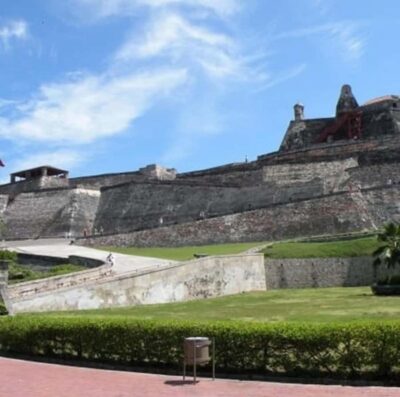 ★ 4.0Cartagena: Panoramic City Tour, Monuments, Walls, CastleFrom $15636 reviews
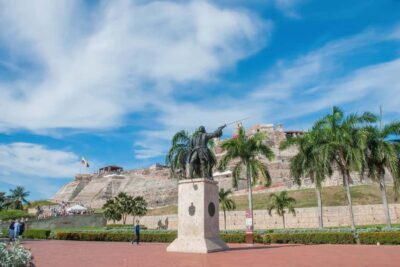 ★ 4.4Cartagena: Guided Tour, with La Popa Convent, and San FelipeFrom $45599 reviews
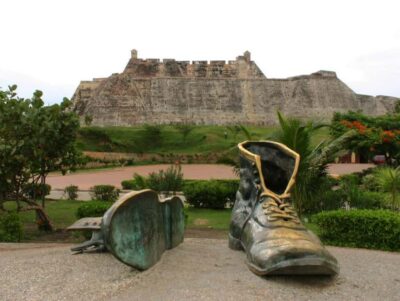 ★ 4.2Cartagena: BILINGUAL CITYTOUR + SAN FELIPE CASTLE & Old cityFrom $29387 reviews
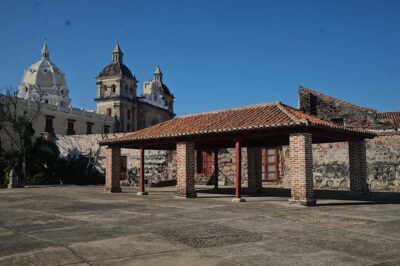 ★ 4.5Cartagena: Walled City and Getsemani Shared Walking TourFrom $16352 reviews
 ★ 4.43-in-1 Panoramic city tour Bogotá-beyond the traditionalFrom $42248 reviews
 ★ 4.8Cartagena: Walled City & Getsemani Private TourFrom $69107 reviews
Where else this tour turns up