
REVIEW · ZIPAQUIRá SALT CATHEDRAL TRIPS
Zipaquirá Salt Cathedral Private Tour + Walking Tour
The Salt Cathedral feels otherworldly. This private day trip trades Bogotá traffic stress for a guided walk inside a salt mine, including the Viacrucis corridor with 14 salt-carved stations and the Dome’s giant salt-cut cross. You also get time in Zipaquirá’s historic squares, plus added stops that tie the town to Colombian culture, from independence to Gabriel García Márquez.
I especially like how the experience is built around the mine first, not as an add-on, and how the tour bundles the essentials so you are not juggling tickets and logistics. A second win is the included audioguides and multilingual support, which helps you keep up even when the live guide is speaking mainly in Spanish. One drawback to consider: parts of the day are intentionally short, so if you want long guided walking time in the city, you may feel it is more structured than free-form.
In This Review
- Key highlights worth knowing before you go
- Entering the Catedral de Sal in a Living Salt Mine
- Viacrucis Stations and the Dome Cross, What to Watch For
- Audioguides and Spanish-Speaking Guides, How You Stay in Sync
- Plaza de la Independencia: Independence Symbols in Plain Sight
- Plaza de los Comuneros: Colonial Buildings and a First Revolution Story
- Gabriel García Márquez at the Casa del Nobel Cultural Center
- The Tres Esquinas Station, French Neoclassical Rail Heritage
- Private Transport Between Bogotá and Zipaquirá, Why It Matters
- Price and Value: Why $185 Can Make Sense Here
- Lunch Free Time: What You Should Expect and How to Handle It
- What the Best Guides Do Well, Names You’ll See
- Weather and Comfort Tips for a Smooth Half-Day
- Should You Book This Zipaquirá Salt Cathedral Tour?
- FAQ
- How long is the Zipaquirá Salt Cathedral private tour?
- What is included in the price?
- Is lunch included?
- Do I need to speak Spanish to understand the Salt Cathedral?
- What are the main stops on the itinerary?
- Is this tour private?
- What if the weather is bad?
- Can the tour accommodate service animals or most travelers?
Key highlights worth knowing before you go
- Salt Mine core experience: Viacrucis stations underground, then the Dome with the world-famous salt-cut cross
- Efficient private transport: you ride with a local bilingual guide and driver setup, so you spend less time planning
- Audioguides for multiple languages: useful when the guide is moving fast or speaking mostly in Spanish
- Historic Zipaquirá stops: Plaza de la Independencia and Plaza de los Comuneros with strong context
- Culture beyond the cathedral: a García Márquez school stop (Casa del Nobel) plus the Tres Esquinas railway station
- Good value bundle: mine ticket, insurance, water, WiFi, and a typical snack included
Other ways down into the salt
- Bogota: Guatavita and Salt Cathedral Daily Group Tour★ 4.7 · 615 reviews
- Bogota: Zipaquirá Salt Cathedral and Lake Guatavita Day Tour★ 4.8 · 551 reviews
- Bogota: Salt Cathedral of Zipaquira Private daily Trip★ 4.8 · 262 reviews
- Bogota:Zipaquirá Salt Cathedral & Guatavita Trip with Pickup★ 4.8 · 183 reviews
Entering the Catedral de Sal in a Living Salt Mine
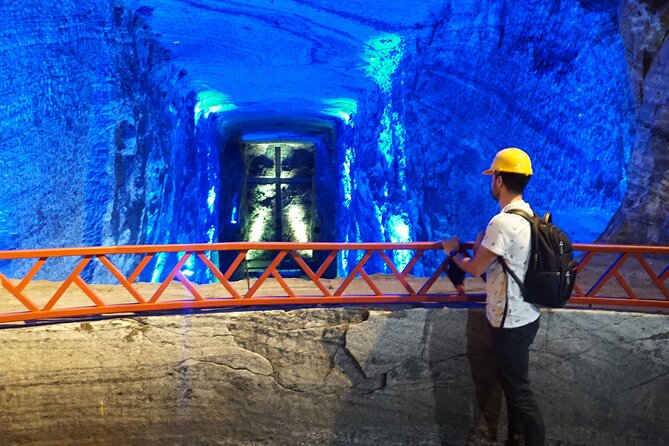
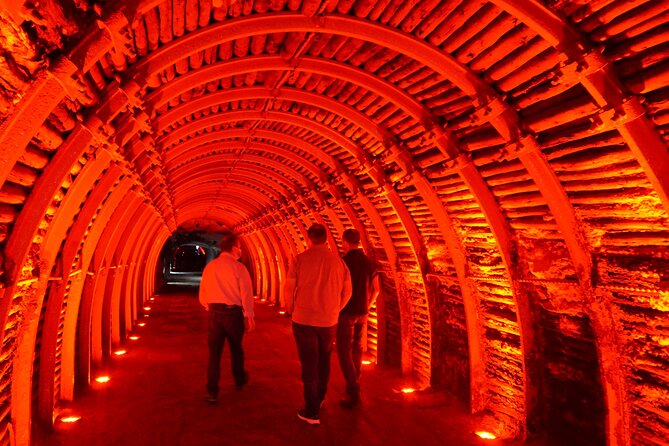
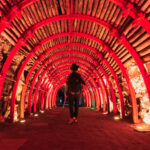
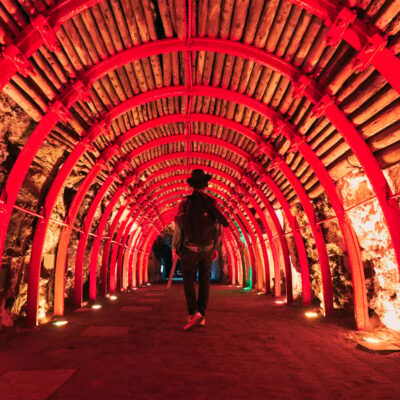
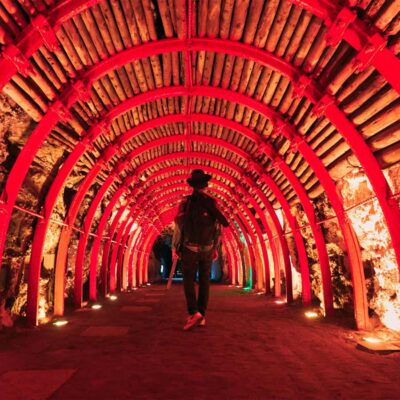
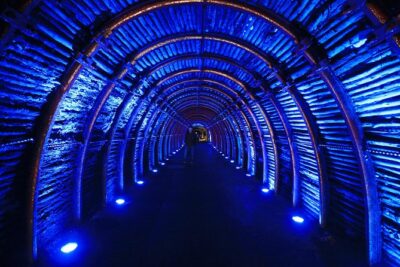
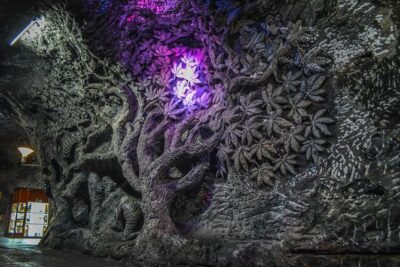
Zipaquirá’s Salt Cathedral is not a museum you just look at. It is built into an actual salt mine, carved over time in a setting that was exploited long before Europeans arrived. The result feels surreal in the best way: stone, silence, and religious symbolism working together in a space you would not expect to be this atmospheric.
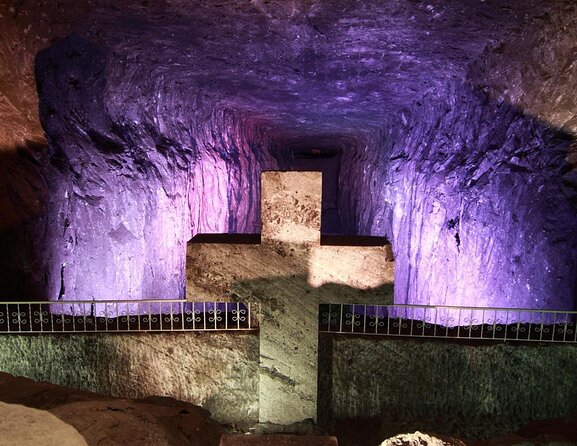
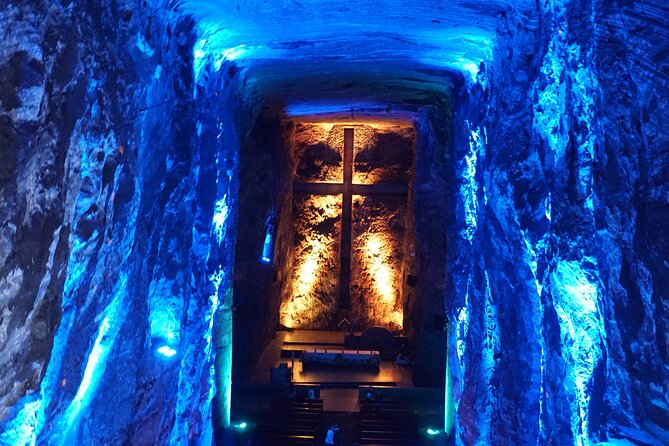
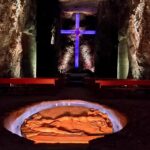
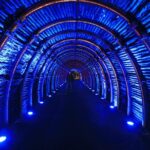
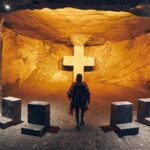
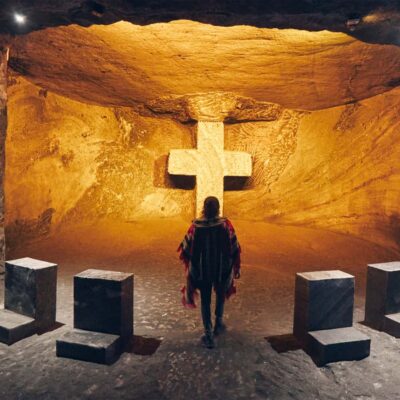
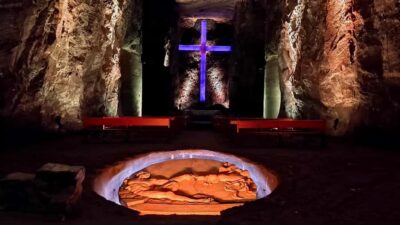
Your visit starts at Viacrucis, an underground corridor shaped around Jesus’ path to crucifixion, marked by 14 stations sculpted from salt rock by miners. After that, you move into the Dome to see the largest salt-cut cross in the world. It is the kind of sight that makes you slow down, mostly because it is huge, and partly because it is so specific in its symbolism.
Practical note: plan for the mine environment. Underground spaces can feel cooler and more enclosed, so wear closed-toe shoes with grip and keep your phone secured.
Viacrucis Stations and the Dome Cross, What to Watch For
In the mine, I like that you are not just pointed at objects. The stops are arranged like a story, beginning with Viacrucis and then building toward the Dome. That structure matters, because it helps you understand what you are seeing, instead of treating it like a one-off photo stop.
At Viacrucis, focus on the stations themselves and on how the corridor leads you forward. The way the route is laid out is part of the design. In the Dome, pay attention to scale. That salt-cut cross is the headline, but the way the cathedral frames it is what makes the space feel intentional rather than random.
If you are the type who loves religious art and symbolism, you will probably come out a bit emotional, not because you are forced to, but because the setting gives the details more weight. If you are not into religious sites, you can still enjoy it as architecture carved into geology, with a strong cultural mission behind it.
Audioguides and Spanish-Speaking Guides, How You Stay in Sync
This is the part I would plan most carefully. The tour includes audioguides in different languages inside the Salt Cathedral, which is a big deal for independent understanding. One review mentioned that the live guide was very animated in Spanish, and the visitor felt a language gap because the guided narration did not land the same way, even though an English audio device was available.
So here is the smart move: use the audioguide even if you are also listening to the guide. Think of the audio as your safety net. You will catch the explanations behind the sculptures and the symbolic links, and you will not lose the thread if you miss a phrase.
If you book this expecting mostly spoken English narration the whole time, you might get frustrated. If you book it knowing you will use audio support inside the mine, your experience usually improves a lot.
Plaza de la Independencia: Independence Symbols in Plain Sight
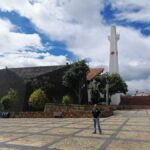
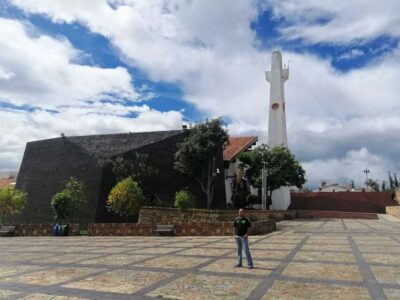
After the underground portion, the tour shifts to Zipaquirá’s public spaces. Plaza de la Independencia starts with a layered idea: before it became a symbol of freedom, it was a market square. The plaza was inaugurated in 2010 as a tribute to independence and Antonio Nariño, honored by a statue in the center holding a book connected to the Human Rights of the people.
One detail that makes this stop worthwhile is the way the flags are used around the plaza. They represent the countries that gained freedom under the leadership of Simón Bolívar. You get a quick lesson in the region’s independence story without needing to read anything big.
This is a short stop, about 10 minutes, so treat it like a reset and a chance to orient yourself in the city before the next historic square.
Other Bogota routes done on foot
Plaza de los Comuneros: Colonial Buildings and a First Revolution Story
The heart of Zipaquirá is Plaza de los Comuneros. This square is tied to the first revolution of America, which is part of why it carries its current name. You also get a sense of why locals return here, because the cobblestone streets and preserved colonial architecture give the area a real sense of place.
The plaza sits close to several major buildings, including the Diocesan Cathedral, Government House, and the Municipal Palace. Even if you only have a brief visit, seeing these facades helps you understand Zipaquirá as more than a one-attraction town.
Like Plaza de la Independencia, this is also a short stop, about 10 minutes. Use it for photos, a quick walk, and a mental bookmark for where you are going next.
Gabriel García Márquez at the Casa del Nobel Cultural Center
One of the cooler non-touristy aspects here is the stop connected to Gabriel García Márquez. You will pass by the school where he studied as a boarder until graduation in 1946. Today, that site is the Casa del Nobel Cultural Center, focused on art and the memory of the writer.
This works well because it adds a modern Colombia layer to a day that already has deep roots: independence themes in the plazas, then literary legacy in the Gabo stop. If you love literature, it is the kind of detour that makes the day feel personal.
This is not a long museum-style visit based on the information you have, so do not expect a full reading marathon. But it is a meaningful add-on that helps you see Zipaquirá as a cultural town, not just a mine.
The Tres Esquinas Station, French Neoclassical Rail Heritage
Another excellent timing-friendly stop is Tres Esquinas, a station built in 1926 during the presidency of General Pedro Nel Ospina. It was part of the Savannah Railway system, which supported commerce and industry for decades, roughly from the 1920s through the 1970s.
What you get here is architecture and historical context. The station is described as elegant neoclassical French in design, and it is declared national architectural heritage. Even with limited time, looking at a building like this helps you understand how infrastructure shaped regional growth.
If you enjoy rail history or industrial-era architecture, this might be one of those small stops you end up remembering more than you expected.
Private Transport Between Bogotá and Zipaquirá, Why It Matters
You are looking at 6 to 7 hours total, mostly because Zipaquirá is a half-day trip from Bogotá. Traffic can swing the drive time, but private transport keeps you from adding chaos. You get picked up and dropped off with your group, and you can often tailor the plan slightly with your driver.
This matters because the Salt Cathedral has an underground schedule feel. You want to arrive ready, not stressed. One review praised smooth transport and staff coordination, with pickup from an Airbnb and drop-off later in a different area of Bogotá (Candelaria). Another review highlighted that the guide and driver partnership made the day feel easy, not squeezed.
If you want a low-stress day, prioritize private. If you want to DIY everything, you could, but then you are trading time saved for planning time and ticket wrangling.
Price and Value: Why $185 Can Make Sense Here
At $185 per person, this is not a budget outing. But the price is not just a ride. Your ticket to the Salt Mine is covered, and medical insurance is included. You also get audioguides in different languages, plus a typical Colombian snack and water provided from their own supply.
You are also buying time. A 6 to 7 hour private experience that includes ticketing and a structured route can feel like good value compared to paying for everything separately plus arranging local transport.
WiFi onboard is included too, and while connection quality can vary in real life, having the option helps during long drives. One review specifically called out a strong connection during the experience.
The biggest value question is this: do you want someone else handling the flow from mine to city? If yes, the bundled cost becomes easier to justify.
Lunch Free Time: What You Should Expect and How to Handle It
Lunch is not included, but you do get free time for lunch at a recommended restaurant. In practice, that free time window may feel short, so you need to pick a place carefully within the time you are given.
One review mentioned a restaurant stop that felt more tourist-oriented, and another noted an additional cost of about $30 US for two for lunch. That tells me the lunch bill is likely on you, and you should plan for it.
My advice: treat lunch as a flexible personal choice. If you have dietary needs, tell your guide. If you want a more local-feeling meal, ask for a better alternative while still staying within the tour timing.
What the Best Guides Do Well, Names You’ll See
This tour tends to shine when your guide is good at both storytelling and pace. In the reviews you provided, names like Ludwyn, Katy, Angel, Pierre, and José show up with praise for friendliness, thorough explanations, and careful attention.
Ludwyn is mentioned for sharing not just mine facts but also broader Colombian history and culture. José pops up repeatedly for being friendly, knowledgeable (in the general sense of explaining clearly), and for taking good care of guests. Katy and Jorge were praised for friendliness and making the day feel smooth.
That pattern matters for your choice: if you are the kind of person who enjoys learning while walking, you will benefit from a guide who can keep the day flowing and connect the dots between salt, faith, independence, and culture.
Weather and Comfort Tips for a Smooth Half-Day
This experience requires good weather. So if your Bogotá plans are fluid, keep an eye on the forecast. Rain can affect road conditions and how comfortable you feel between outdoor plaza stops.
For comfort, pack smart for a day trip:
- Wear closed-toe shoes with grip for cobblestones and indoor mine walkways
- Bring a light layer, underground spaces can feel cooler
- Keep a small amount of cash for lunch since it is not included
Also, plan bathroom timing. One review mentioned some staff reluctance at the end of the mine walk. That does not mean it will happen to you, but it is a reminder to use facilities earlier rather than waiting until the last minute.
Should You Book This Zipaquirá Salt Cathedral Tour?
Yes, if your main goal is the Salt Cathedral experience inside the mine, and you like a structured day with history woven in. The included mine ticket, audioguides, insurance, and private transport make it a strong option when you want to avoid logistics headaches.
I would think twice if your priority is a long, fully guided city immersion with lots of free wandering, or if you strongly prefer spoken live narration in English all the time. In that case, you should lean into the audioguides and go in expecting that the mine is the centerpiece.
If you want a half-day that mixes faith, architecture, independence symbolism, and literary connection, this is a practical way to do it from Bogotá.
FAQ
How long is the Zipaquirá Salt Cathedral private tour?
It runs about 6 to 7 hours, depending on conditions like traffic.
What is included in the price?
The tour includes the Salt Mine ticket, audioguides in different languages in the Salt Cathedral, medical insurance, water, a typical Colombian snack, WiFi onboard, and a souvenir. It also includes free time for lunch at a recommended restaurant, though lunch itself is not included.
Is lunch included?
No. Lunch is not included, but you do get free time to eat at a recommended restaurant.
Do I need to speak Spanish to understand the Salt Cathedral?
You do not. The Salt Cathedral experience includes audioguides in different languages, and the tour can include a professional bilingual local guide if you choose.
What are the main stops on the itinerary?
You will visit the Salt Cathedral (starting at Viacrucis and continuing to the Dome), then see Plaza de la Independencia and Plaza de los Comuneros. You will also pass by the school related to Gabriel García Márquez, and visit the Tres Esquinas train station.
Is this tour private?
Yes. It is a private tour or activity, and only your group participates.
What if the weather is bad?
This experience requires good weather. If it is canceled due to poor weather, you will be offered a different date or a full refund.
Can the tour accommodate service animals or most travelers?
Service animals are allowed, and most travelers can participate.
Your Group Only, Around Bogota


Walk Bogota Slowly



Underground at Zipaquira
Just added to our Bogota shelf
- Fun Graffiti Workshop: The Art of Aerosol and Color
★ 5.0 · 3 reviews - From Bogota: White Water Rafting Experience
★ 4.4 · 3 reviews - From Bogota: Excursion to Jaime Duque Park
★ 5.0 · 3 reviews - Bogotá: La Candelaria Food Tour with Tastings
★ 4.2 · 3 reviews - Walking tour José Celestino Mutis Botanical Garden 3 hrs
★ 5.0 · 3 reviews
Zipaquirá Salt Cathedral Trips, compared.
 ★ 4.8Zipaquirá: Salt Cathedral Group Tour with PickupFrom $461,606 reviews
 ★ 4.7Bogota: Guatavita and Salt Cathedral Daily Group TourFrom $91615 reviews
 ★ 4.8Bogota: Zipaquirá Salt Cathedral and Lake Guatavita Day TourFrom $61551 reviews
 ★ 4.8Bogota: Salt Cathedral of Zipaquira Private daily TripFrom $75262 reviews
 ★ 4.8Bogota:Zipaquirá Salt Cathedral & Guatavita Trip with PickupFrom $66183 reviews
 ★ 5.0Shared Tour Zipaquirá Salt Cathedral and Guatavita LagoonFrom $74139 reviews
 ★ 5.0Salt Cathedral of Zipaquirá & Lake Guatavita: Private or SharedFrom $13988 reviews
 ★ 5.0Private Salt Cathedral of Zipaquira Tour from Bogota with LunchFrom $13588 reviews
Where else this tour turns up