
REVIEW · CITY TOURS
Bogota Walking Tour Teusaquillo, a different part of the city
Bogotá changes when you step into Teusaquillo. This walking tour strings together museums, architecture, and street art, showing how everyday places connect to Colombia’s politics. You also get planned tasting stops, so it is not just looking, it is sampling too.
What I love most is how the route links buildings to meaning. The guide, Daniel, is singled out for explaining not only what you see, but why it matters for Colombia’s social and political story.
Another highlight is the coffee tasting and the craft beer included along the way. One possible drawback to plan for: there is no lunch, and you are on your feet for about 2.5 hours, so you will want to eat before or after.
In This Review
- Key things to know before you go
- Teusaquillo on Foot: why this part of Bogotá is worth your time
- Price and timing: what $28 gets you for 2.5 hours
- Starting at Museo Nacional: independence to modern Colombia
- Cavas and Falcas: beer-company buildings and the industrial shift
- The house tied to political conflict: where personal stories meet architecture
- Street art gallery stop: seeing national artists at street level
- The Parkway ending: 1950s architecture and café-and-artist energy
- Coffee and craft beer tastings: included breaks that make the tour feel complete
- Who should book this Bogota Walking Tour Teusaquillo
- Should you book it? My practical call
- FAQ
- How long is the Bogota Walking Tour Teusaquillo?
- Where does the tour start and end?
- What is included in the price?
- Is lunch included?
- How large is the group?
- Are service animals allowed?
- Is there free cancellation?
Key things to know before you go
- Teusaquillo on foot: a different feel than the city center, with more residential and artsy energy.
- Politics told through places: the tour ties national events to architecture you can stand in front of.
- Daniel as a guide name to look for: reviews consistently credit him with clear, connected explanations.
- Coffee plus craft beer: included tastings that break up the walk.
- Small group size: a maximum of 20 travelers for a more personal pace.
- Ends in a food-and-coffee zone: Parkway makes it easy to keep exploring right after.
Other Bogota routes done on foot
- Bogotá: Guided La Candelaria Walking Tour★ 4.8 · 1,229 reviews
- Zipaquirá Salt Cathedral Private Tour + Walking Tour★ 5.0 · 66 reviews
- La Candelaria Walking Private Tour (3 Hrs.)★ 5.0 · 51 reviews
- Bogota Walking Tour Teusaquillo, a different part of the city★ 5.0 · 41 reviews
Teusaquillo on Foot: why this part of Bogotá is worth your time
Teusaquillo feels like a side chapter of Bogotá. Instead of racing through the biggest monuments, you move through neighborhoods where the buildings and street life do the storytelling for you. That matters because Bogotá can be overwhelming fast, and a good walk turns noise into patterns.
This tour is designed around that idea: you hop from one meaningful stop to the next, keeping the pacing easy enough for a casual walking style. Along the way, you will hear about how Colombia’s major eras show up in art, industry, and even in the architecture around you.
There is also a practical advantage. You end in an area known for restaurants, cafés, and independent projects, so the day does not end when the tour ends. For many people, that translates into less time hunting for a place to eat, and more time actually enjoying the neighborhood after.
Price and timing: what $28 gets you for 2.5 hours
At $28 per person for about 2 hours 30 minutes, this tour is priced like a focused specialty walk, not a big, all-day program. Where it earns value is in the included tastings: coffee plus craft beer (alcoholic beverages) are part of the cost.
You should also know the group limit: up to 20 travelers. That usually helps the guide keep everyone moving and paying attention, instead of being stuck in a long line behind other groups. The tour is also booked about 18 days in advance on average, so if you want a specific time slot, it is smart to reserve sooner rather than later.
One more timing reality: there is no lunch included. If you are the kind of person who gets hangry while sightseeing, plan a proper meal before you start. Otherwise, you can treat the Parkway ending as your built-in dinner option.
Starting at Museo Nacional: independence to modern Colombia
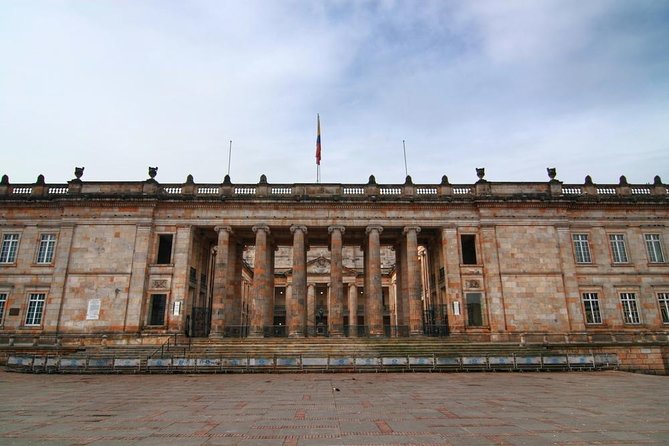
You meet at Museo Nacional, Santa Fe, Bogotá. The opening stop sets the tone in a smart way, because it anchors everything else that comes later. Instead of starting with street art and moving to politics later, you begin with a museum that covers the country from independence through more recent times.
This museum stop is not just about walking into a room and looking at objects. The idea is that you are seeing how national identity is represented through major artwork, and how the museum building itself holds political memory in its walls and architecture. That gives the rest of the tour context, so later stops about industry and political conflict do not feel random.
What you can do to get more out of this part is simple. Spend a little extra time orienting yourself to the eras the museum emphasizes, then listen for how the guide connects themes to the neighborhood. Even if you only catch part of the museum’s story, the tour framing helps you understand why these places connect.
Cavas and Falcas: beer-company buildings and the industrial shift
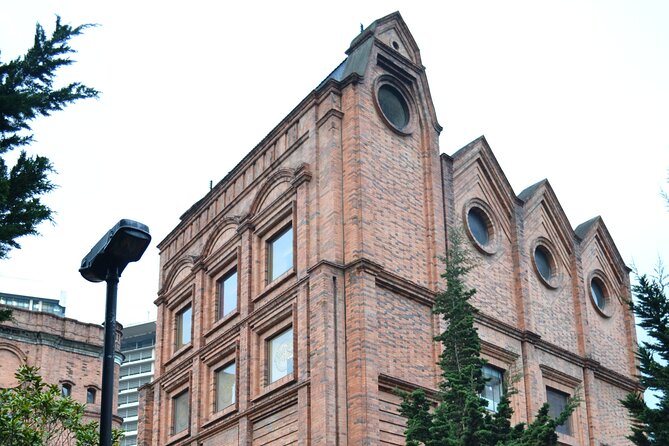
Next, you learn about the buildings Cavas and Falcas, once part of the first beer company in the country. This is where the tour becomes surprisingly fun, because you see how industry left physical marks on Bogotá’s growth.
The message here is clear: industrialization changed the city, and the city expanded into modern urbanizations. Instead of treating industrial history like a dusty topic, the stops turn it into something you can point at. You are not just hearing words. You are standing in front of structures tied to brewing, production, and urban change.
A good practical angle for this stop is photo planning. Architecture and building details can be easy to miss when you are moving fast. Slow down for a minute, take one wide shot to capture the overall feel, then one close shot for texture or design elements. Those become useful later when you compare the neighborhood styles you see in the final stretch.
One consideration: this is still a walking tour, so if you want heavy museum-style time at each stop, that might not match your expectations. The strength is in connections and storytelling, not lingering for hours.
Other city runs through Bogota
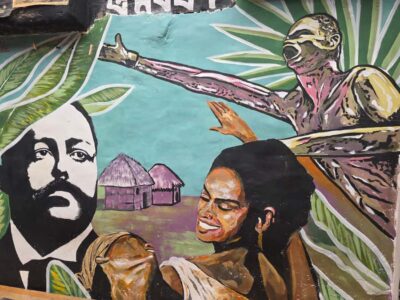
The house tied to political conflict: where personal stories meet architecture
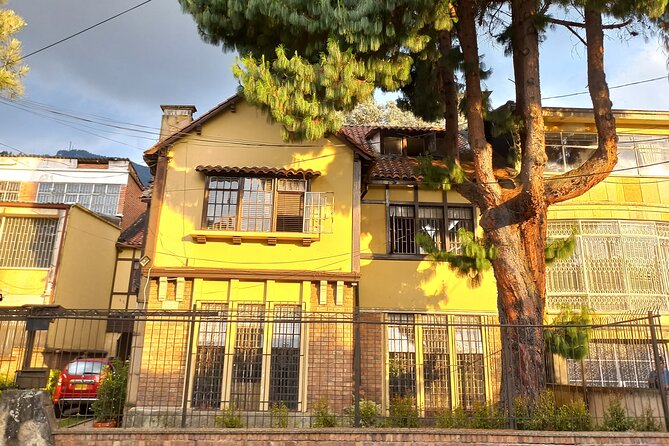
Another stop focuses on the house of a key character who changed Colombia’s history and marked the beginning of a political conflict. The tour places this house in a setting with some of the nicest architecture in the city, which helps make the emotional weight of the story feel real.
This is a different kind of sightseeing moment. You are not looking at an exhibit under glass. You are standing near a location where political tension became part of the public story. That is why the architecture matters, too. It is not just pretty walls. It is the stage where important moments unfolded.
Because the tour description does not list the person’s name, I suggest you treat this stop as a listening moment. Ask the guide to connect the figure to the conflict and explain what shift happened afterward. Even with limited time, you can walk away with a clearer timeline of why later Colombia looked the way it did.
And if you are the type who likes to understand today by learning yesterday, this stop usually delivers. It helps you link political themes to how people lived, built, and moved through the city.
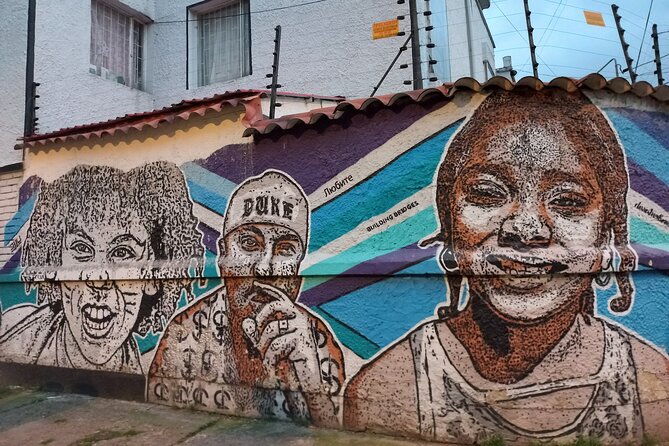
Street art gallery stop: seeing national artists at street level
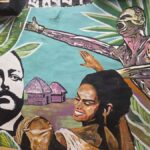
Then you move to a street art gallery featuring some of the greatest artists of the country. This is where Teusaquillo’s creative identity becomes visible, and where the tour balances weight with color.
The best way to enjoy street art is to slow your gaze. Look at a piece, then look at the surrounding wall, then scan the block. Street art often works like a conversation across surfaces. In a guided setting, you can also learn how the art ties back to social themes the tour has already been discussing.
Since the tour keeps the walking pace steady, you will not get a long, museum-style art lesson here. Instead, think of it as a focused street-level introduction. You are building familiarity with artists and styles, and learning why murals matter in a city’s public identity.
A practical tip: wear shoes that handle uneven sidewalks. Even when the route is “only” a few blocks at a time, Bogotá streets can vary.
The Parkway ending: 1950s architecture and café-and-artist energy
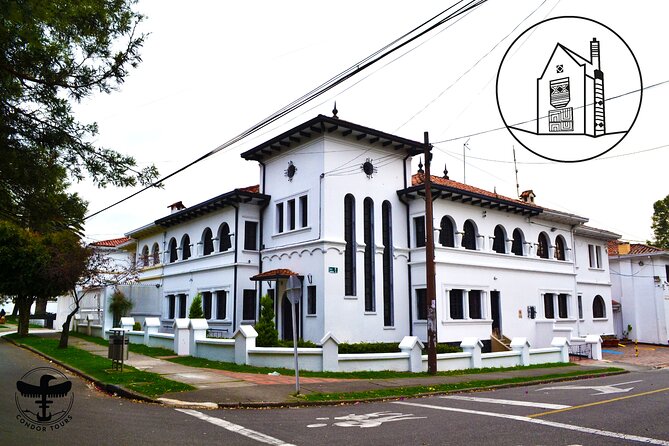
The tour ends in the Parkway zone, around Cl. 39a. The description points to this as a meeting point for artists, restaurants, cafés, and independent projects, plus it has beautiful architecture from the 50s and a bohemian spirit.
This ending is smart for a few reasons. First, you have built-in places to eat, which solves the no-lunch issue. Second, you finish in a zone that encourages you to keep exploring on your own, without needing to transfer to a new neighborhood right away.
If you want to extend the experience, aim for a relaxed stop at a café or bar and give yourself time to process what you learned. A lot of the tour’s value comes from connections, not individual sights. Sitting down for a drink or coffee right after the walk helps those connections stick.
Also, if you are traveling with a friend group, this is a good coordination point. People can split into dinner plans nearby without everyone needing to move far from the tour’s end.
Coffee and craft beer tastings: included breaks that make the tour feel complete
Food and drink breaks are not an add-on here. Coffee tasting and alcoholic craft beer are included, and those stops help reset your energy while keeping the route moving.
This matters because walking tours can turn into a constant, dry march: look, listen, keep going. Tastings interrupt that loop. They also add a local layer beyond sightseeing, since coffee and beer are part of Colombian daily culture in many areas.
If you do not want alcohol, you can still enjoy the tour for its story stops, but you should confirm how the tastings are handled for non-alcoholic preferences when you book. The tour data clearly states craft beer and alcoholic beverages are included, so plan accordingly.
One more practical note: since there is no lunch, these tastings should be considered a perk, not a meal replacement. Drink water too, especially if you are walking in warmer parts of the day.
Who should book this Bogota Walking Tour Teusaquillo
This tour fits best if you want Bogotá with context. If you like architecture, street art, and the idea that political events shape the city you walk through, you will likely enjoy it.
It also suits people who prefer smaller groups and guided pacing. With a maximum of 20 travelers, you are less likely to feel lost in a crowd. And because the tour is near public transportation, it is easier to join and then continue your day independently.
You might skip it if your main goal is long time inside museums or if you need a fully self-paced experience with no guided structure. This is a walking route with multiple stops, so it is not designed for deep solo exploration at each location.
Should you book it? My practical call
Book this tour if you want a smarter, more varied Bogotá walk. The museum introduction, the industrial beer-story architecture, the political conflict stop, and the street art all connect into a single neighborhood view of Colombia. The included coffee tasting and craft beer add real value, not just a token stop.
I would not book it as your only Bogotá experience if you also want heavy museum time or lots of free wandering. Use it as your anchor tour for Teusaquillo, then build the rest of your day around cafés, restaurants, and independent spots near Parkway.
One last nudge: reserve ahead if you can. Since it is commonly booked about 18 days in advance, last-minute plans may limit your choices.
FAQ
How long is the Bogota Walking Tour Teusaquillo?
It runs for about 2 hours 30 minutes.
Where does the tour start and end?
It starts at Museo Nacional, Santa Fe, Bogotá and ends in the ParkWay area on Cl. 39a, Bogotá.
What is included in the price?
The tour includes a Condor Tours guide, coffee tasting, and craft beer, plus alcoholic beverages.
Is lunch included?
No, lunch is not included.
How large is the group?
The tour has a maximum of 20 travelers.
Are service animals allowed?
Yes, service animals are allowed.
Is there free cancellation?
Yes, you can cancel for a full refund up to 24 hours in advance of the experience start time.
Everything Else We Reviewed in Bogota
Bogota City Routes
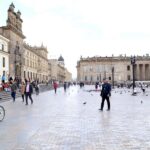
Walk Bogota Slowly
Just added to our Bogota shelf
- Fun Graffiti Workshop: The Art of Aerosol and Color
★ 5.0 · 3 reviews - From Bogota: White Water Rafting Experience
★ 4.4 · 3 reviews - From Bogota: Excursion to Jaime Duque Park
★ 5.0 · 3 reviews - Bogotá: La Candelaria Food Tour with Tastings
★ 4.2 · 3 reviews - Walking tour José Celestino Mutis Botanical Garden 3 hrs
★ 5.0 · 3 reviews
City Tours, compared.
 ★ 4.9Bogota: Bicycle City TourFrom $192,156 reviews
 ★ 4.9Bogotá: Private City Tour, Monserrate, Emerald and BoteroFrom $65798 reviews
 ★ 3.9Cartagena: City Sightseeing Hop-On Hop-Off Bus Tour & ExtrasFrom $23681 reviews
 ★ 4.0Cartagena: Panoramic City Tour, Monuments, Walls, CastleFrom $15636 reviews
 ★ 4.9Bogotá City Tour with Monserrate, Gold and Botero MuseumsFrom $65584 reviews
 ★ 4.2Cartagena: BILINGUAL CITYTOUR + SAN FELIPE CASTLE & Old cityFrom $29387 reviews
 ★ 4.5Cartagena: Walled City and Getsemani Shared Walking TourFrom $16352 reviews
 ★ 4.9Medellín: Private City Tour with Metrocable and Comuna 13From $76330 reviews
Where else this tour turns up