
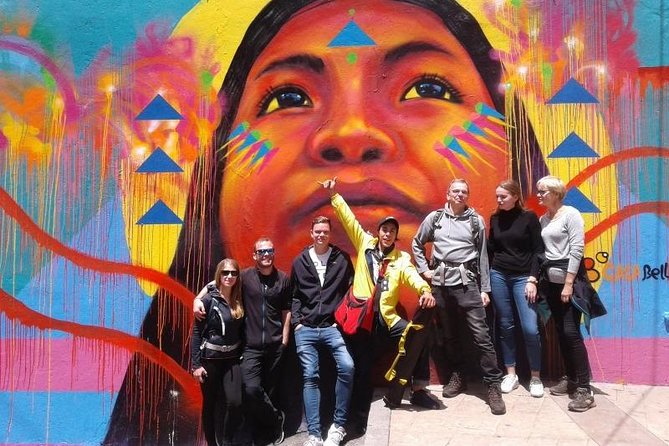
REVIEW · COMUNA 13 & GRAFFITI STREET ART WALKS
Graffiti Tour in La Candelaria Bogotá with Transportation
Street art tells politics in Bogotá. On this 3-hour private tour with hotel pickup and transportation, you walk La Candelaria from Chorro de Quevedo, following murals by Ledania, 3 Manos, Wosnan, and Ocio 4 while learning how artists frame indigenous ancestry and downtown tensions. I especially love the socio-political context the guide gives, and the way you get off main streets to see smaller murals. The one catch: it runs rain or shine, so plan for wet sidewalks.
A nice extra is the coca leaf tea tasting, a calm pause before you start spotting the messages on the walls again. You’ll also hear from guides like Lenora, Luis, Gerald, Lorena, Natalie, and Christian in different bookings, and the best part is how they connect symbolism to real places in downtown Bogotá. If you want food included, note there’s no lunch, though you’ll finish at Café Herencia where you can grab a drink and keep walking afterward.
In This Review
- Key Things I’d Focus On Before You Go
- Chorro de Quevedo to La Candelaria: Where Street Art Gets Its Meaning
- Coca Leaf Tea, Then the Wall Walk Starts
- The Indigenous Ancestry Street, and the Artists Behind the Symbols
- Seeing the Girls, the Women, and the Role of Female Artists
- La Concordia Park and Marketplace: A Downtown Identity Stress Test
- Bolívar Square and Journalists Park: Bogotá’s Past in a Different Font
- Finish at Café Herencia: Keep Looking After the Tour
- Price and Value for a 3-Hour Private Tour
- Who This Bogotá Graffiti Tour Is Best For
- Should You Book This Graffiti Tour in La Candelaria?
- FAQ
- How long is the graffiti tour in La Candelaria?
- Where does the tour start?
- Is transportation included?
- What languages are the guides?
- What is included in the $48 price?
- Which graffiti artists may be part of the tour?
- Is lunch included?
- Does the tour run in bad weather?
- What is the cancellation policy?
Key Things I’d Focus On Before You Go
- Chorro de Quevedo first, so you get the story before the wall tour starts.
- Socio-political context, including how indigenous ancestry shows up in street art.
- Women artists get serious attention, not just as a side note.
- Off-the-beaten-track murals, especially on narrow, tightly packed streets.
- La Concordia is a highlight stop, described as a tension spot and a mixer of ideas.
- Café Herencia finish point, with more work by Carlos Trilleras to keep the thread going.
Other guided walks through the painted stairways
- Bogotá: La Candelaria Graffiti & Urban Art Guided Tour★ 4.7 · 250 reviews
- Fun Graffiti Workshop: The Art of Aerosol and Color★ 5.0 · 73 reviews
- Graffiti Tour in La Candelaria Bogotá with Transportation★ 5.0 · 68 reviews
- Bogotá: Graffiti Tour el mejor recorrido de arte urbano★ 4.7 · 41 reviews
Chorro de Quevedo to La Candelaria: Where Street Art Gets Its Meaning
This graffiti tour works because it starts in the right mood. You begin at Chorro de Quevedo Square, right in the heartbeat of La Candelaria. From there, the guide frames what you’re seeing as more than decoration. Think of it like a decoder ring for Bogotá’s street language, where color and characters often carry arguments, memory, and identity.
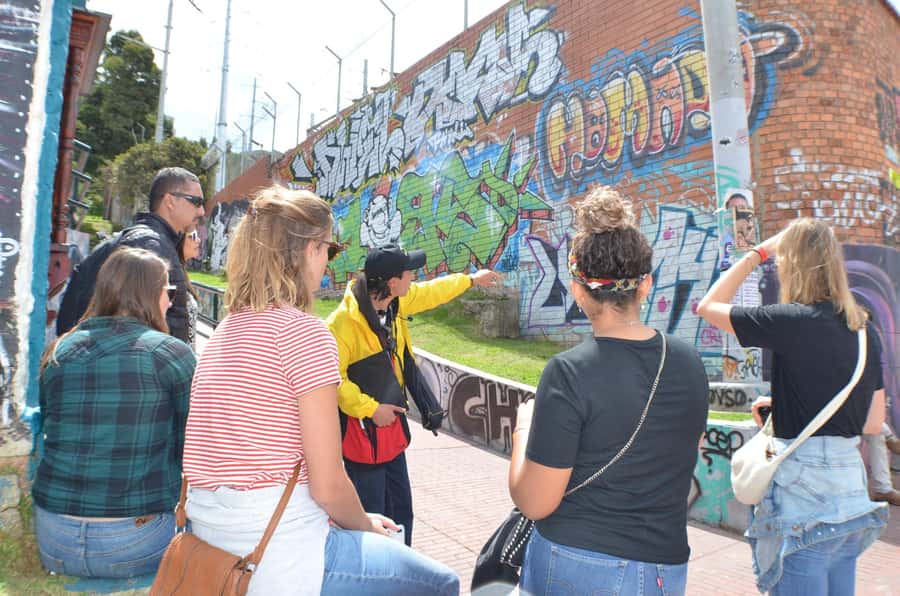
You’ll then spend the core of the walk in La Candelaria itself. The focus stays on murals and graffiti that respond to the city around them. And you’re not just glancing at art from the sidewalk either. The route is built for small street turns, close looks, and short stops where the guide can translate what the imagery is pointing at.
In the mix, you’ll hear names tied to Bogotá street art culture. Local artists you may see discussed include Ledania, 3 Manos, Wosnan, and Ocio 4, plus artists later on like Carlos Trilleras. Even if you’re not an art super-nerd, the tour gives you enough context to feel like you understand what you’re looking at.
Coca Leaf Tea, Then the Wall Walk Starts
One of the easiest wins on this tour is the coca leaf tea tasting. It’s small, but it sets the tone. You pause, you sip, and suddenly the city feels less like a museum and more like a lived-in place. It also helps if you’re arriving with travel jitters, because the tour is walking-forward almost immediately after.
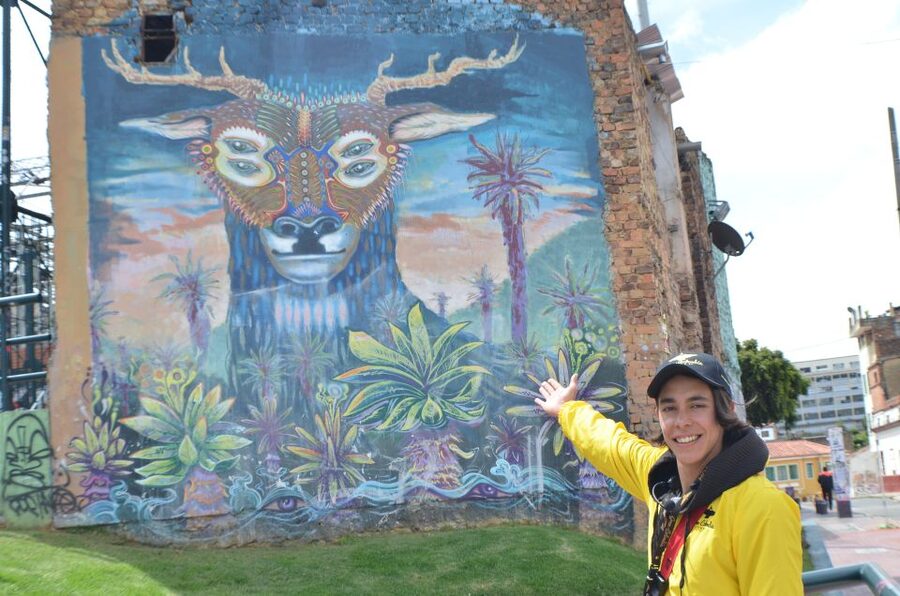
After that, the guide ties graffiti to Bogotá’s shifting story. You’ll learn how artists connect their work to local history, including indigenous ancestry and the way downtown neighborhoods have shaped public ideas. The tour’s best moments are when you stop, look again, and realize the wall is answering a question the city has been asking for decades.
The Indigenous Ancestry Street, and the Artists Behind the Symbols
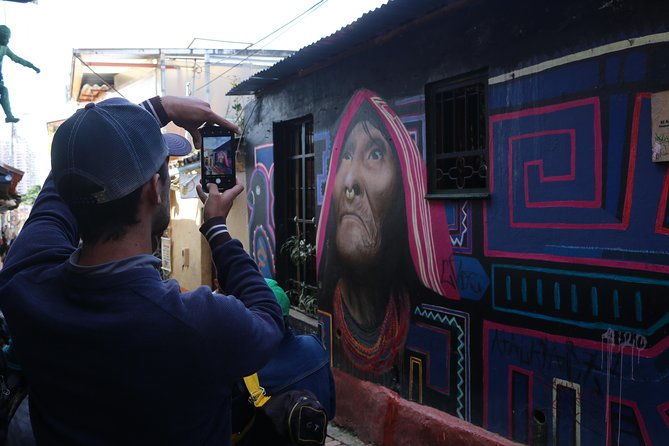
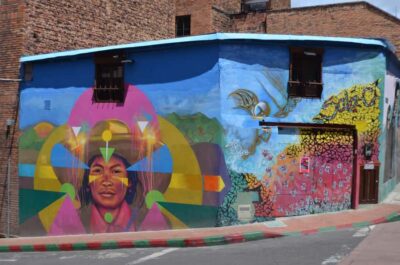
A key part of the route is a narrow street crowded with graffiti that retells indigenous ancestry. This is the kind of stop that changes how you see the rest of the tour. Instead of treating street art like random visual noise, you start noticing patterns: recurring symbols, specific figures, and the way the composition guides your eye toward a message.
Here’s why that matters for you: if you’ve ever walked through street art zones and felt like you missed the point, this tour gives you a map made of stories. You’re taught to connect the artwork to its socio-political context, meaning the why behind the images. It’s not about making the art sound complicated. It’s about helping you understand the stakes.
You’ll also encounter work tied to Carlos Trilleras. There’s even a stop where you see murals painted by Wosnan and Ocio 4. When the guide names artists and explains what they’re responding to, the street art starts to feel like a conversation between different voices of Bogotá, not separate posters stuck to walls.
Seeing the Girls, the Women, and the Role of Female Artists
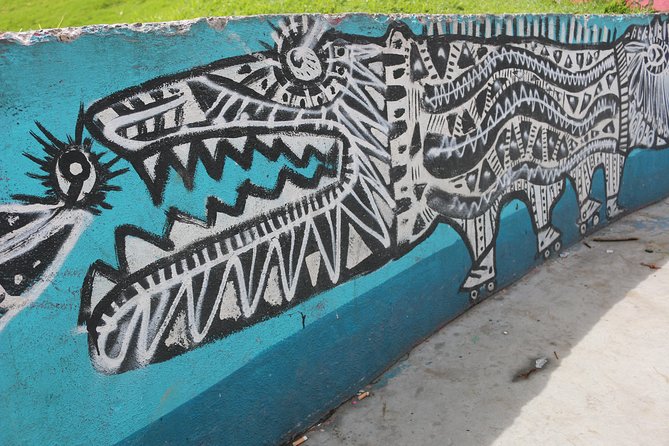
One of the tour’s most praised strengths is how it handles gender and authorship in street art. You’ll see some of the best graffiti authored by women, and you’ll learn more about their role in how this art spreads through the city.
For you, that’s a practical improvement over the usual street art tour script. A lot of tours give you the highlights and leave the rest as background. Here, the guide nudges you to pay attention to authorship, influence, and who gets to shape the visual culture. It’s also a reminder that street art is not only something communities endure. It’s something they build.
And when women’s work appears on the walls alongside names you hear earlier in the tour, it creates a fuller picture. Artists you might see highlighted include Bastardilla, Vera, Ledania, and Erre, with the guide tying each style to the message behind it.
Around La Candelaria and up the hill, other options
La Concordia Park and Marketplace: A Downtown Identity Stress Test
If you want one stop that feels like the city’s brain speaking, it’s La Concordia. The tour spends time at the Park of La Concordia and the La Concordia marketplace, described as an important tension spot and a meeting point, where ideas and influences mix in ways that define downtown Bogotá’s identity.
This is where the tour’s “street art as social commentary” idea becomes real. The guide isn’t only showing murals. They’re connecting what’s painted to a specific kind of neighborhood energy, where people collide, trade, argue, and influence each other. In plain terms, this part helps you understand why graffiti looks the way it does. When a place is a constant mix of viewpoints, wall art often becomes a public bulletin board with strong opinions.
After this stop, the walk continues through picturesque streets with more graffiti along the way. That stretch matters too. It keeps the pace from feeling like one big lecture. You get a slow drip of new visuals, while the guide ties them back to the themes you heard earlier.
Bolívar Square and Journalists Park: Bogotá’s Past in a Different Font
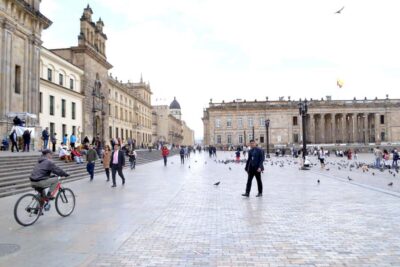
The tour includes quick looks around Bolívar Square, with a short guided stop designed to connect downtown symbolism to what’s happening on the walls. Even if you only spend a brief moment there, the value is how the guide bridges official public space and unofficial artistic voices.
Then you walk toward Journalists Park. This stop has a clear historical hook: journalists, poets, and writers used to gather there in the 1960s. That detail matters because it shows Bogotá’s culture has long had public meeting points for ideas. Street art fits into that tradition. The difference is that graffiti often brings the conversation to the street, not behind a typewriter.
By the time you reach this area, you’ll likely start noticing the tour’s rhythm: the guide sets the context, points you to imagery, and then you see how the city’s identity keeps rewriting itself.
Finish at Café Herencia: Keep Looking After the Tour
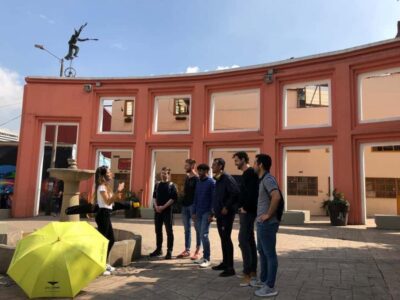
You end at Café Herencia, where you can admire more of Carlos Trilleras’s artworks. Ending at a café is smart. It gives you a natural buffer after the walking. You’re not dumped back on the street with no next step. Instead, you can sit, cool down, and keep looking at the artwork in a calmer setting.
Because lunch isn’t included, this finish works best if you’ve already eaten or you plan to grab something nearby after. If you’re traveling with someone who gets hungry fast, you might consider a light snack before the tour. The tour runs about three hours total, and you’ll be on your feet.
Also, since it runs rain or shine, Café Herencia can be a lifesaver. If weather turns, you’ll have somewhere warm and familiar to regroup.
Price and Value for a 3-Hour Private Tour
At $48 per person for a 3-hour experience, the value is mostly in the combination. You’re paying for a live guide, door-to-door hotel pickup and drop-off, private transportation, coca leaf tea tasting, and insurance. That’s a lot bundled into one price for a city neighborhood walk.
You should especially appreciate the transport piece if you don’t want to spend your morning studying streets you can’t easily navigate with confidence. La Candelaria is walkable, but it’s also a neighborhood where turns matter. Private transport helps the tour keep a smooth timeline so you spend more time looking at walls and less time figuring out where you are.
There is one logistics note to keep in mind: the tour takes place rain or shine. If you hate wet shoes, bring grippy footwear and expect the ground to be slick. Also, because it’s a private group, you can usually feel more relaxed asking questions without fighting for attention.
One additional practical consideration comes from a booking note about driving style. One participant found the driver a bit aggressive on the road. If you’re sensitive to that kind of thing, it’s worth being aware.
Who This Bogotá Graffiti Tour Is Best For
This tour suits you if you want more than photos. You like street art, but you also want the meanings behind it, especially the socio-political context and how indigenous ancestry is represented. It’s also a good choice if you enjoy walking in a specific neighborhood with a story threaded through multiple stops.
It’s less ideal if you want a totally free-form art crawl. This tour is guided, so you’re getting the map and the explanation, not wandering randomly.
Should You Book This Graffiti Tour in La Candelaria?
If you’re spending time in Bogotá and you want street art with real context, I’d book it. The route covers key cultural areas, it highlights women artists, and it connects graffiti to downtown identity instead of treating it like an Instagram scavenger hunt. With private transportation, hotel pickup, coca leaf tea tasting, and insurance included, you’re not juggling logistics while you’re trying to enjoy the walk.
Your main decision point is comfort. If you can handle a rain or shine outdoor experience, you’ll get a lot out of the three hours. If weather and slippery sidewalks are a deal-breaker for you, you might want to plan for proper shoes and a rain jacket.
FAQ
How long is the graffiti tour in La Candelaria?
The tour lasts 3 hours.
Where does the tour start?
It starts at Chorro de Quevedo Square in the La Candelaria area, with hotel pickup included in Bogotá.
Is transportation included?
Yes. The tour includes private transportation, along with hotel pickup and drop-off.
What languages are the guides?
The live tour guide is available in English and Spanish.
What is included in the $48 price?
The price includes the tour guide, hotel pickup and drop-off, private transportation, coca leaf tea tasting, and insurance.
Which graffiti artists may be part of the tour?
You may see and learn about artists such as Ledania, 3 Manos, Wosnan, Ocio 4, Carlos Trilleras, Bastardilla, Vera, and Erre.
Is lunch included?
No, lunch is not included.
Does the tour run in bad weather?
Yes, the tour runs rain or shine.
What is the cancellation policy?
You can cancel up to 24 hours in advance for a full refund.
Everything Else We Reviewed in Bogota

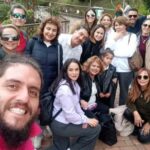
La Candelaria, Then Up Monserrate
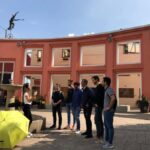
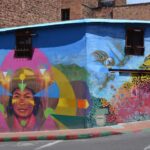
Comuna 13 and the Painted Stairs
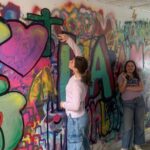
Just added to our Bogota shelf
- Fun Graffiti Workshop: The Art of Aerosol and Color
★ 5.0 · 3 reviews - From Bogota: White Water Rafting Experience
★ 4.4 · 3 reviews - From Bogota: Excursion to Jaime Duque Park
★ 5.0 · 3 reviews - Bogotá: La Candelaria Food Tour with Tastings
★ 4.2 · 3 reviews - Walking tour José Celestino Mutis Botanical Garden 3 hrs
★ 5.0 · 3 reviews
Comuna 13 & Graffiti Street Art Walks, compared.
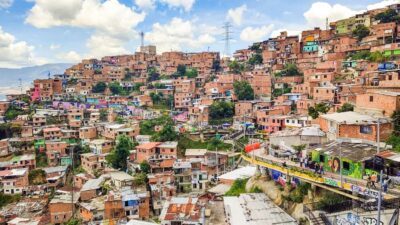 ★ 4.8Medellin: Comuna 13 Graffiti Tour, Cable Car & Street FoodFrom $189,046 reviews
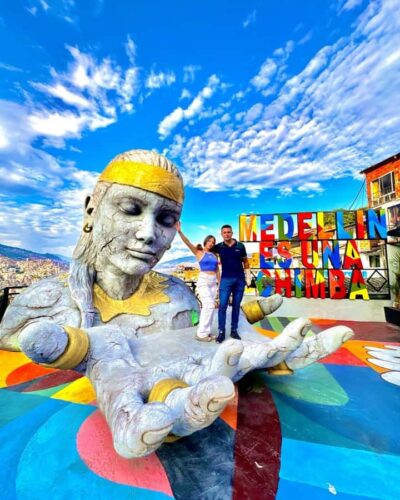 ★ 4.9Medellín: Comuna 13 True Story and Street Food TourFrom $141,779 reviews
 ★ 4.8Medellín: Comuna 13 District Tour with Cable Car RideFrom $271,467 reviews
 ★ 4.9Medellín: Private City Tour with Metrocable and Comuna 13From $76330 reviews
 ★ 4.9Medellín: Comuna 13 Tour with Snacks And Your Own GraffitiFrom $11311 reviews
 ★ 4.5City Tour + Commune 13 MedellinFrom $37295 reviews
 ★ 4.7Bogotá: La Candelaria Graffiti & Urban Art Guided TourFrom $16250 reviews
 ★ 4.9Medellín: Comuna 13 and Graffiti Guided Tour with a LocalFrom $16239 reviews
Where else this tour turns up