
REVIEW · WALKING TOURS
Comuna 4 Walking Tour Medellin
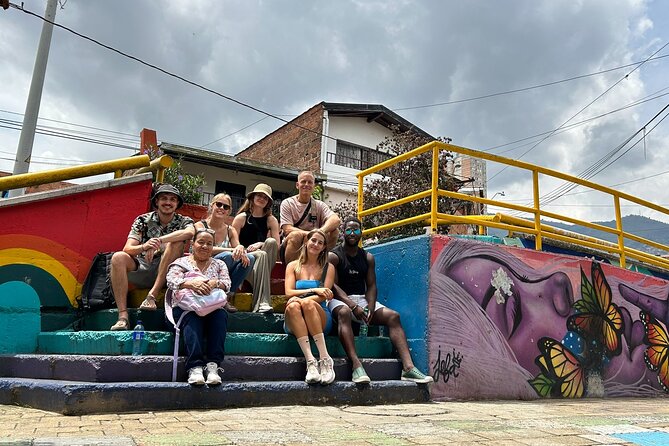
Moravia in Medellín is not the kind of story you get from a postcard. This 3.5 hour Comuna 4 walking tour mixes a bilingual guide and community ambassadors, like Gladys, with real, lived context on how the neighborhood formed, how it was meant to change, and what that change cost people. I especially liked the way the tour keeps pointing you to the human stakes behind Medellín’s famous transformation.
Two things I also like a lot: the pace stays calm while you move through the neighborhood’s key places, and the stop at La Resistencia de Moravia explains why families have pushed back against a government reallocation plan for more than a decade. One possible drawback: this is a serious, discussion-heavy route. If you want a light, photo-only walk, this may feel heavier than you expected.
In This Review
- Key highlights you will care about
- Why Comuna 4 feels different in Medellín
- Price and what you really get for $35
- Meeting points and how the walk is timed
- Stop 1: Estación Metro Caribe and the origins of Moravia
- Stop 2: Morro de Moravia and La Resistencia de Moravia
- Stop 3: Centro de Salud Moravia El Bosque and the welfare reality
- The quick cultural hit at cigarrería La Plaquita
- Shade, Fundación Oasis Urbano, and the strata system
- Stop 5: E.I. Fe y Alegría – Luis Amigó and the empanadas
- Stop 6: the synthetic pitch and the story of resilience
- Stop 7: Moravia Cultural Center and community-built infrastructure
- Guides you will remember: Toto and Gladys
- Who this tour suits best
- How to make the most of it
- Should you book this Comuna 4 walking tour?
- FAQ
- How much does the Comuna 4 walking tour cost?
- How long is the tour?
- Where does the tour start?
- Is it a small group tour?
- What is included in the price?
- Do I need hotel pickup?
- Is the tour near public transportation?
- What should I expect at the stops?
- Can I cancel for a full refund?
- Is this tour suitable for most people?
Key highlights you will care about
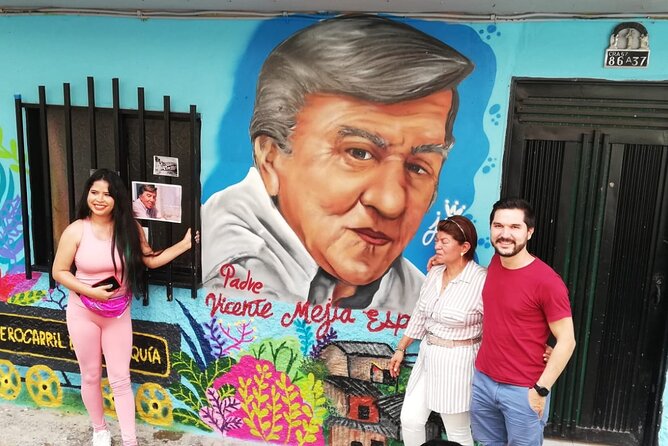
- You meet community leaders, including Gladys, not just a scripted guide
- You walk Moravia’s “other side of transformation”, including the resistance story
- You stop at neighborhood essentials, from health care realities to education and the strata system
- You get cultural signals through everyday sights, like football team graffiti at cigarrería La Plaquita
- You try snack time that actually fits the neighborhood, with tiny empanadas that come up again and again
- Your group stays small, with a maximum of 8 travelers for easier conversation
Other Medellin routes done on foot
- Medellin Historic Walking Tour★ 4.9 · 86 reviews
- 2-Hours Street Art Walking Tour in Medellin Comuna 13★ 5.0 · 54 reviews
- Walking tour downtown Medellín★ 5.0 · 39 reviews
- Walking tour, cable car & fruit tasting★ 5.0 · 33 reviews
Why Comuna 4 feels different in Medellín
Comuna 4, and especially Moravia, is where Medellín’s change becomes personal. Instead of only showing you polished viewpoints, the tour takes you through the places where residents have been building life, negotiating with authorities, and defending community choices.
What makes it work is the balance. You learn the neighborhood’s origins in the 1960s as an illegal settlement, then you get a version of Medellín’s transformation that isn’t the one you usually hear. The tone is thoughtful. It is not a lecture with a checklist. It is more like a guided conversation with people who have skin in the game.
And you feel the care in the small details. A football stop is not random. The graffiti is a map of identity. Snack time is not an afterthought. It is part of how the community stays connected to itself.
Price and what you really get for $35
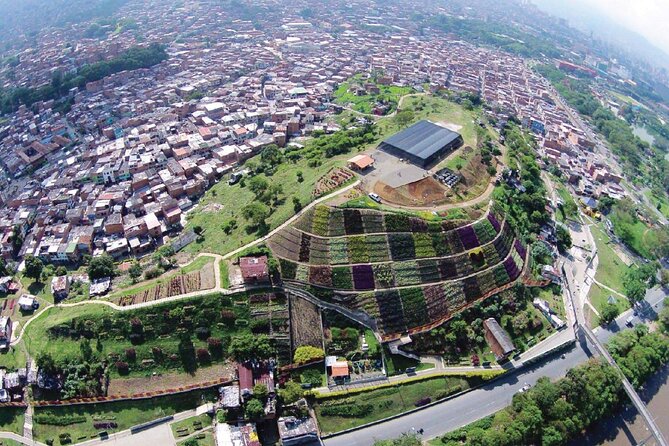
At $35 per person, this tour is priced in the “small but meaningful” range for Medellín. The value comes from what is included, not just the guide.
You get:
- a local community leader
- a professional bilingual tour guide
- a snack
- and a route that stays centered in the neighborhood rather than hopping around for convenience
Most importantly, you are paying for access to a perspective you cannot easily DIY. If you only take the classic city tours, you will miss how residents interpret transformation, welfare access, education, and the realities of daily survival.
Duration is about 3 hours 30 minutes. That is long enough to connect the dots between history, systems, and current life, but short enough that you are not stuck for an entire day.
Meeting points and how the walk is timed
You start in the Moravia area around public transit, with the first stop connected to Estación Metro Caribe. Your guide and community ambassador meet you there and set the tone right away with the neighborhood’s background.
The tour ends back at the meeting point, so you are not left figuring out a second transport leg. There is also no hotel pickup, so plan to arrive on your own time.
Group size matters here. With a maximum of 8 travelers, questions do not get lost. You can also move at a human pace through streets that feel tighter than the typical tourist corridors.
Stop 1: Estación Metro Caribe and the origins of Moravia
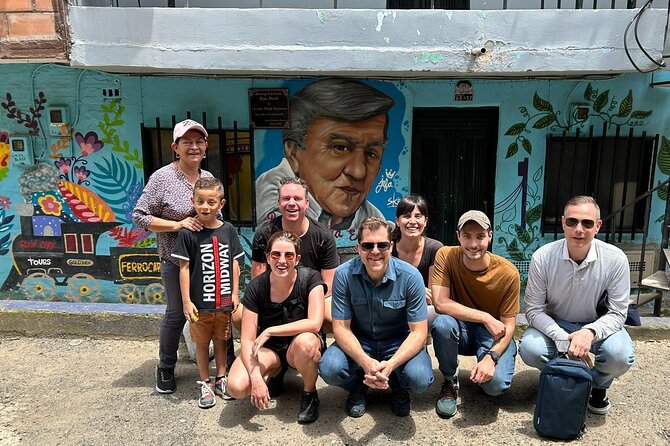
The walk opens with context, right at Estación Metro Caribe. This is where your guide and community ambassador lay down the foundation: how Barrio Moravia began in the 1960s as an illegal neighborhood.
You also hear one version of the transformation of Medellín, but framed from the neighborhood’s lived timeline instead of from the city’s official narrative. That framing is the key. You are not just learning dates. You are learning how people explain their own past and why that explanation matters now.
This first leg lasts about 30 minutes. It is a good length because it gets you oriented before you go deeper. If you arrive with no background on Medellín’s planning and public works, this start helps you catch up fast.
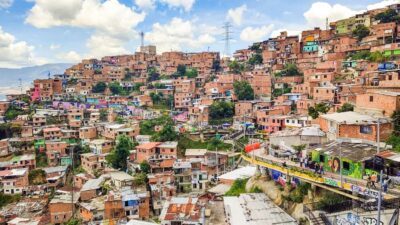
Stop 2: Morro de Moravia and La Resistencia de Moravia
Next you head to Morro de Moravia for La Resistencia de Moravia. This stop is where the tour turns from history into conflict and community strategy.
You get to know the “other side” of transformation. In plain terms: you hear why hundreds of families resisted a government reallocation plan, and you learn that this resistance has lasted more than a decade.
This is one of the most praised parts of the experience, because it makes the transformation story complicated in the right way. Medellín’s growth can look like progress from a distance. Up close, you see that “progress” can mean forced relocation for some people, and a slow loss of control over home, work, and networks.
You might find this stop emotionally intense. That is normal. It is also why the tour stays organized and guided. You are not just observing. You are being taught how to interpret what you see.
Stop 3: Centro de Salud Moravia El Bosque and the welfare reality
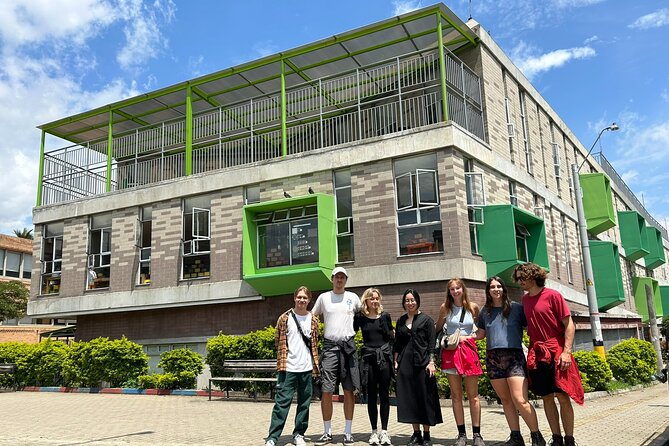
Deeper in the neighborhood, the tour pauses at Centro de Salud Moravia El Bosque. Here you sit and talk about Colombia’s health care and welfare system.
This stop focuses on a simple contrast that hits hard: the welfare system exists, yet almost half of Colombians do not have access. The guide connects that statistic to what you see around you, including the presence of street vendors.
I like this stop because it helps you stop blaming individuals. It frames the street economy as a response to gaps in access, not as a random “street scene.” It turns what might otherwise feel chaotic into something you can understand.
Time here is about 30 minutes, with a seated conversation style. If you are walking all day, this break is practical. It also helps you digest the previous resistance story without rushing.
The quick cultural hit at cigarrería La Plaquita
Not every stop needs to be long to matter. At cigarrería La Plaquita, you see graffiti dedicated to Medellín’s biggest football teams and you get the cultural meaning behind the sport in Colombian life.
This is only about 10 minutes. But it works because it gives you a shortcut to culture through art. Instead of asking you to imagine what football means, the stop shows you how that meaning appears on walls, daily.
If you are a sports fan, you will feel the logic instantly. If you are not, it still tells you something important: community pride has visual languages, and in Medellín, football is one of them.
Shade, Fundación Oasis Urbano, and the strata system
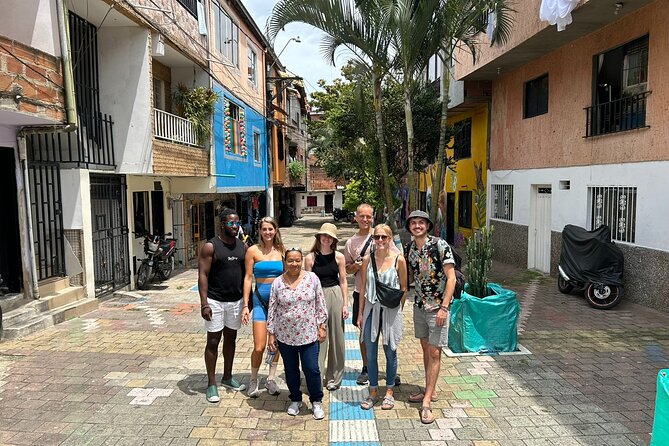
After the graffiti, the tour slows down again. You sit in the shade of trees in front of Fundación Oasis Urbano, then explore education and the strata system in Colombia.
This is a thoughtful pause in the middle of the walk. It keeps energy stable, which matters when you are in an area with fewer “tour comfort” options than central Medellín.
What you take away here is how systems show up in everyday life. The strata system comes up as part of how resources and attention flow, and education is framed as one of the ways people try to improve outcomes even when the deck is not fully even.
This stop is also a reminder that community transformation is not only about big city projects. It is about how neighbors keep educating children and organizing around opportunity.
Stop 5: E.I. Fe y Alegría – Luis Amigó and the empanadas
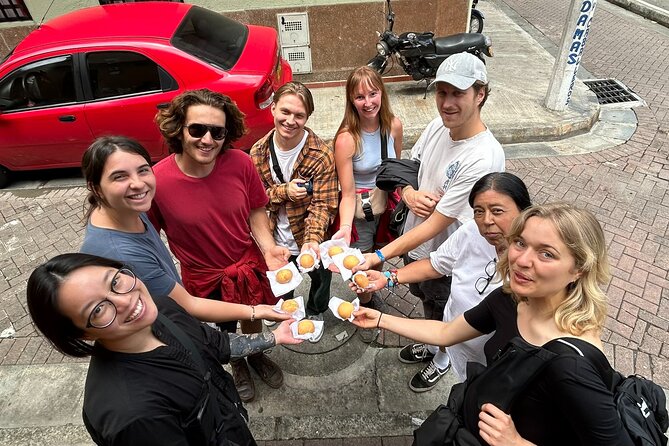
Now for snack time, done the right way. At E.I. Fe y Alegría – Luis Amigó, you get the tiniest yet most delicious street empanadas in the city.
This is about 10 minutes, but it is a high-impact moment. Food turns the tour from information into something sensory and human. It also signals respect for the neighborhood’s rhythms, not just a quick roadside bite.
One practical note: “tiniest” means you might want it as a snack rather than a full meal replacement. If you skip breakfast, consider eating before the tour.
Stop 6: the synthetic pitch and the story of resilience
At the synthetic pitch in Moravia, you see the neighborhood football field and meet the local ambassador tied to the space.
This part is only about 10 minutes, but it adds a layer the tour keeps returning to: resilience is not an abstract theme here. It is a person’s story, connected to a place kids use, a community that shows up, and hope that keeps getting renewed.
One of the reasons this stop lands well is that it connects football to life skills. You see how sport is not only entertainment. It is a way to maintain community and identity.
Stop 7: Moravia Cultural Center and community-built infrastructure
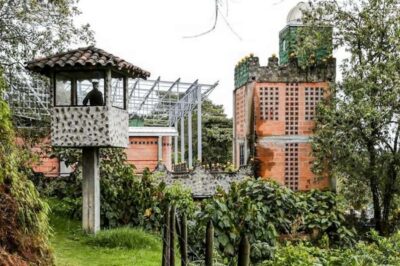
The tour ends with a visit to Moravia Cultural Center. You go inside the Centro Cultural with the community ambassador to learn how the community built the infrastructure.
This is about 30 minutes, and it is a fitting finale. Earlier stops covered origins, conflict, access to services, and cultural signals. Here you see what residents created themselves, not what only outside plans promised.
A few details from firsthand accounts stand out, like the idea that programs and spaces keep growing even while challenges remain. The neighborhood still faces issues including overpopulation. But the cultural center story reframes hope as practical. People built rooms, activities, and a local sense of continuity.
Guides you will remember: Toto and Gladys
One thing that shows up again and again in the experience: Toto and Gladys. Toto is described as thorough, compassionate, and passionate in how he explains Moravia’s history and transformation. Gladys, a resident with lived memory of the changes, brings the stories to life because she does not speak as an outsider.
There is also mention of Abuela Gloria, who adds another layer through direct presentation. When a tour has multiple resident voices, you get texture. You are not hearing one single narrative. You are seeing how people carry the same history differently.
This is exactly what makes the tour feel authentic. The tour does not just show you places. It gives you human context for why those places matter.
Who this tour suits best
This tour is a strong fit if:
- you want a real neighborhood perspective rather than a polished highlight reel
- you are interested in how cities transform, and what gets left out
- you are comfortable with walking plus discussion, not just sightseeing
- you like tours led by people who grew up in the story, like Gladys
It may be less ideal if you want:
- a purely casual, lighthearted stroll
- lots of time for shopping or lingering at viewpoints
- a tour that avoids heavy topics entirely
How to make the most of it
A few practical moves can help you get more from the walk.
First, bring a curious mindset and come ready to ask questions. The small group size is there for a reason.
Second, expect that some answers will be direct and sometimes emotional. If you are sensitive to stories of displacement or unequal access, give yourself permission to sit with it.
Third, pack for comfort. You are outside for hours, so wear comfortable shoes and bring water if you need it. Snack is included, but hydration and comfort keep you present for the conversations.
Should you book this Comuna 4 walking tour?
If you are deciding between a classic Medellín experience and something more human-scale, I think this one is worth booking. For $35, you get bilingual guidance, a community leader presence, a snack, and a route that explains why transformation is not a single story.
Book it if you want to understand Moravia beyond headlines, and if you like learning from residents like Toto and Gladys, whose personal context makes the history feel real rather than abstract.
Skip it only if you strongly prefer light, photo-first tours. This is a walk with meaning, and it will leave you thinking after you leave the neighborhood.
FAQ
How much does the Comuna 4 walking tour cost?
The tour costs $35.00 per person.
How long is the tour?
It lasts about 3 hours 30 minutes.
Where does the tour start?
The first stop is at Estación Metro Caribe, where your guide and community ambassador meet you. The activity also lists the meeting point in the Moravia area at Av. Regional #Calle 78, Castilla, Medellín, Antioquia.
Is it a small group tour?
Yes. The maximum group size is 8 travelers.
What is included in the price?
You get a local community leader, a professional bilingual tour guide, and a snack.
Do I need hotel pickup?
No. Hotel pickup or drop off is not included.
Is the tour near public transportation?
Yes. It is near public transportation.
What should I expect at the stops?
You’ll visit places such as Moravia’s historical starting point, La Resistencia de Moravia, a local health center for a welfare and health discussion, a spot with football-themed graffiti, areas linked to education and the strata system, and the Moravia Cultural Center.
Can I cancel for a full refund?
Yes. Free cancellation is available up to 24 hours before the experience start time for a full refund.
Is this tour suitable for most people?
Most travelers can participate. Service animals are allowed.
The Rest of Our Medellin Reviews
Everything Else We Reviewed in Medellin
Walk Medellin Slowly
Just added to our Medellin shelf
- Tour to Río Claro and La Caverna del Cóndor
★ 5.0 · 3 reviews - Tour Medellín: Pablo Escobar and Commune 13
★ 5.0 · 3 reviews - Shared Tour Medellin’s Violence & Post-conflict after Pablo
★ 4.1 · 3 reviews - Medellin: Coffee Farm Tour & Spa with Overnight Glamping
★ 4.5 · 3 reviews - Medellin: Traditional Food Tour
★ 4.9 · 3 reviews
Walking Tours, compared.
 ★ 4.9Cartagena: Historic Center and Getsemaní Shared Walking TourFrom $122,716 reviews
 ★ 4.8Bogotá: Guided La Candelaria Walking TourFrom $161,229 reviews
 ★ 4.5Cartagena: Walled City and Getsemani Shared Walking TourFrom $16352 reviews
 ★ 4.9Medellin Historic Walking TourFrom $1486 reviews
 ★ 5.0The Cali Street Food Walking TourFrom $3281 reviews
 ★ 5.0A Pearl In The Caribbean-walking tour in EnglishFrom $1671 reviews
 ★ 5.0Cali: Walking tour of the historic centerFrom $4169 reviews
 ★ 5.0Zipaquirá Salt Cathedral Private Tour + Walking TourFrom $18566 reviews
Where else this tour turns up