
REVIEW · COLOMBIAN FOOD, FRUIT & STREET EATS
Medellín Multi-sensory Tour in the market, +15 Exotic Fruits
Fruit tastes better with local stories. This multi-sensory walk through Plaza Minorista José María Villa turns lunch-menu fruit into 15 to 20 tastings tied to real market life, so you get flavor first and culture right alongside it. I like the setup that makes you slow down and taste properly, with a personal spoon, napkins, and fruit-cleaning items included. I also like the trader-to-trader feel, because you are not just sampling, you are hearing how stalls find, price, and sell their produce.
One thing to plan for: you’ll be on your feet in a busy market with no water included, and it is not suitable for food allergies. Bring comfortable closed-toe shoes, and if you tend to get snacky, eat light before you go because the fruit keeps coming.
In This Review
- Key highlights worth your morning
- Plaza Minorista José María Villa, the fruit market that actually teaches
- The 2.5-hour morning flow, and how to not feel rushed
- Start at Puerta 1, get oriented, then step into market life
- First market stop: photo stop, self-guided wandering, then fruit tasting
- Second and third market loops: traders explain sourcing and seasonality
- Break time and the finish: juice after you’ve tried enough
- What you’ll taste: the tropical lineup and how to eat it right
- Guide power: why small groups and vendor connections matter here
- Price and value: why $36 can be a smart deal for fruit and access
- Who should book, and who should think twice
- Should you book this Medellín multi-sensory fruit tour?
- FAQ
- Where is the meeting point for the Medellín fruit tour?
- How long is the tour?
- How many fruit tastings are included?
- Is fruit juice included?
- What should I bring or wear?
- Is water included in the price?
- Is the tour suitable for people with food allergies?
- How big is the group and what languages are available?
Key highlights worth your morning

- 15 to 20 fruit tastings in season with the exact mix changing as harvest shifts
- Local trader access through stalls that feel familiar to Medellín regulars
- A multi-stop route on foot with repeated tasting blocks, photo moments, and breaks
- Fruit-cleaning and personal spoon so you can eat with less mess and more confidence
- Small groups of up to 8 so questions land and conversations keep going
- Finish with fruit juice after a full circuit of the market’s flavors
Other tables, stalls and fruit carts nearby
- Medellin: Comuna 13 Graffiti Tour, Cable Car & Street Food★ 4.8 · 9,046 reviews
- Medellín: Comuna 13 True Story and Street Food Tour★ 4.9 · 1,779 reviews
- Medellin: Street Food and Poblado Rooftop Tour with a Local★ 4.8 · 317 reviews
- Medellín Multi-sensory Tour in the market, +15 Exotic Fruits★ 5.0 · 113 reviews
Plaza Minorista José María Villa, the fruit market that actually teaches
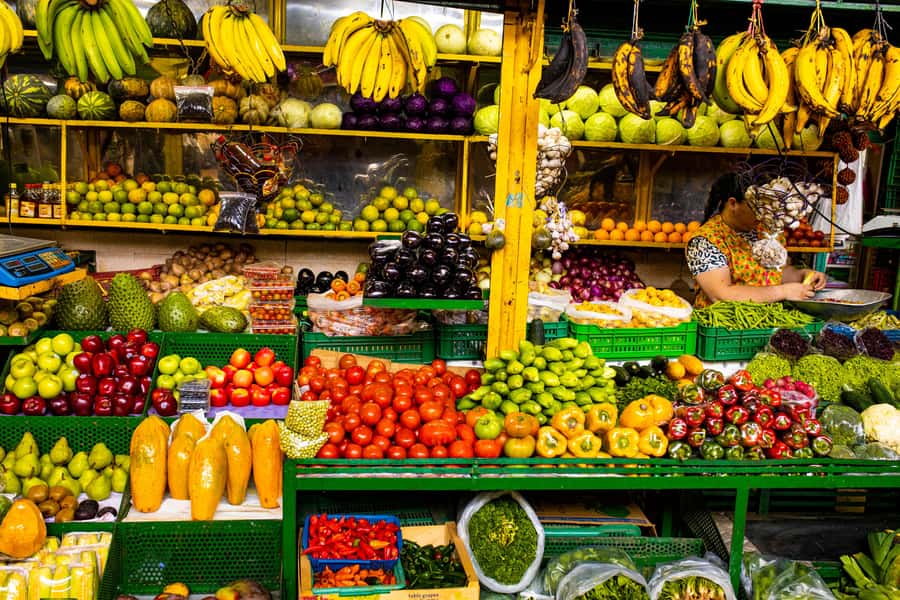
Medellín has a lot of good ways to spend an afternoon, but this is one of the few that feels like a classroom where the lessons are edible. The tour is centered on Plaza Minorista José María Villa, the economic heart of the city since 1984, and that matters. Markets like this are not just where people buy food. They are where the city’s daily rhythm gets sorted out, traded, negotiated, and sent onward.
You’ll also feel the tour’s “80% flavor, 20% history” design quickly. Instead of a lecture, you get a guided rhythm: taste, listen, look, taste again. Each fruit becomes a small story about where it comes from, why it shows up now, and how locals eat it. That is the kind of travel value that sticks, because once you taste something like lulo or granadilla, you start recognizing it again when you see it later in shops or restaurants.
And the “multi-sensory” part is real. You are walking a market full of colors and smells, and you are learning how fruit moves through the space. Even if you just came for the food, you’ll leave understanding the market’s logic: what people buy, when they buy it, and how traders talk to each other.
The 2.5-hour morning flow, and how to not feel rushed
This runs about 150 minutes in the morning, when the market is busiest and the stalls are most active. Timing affects everything here. If you go later, you can miss that full-on “people are working” energy that makes conversations happen. Morning also helps you keep your energy for walking and tasting without burning out.
Your route is built with short legs and repeated market stops. You start at Plaza Minorista at Puerta 1 (P1), Door 1, and your guide waits with a purple umbrella. From there, you get a short safety briefing (about 10 minutes) and a couple of quick on-foot segments (about 5 minutes each) that reposition you inside the market.
Then the tour cycles through tasting-heavy blocks. Each main market visit is around 30 minutes, so you are not stuck in one stall trying to decide what you want. You move, taste, learn, take photos, and then move again. The pacing also includes break time during the latter part of the walk, which helps you reset your palate before the next round.
If you’re the type who hates being hustled, this is still structured enough to feel organized, but it leaves room for questions. The small group size, capped at 8 participants, is a big reason why. You don’t get lost in a crowd.
Start at Puerta 1, get oriented, then step into market life
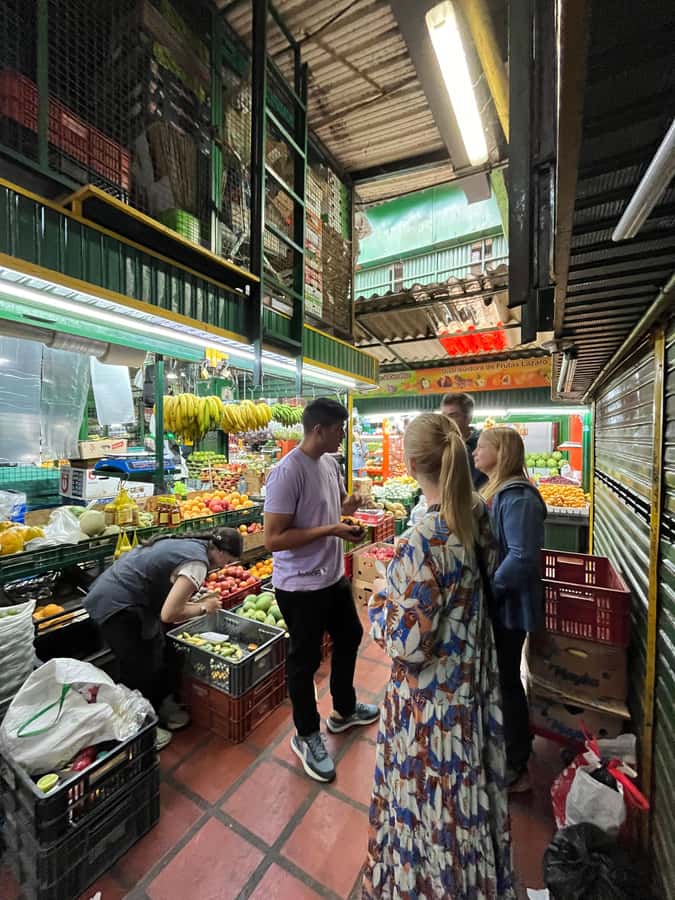
Your meeting point is very specific for a reason: Plaza Minorista has multiple entrances. You’ll want to arrive at the main entrance Puerta 1, P1 and look for your guide under the purple umbrella.
Right away, the tour takes the edge off the unfamiliar. The safety briefing at the start is short, but it sets expectations for walking in a public market environment. After that, there’s a short walk and then you’re into the first stall circuit.
This early part matters more than you might think. Markets can be confusing if you’ve never seen one like this. You could technically wander on your own, but you would miss the “why” behind what you see. With a guide, you learn how traders think, how they talk, and what to notice while you’re still fresh and curious.
First market stop: photo stop, self-guided wandering, then fruit tasting
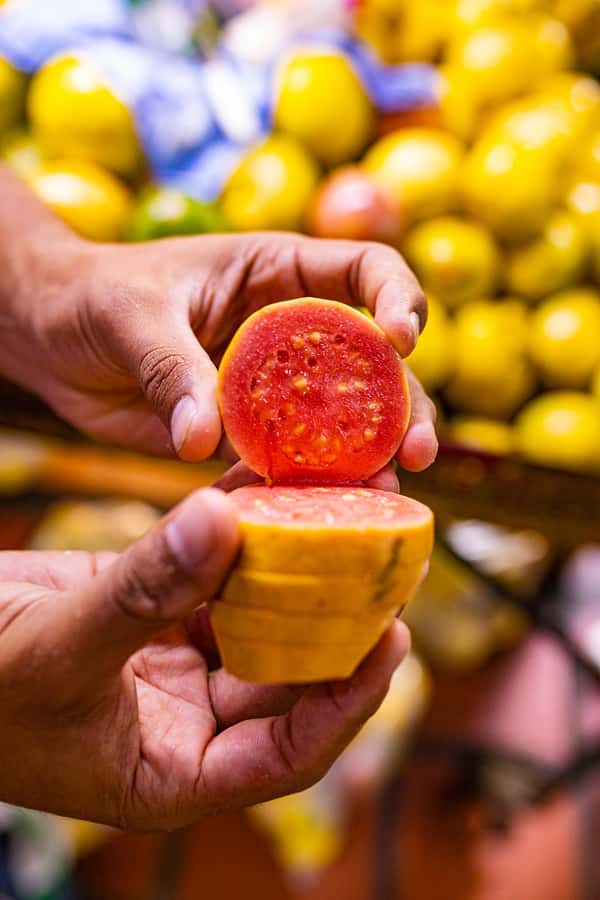
The first big stop is where you start building your mental map. You’ll do some guided touring, then there’s a photo stop plus a chunk of self-guided time inside the market. That mix is smart. You get guided context, but you also get to look around with your own eyes before the tasting round continues.
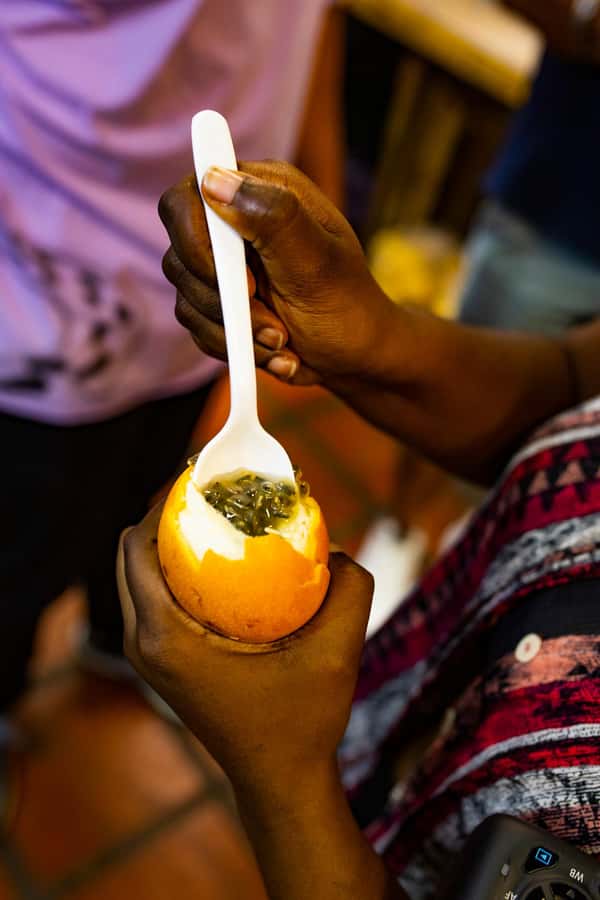
Expect a tasting segment during this first visit. You’ll use a personal spoon and the tour provides napkins and hand-cleaning items plus fruit cleaning supplies. That practical kit is a quiet quality-of-life upgrade. Fruit is messy if you eat it wrong, and this setup helps you focus on taste instead of chasing stains.
This is also a moment where you should pay attention to how locals approach fruit. Some fruits are eaten with simple add-ons like lime and salt. Others may come with things like condensed milk depending on what you try. You’re not just tasting fruit, you’re tasting local “how we eat it” preferences.
Other Medellin markets worth the wander

Second and third market loops: traders explain sourcing and seasonality
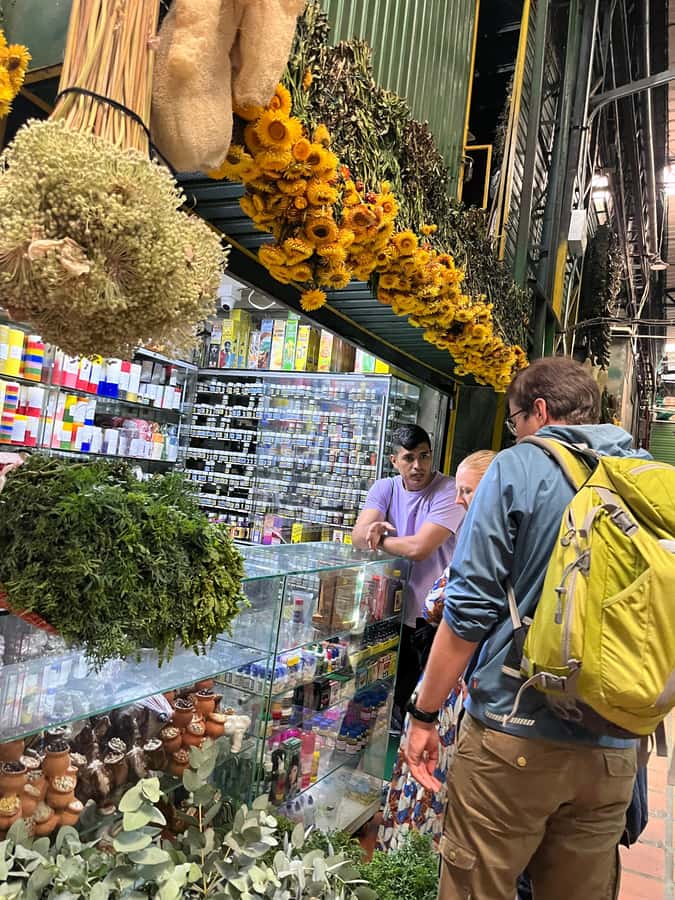
The tour repeats its market visit rhythm again, with another guided circuit of about 30 minutes and another repositioning walk in between. That repetition is what makes it work. You’re not getting one flavor experience. You’re seeing how the market keeps feeding itself with new batches of produce.
One of the most praised aspects of this tour is the access to the people behind the stalls. Guides like Sergio, Laura, Adriana, Cheche, and Daniel come up again and again in participant comments, and a common thread is that the guides know the market’s human side. You’re interacting with traders who share sourcing anecdotes and practical market wisdom, like how they get fruit, why certain fruits show up at certain times, and what the stall is known for.
You’ll likely notice how much of the learning happens through conversation, not a slideshow. That’s where the “market secrets” idea becomes tangible. Traders aren’t performing for tourists. They’re working. When you have a guide who can talk with them like a neighbor, you see the market as an operating system rather than a photo backdrop.
At this stage, the biggest value is in seasonality. The tour says the selection is based on harvest season, so you can’t treat it like a fixed checklist. Instead, treat it like a living sampler. If a fruit is at its best today, you get it, and you learn why that timing matters.
Break time and the finish: juice after you’ve tried enough
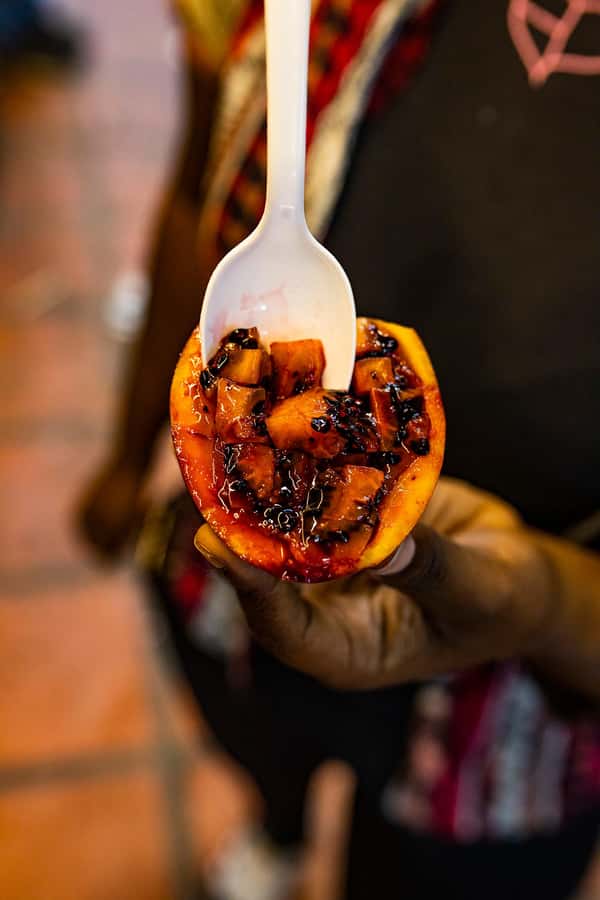
Later in the tour, you’ll hit break time while still staying inside the market flow. This gives you a chance to catch your breath, compare what you liked, and ask the guide to help you sort out the fruit names you are juggling. Multiple participants mention getting a list of the fruits they tried, which is helpful because markets move fast and the fruit names can sound unfamiliar.
Then you end with fruit juice. Juice is the finishing note that ties everything together. If the tastings are about texture and flavor, the juice is about balance, sweetness level, and how the fruit turns into something drinkable without losing its identity.
Also keep your eyes open for small surprises. A couple of people mention spotting cats around the market. That’s not something you should plan around, but it adds to the real-world feel. This is a working market, not a staged set.
What you’ll taste: the tropical lineup and how to eat it right
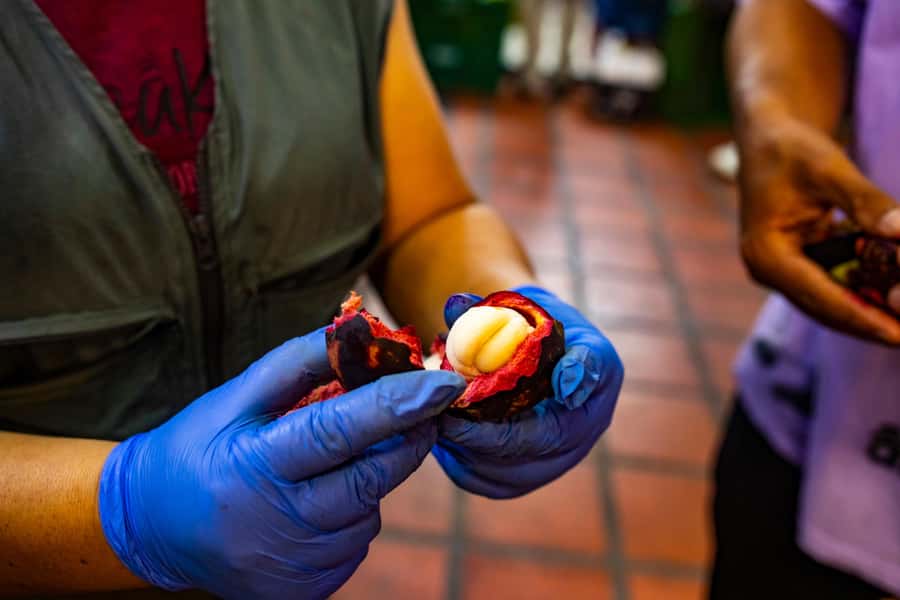
The tour promises 15 to 19 premium fruit varieties (with the exact count depending on harvest and what’s available). The fruits listed include standouts like mango, lulo, and granadilla, plus items such as pitahaya, guava, and guanábana. You may see other options too, and that’s part of the appeal. The goal is variety, not just familiar fruit.
A practical way to approach tastings:
- Try each fruit once plain, then see if you want the salt-and-lime or condensed-milk style with that same fruit
- Pace yourself. If you slam everything at once, you lose nuance
- Use the cleaning supplies. Wipe, rinse, and reset so you can compare flavors accurately
From the strong feedback this experience gets, the most-loved tastings are usually the ones that people had never seen before. The market is a treasure chest for names you might not recognize, and the guide helps connect the fruit to what you’ll likely taste later in Medellín.
And yes, mango tends to be a crowd favorite. Multiple comments call out especially great mangoes from this market experience, which makes sense because mango is both widely grown and deeply local in how people eat it.
Guide power: why small groups and vendor connections matter here
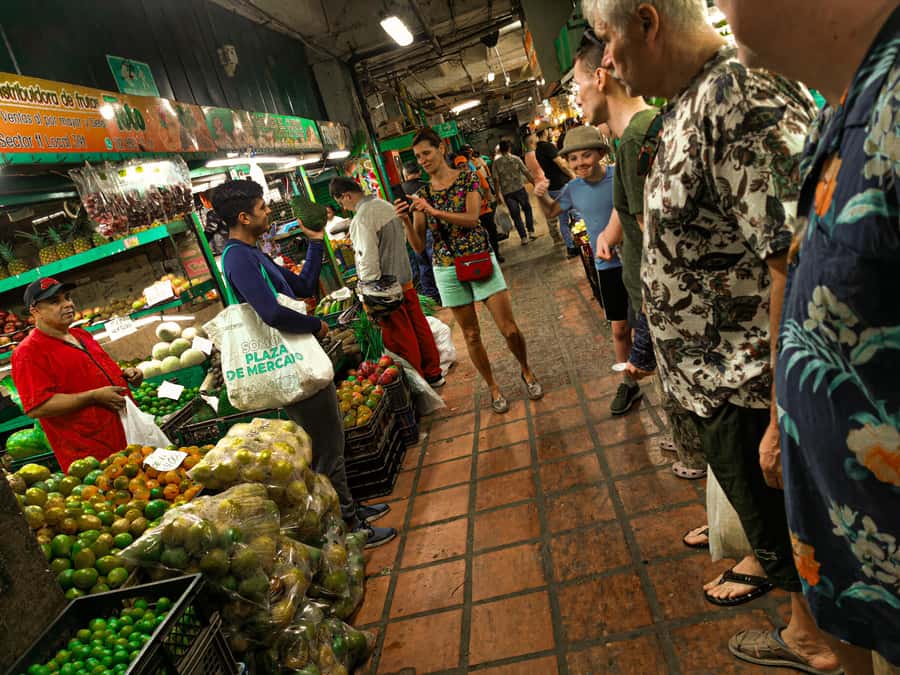
A fruit tour can be just a walk with samples. This one works because it’s built around people. The tour is guided by locals and designed for small groups up to 8 participants, which makes conversations possible and reduces the awkwardness of eating in public.
The guides highlighted most often, like Sergio, show up for a reason. People describe guides as engaging and friendly, with strong ties to the market and the ability to connect you to vendors like real humans. When a guide can speak comfortably with traders, you don’t just receive fruit. You get context and stories. That context is what makes the fruit taste even better, because you’re tasting a place, not a product.
Another advantage is that you can usually ask practical questions while you’re there, like what to buy for sweetness versus acidity, or which fruits are best to try right now. A couple of participants even mention the guide helping them select fruits to buy after the tasting, so you can bring home more than a memory.
Price and value: why $36 can be a smart deal for fruit and access
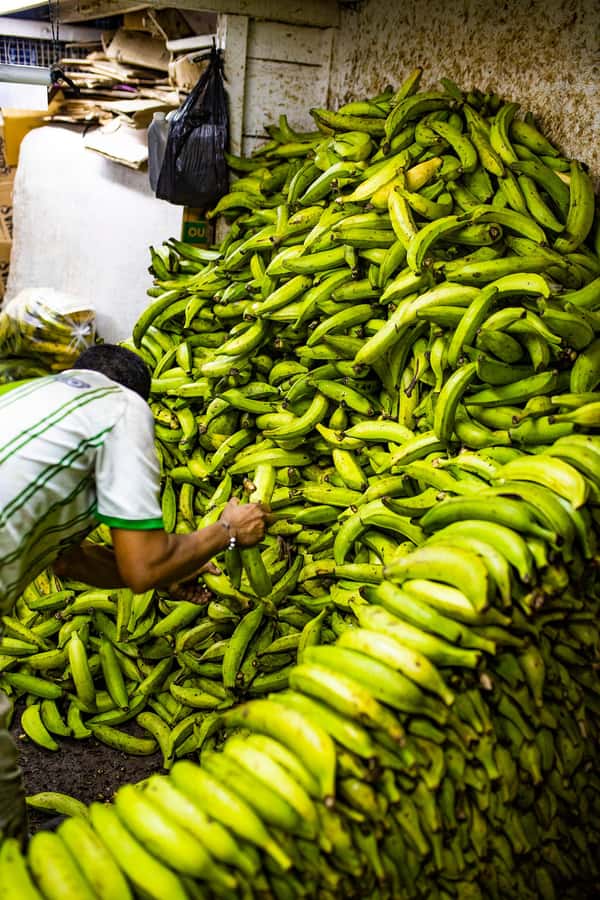
At $36 per person for about 2.5 hours, you’re not paying for a single fruit plate. You’re paying for:
- 15 to 19 fruit varieties plus juice
- A guided walking route with multiple market stops
- A personal spoon, napkins, and fruit cleaning supplies
- The small-group format and local vendor access
- A portion of the ticket supporting small producers in the plaza
The value argument is simple: buying that kind of variety on your own adds up fast, and you lose the “someone who knows the market” advantage. More importantly, the money goes into a working system, not into a generic souvenir circuit.
If you are a foodie or you want an authentic first taste of Medellín food culture, this is one of the better ways to spend a morning. You’ll leave full, with a list (often shared) of fruit names, and with a better sense of what to look for later.
Who should book, and who should think twice
This is a great fit if you:
- Like food tours that teach as they feed you
- Want a small-group experience instead of a big group shuffle
- Are curious about how Medellín’s market scene works beyond the produce
It can be a tough fit if you:
- Have food allergies, since the tour is not suitable for people with allergies
- Need a fully seated experience, because it involves walking inside a market
- Hate crowds or close quarters, even though the group cap keeps it manageable
If you’re traveling with kids, it might work for older kids who can handle standing and tasting, but the tour is designed as an adult-friendly market walk. You’ll need to use your best judgment based on your group.
Should you book this Medellín multi-sensory fruit tour?
If you’re the type of traveler who thinks, I want to see the real daily life, then yes, book it. This is one of the few Medellín experiences that uses food as a doorway into how the city functions. The combination of market access, multiple tasting rounds, fruit-cleaning tools, and small-group guidance makes it feel practical, not performative.
My recommendation: go hungry in a smart way. The tastings are the star, and several people advise skipping breakfast or eating something light. Wear closed-toe shoes, because sandals and flip-flops are not allowed. And plan to pick up water nearby since water is not included.
If you want Medellín flavors with context, start here. Then use what you learned as a shopping cheat sheet while you’re in town.
FAQ
Where is the meeting point for the Medellín fruit tour?
Meet at the Plaza Minorista José María Villa main entrance at Puerta 1, P1 (Door 1). Your guide will be waiting there with a purple umbrella.
How long is the tour?
The tour lasts about 150 minutes, or roughly 2.5 hours.
How many fruit tastings are included?
The tour includes tasting of 15 to 19 fruit varieties, depending on harvest season.
Is fruit juice included?
Yes. Fruit juice is included as part of the experience.
What should I bring or wear?
Bring your passport or ID card (a copy is accepted). Wear comfortable shoes. Sandals and flip-flops are not allowed.
Is water included in the price?
No, water is not included.
Is the tour suitable for people with food allergies?
No. It is not suitable for people with food allergies.
How big is the group and what languages are available?
The group is limited to a maximum of 8 participants. The guide is available in English and Spanish.
Where Medellin Shops

Medellin Market Days
Fruit Carts, Stalls and Long Lunches


Just added to our Medellin shelf
- Tour to Río Claro and La Caverna del Cóndor
★ 5.0 · 3 reviews - Tour Medellín: Pablo Escobar and Commune 13
★ 5.0 · 3 reviews - Shared Tour Medellin’s Violence & Post-conflict after Pablo
★ 4.1 · 3 reviews - Medellin: Coffee Farm Tour & Spa with Overnight Glamping
★ 4.5 · 3 reviews - Medellin: Traditional Food Tour
★ 4.9 · 3 reviews
Colombian Food, Fruit & Street Eats, compared.
 ★ 4.8Medellin: Comuna 13 Graffiti Tour, Cable Car & Street FoodFrom $189,046 reviews
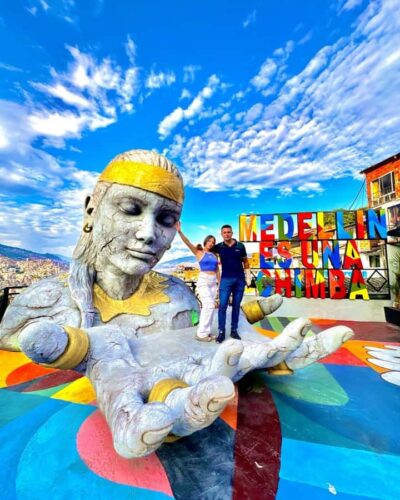 ★ 4.9Medellín: Comuna 13 True Story and Street Food TourFrom $141,779 reviews
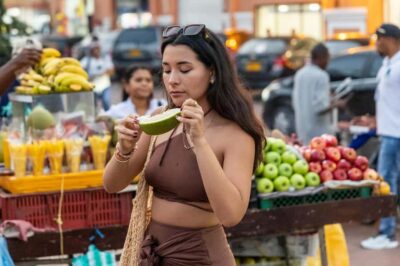 ★ 4.9Cartagena: Guided Street Food Tour with TastingsFrom $49833 reviews
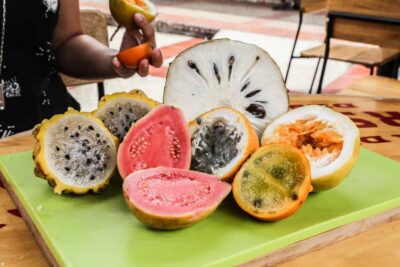 ★ 4.9Bogota Food Tour with over 12 Tastings & TejoFrom $56454 reviews
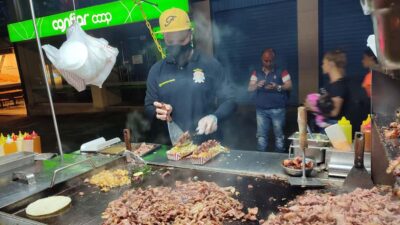 ★ 4.8Medellin: Street Food and Poblado Rooftop Tour with a LocalFrom $39317 reviews
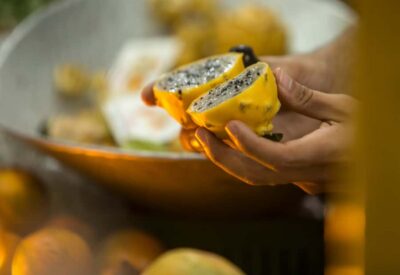 ★ 5.0Medellín: Guided Exotic Fruits TourFrom $36202 reviews
 ★ 4.5Medellin: Party Bus with DJ & Street Food TastingsFrom $36112 reviews
 ★ 4.8Medellín: E-bike and Foodie TourFrom $48102 reviews
Where else this tour turns up