
REVIEW · COMUNA 13 & GRAFFITI STREET ART WALKS
Graffiti Tour: a fascinating walk through a street art City
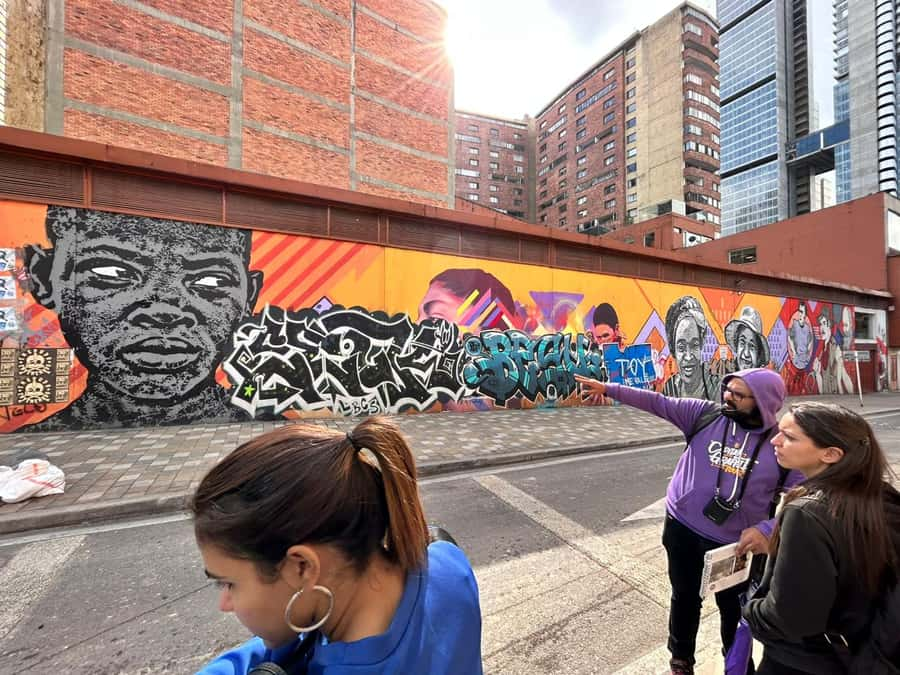
Graffiti in Bogotá feels like street news. This tour turns walls into stories, from illegal street art to the politics pasted right onto concrete.
I especially love seeing the tallest illegal graffiti in Colombia and hearing what makes it matter beyond the paint. I also like how the walk connects art to real social issues, including posters tied to the current peace process and the city’s hopes for a better future.
One drawback to consider: this is grounded in tough themes, including references to false positives and resilience, so if you prefer purely playful street art, you may want to be ready for heavier context.
In This Review
- Key Things You’ll Notice on This Bogotá Graffiti Tour
- Start at the Gold Museum and Learn the City’s Street-Language
- The Tallest Illegal Graffiti in Colombia, and How to Look at It
- Political Posters and Social Issues: Art as Ongoing Debate
- False Positives, Resilience, and Why the Walls Won’t Stay Quiet
- How the Guides Translate Technique Into Meaning
- Social Impact Built Into the $15 Price
- Duration and Timing: A 150-Minute Walk That Stays Focused
- Who This Tour Suits Best
- Practical Notes for a Smooth Bogotá Graffiti Experience
- Should You Book Capital Graffiti Tours?
- FAQ
- Where is the meeting point for the graffiti tour?
- How long is the Bogotá graffiti tour?
- How much does the tour cost?
- What languages are available for the live tour guide?
- Is the tour wheelchair accessible?
- Is it a shared tour or can I book privately?
- What is included in the tour price?
- What should I not bring?
- How does the Shared option work for payment at the end?
- Can I cancel for a refund?
- Can I reserve now and pay later?
Key Things You’ll Notice on This Bogotá Graffiti Tour
- The tallest illegal graffiti in Colombia, framed with context so you understand why it survives
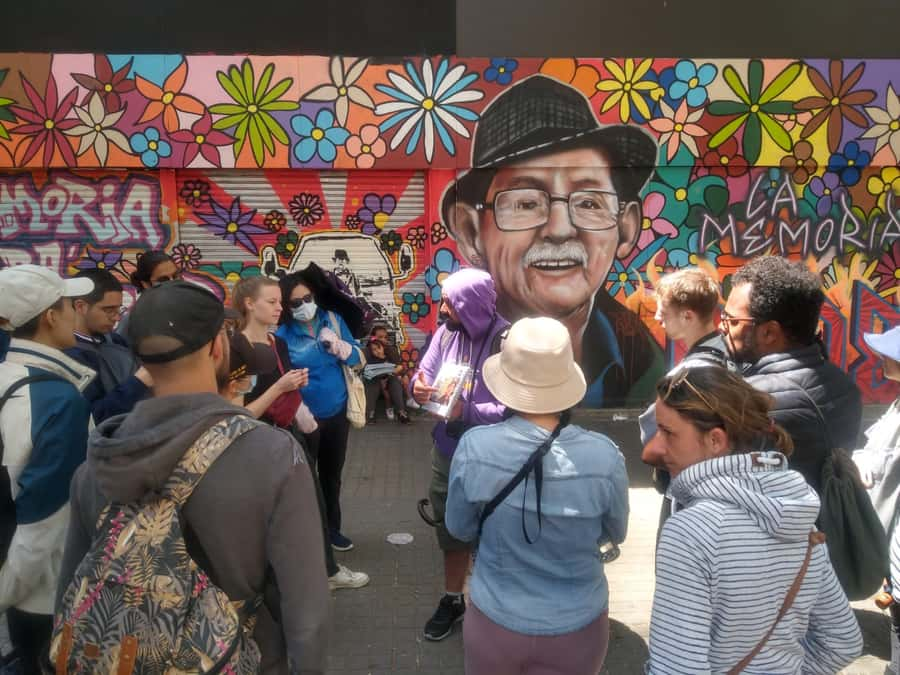
- Political poster-heavy walls, focused on current social issues, not vague street symbolism
- Community resilience in the face of false positives, explained through what you see
- Local artists and community leadership, with new mural work supported through the tour’s model
- Techniques and sources explained on the move, so you start reading styles, not just images
Other guided walks through the painted stairways
- Bogotá: La Candelaria Graffiti & Urban Art Guided Tour★ 4.7 · 250 reviews
- Fun Graffiti Workshop: The Art of Aerosol and Color★ 5.0 · 73 reviews
- Graffiti Tour in La Candelaria Bogotá with Transportation★ 5.0 · 68 reviews
- Bogotá: Graffiti Tour el mejor recorrido de arte urbano★ 4.7 · 41 reviews
Start at the Gold Museum and Learn the City’s Street-Language
Most graffiti tours start with a mural photo. This one starts with your guide helping you read Bogotá while you walk.
You’ll meet next to the Gold Museum at Carrera 6 # 15-88. Look for the guide in a purple hoodie, cap, or umbrella, which makes it easy to spot even if you arrive a few minutes late. From the first stop, the tone is clear: street art here is not random decoration, it is communication.
What you get right away is interpretive context. Your guide is an artist or works closely with the creative community, so explanations tend to be practical. You’ll hear the political and historical backdrop behind the work, plus the geography of where certain messages tend to show up. In a city like Bogotá, that matters, because art is often shaped by local pressure, local grief, and local hope.
The Tallest Illegal Graffiti in Colombia, and How to Look at It
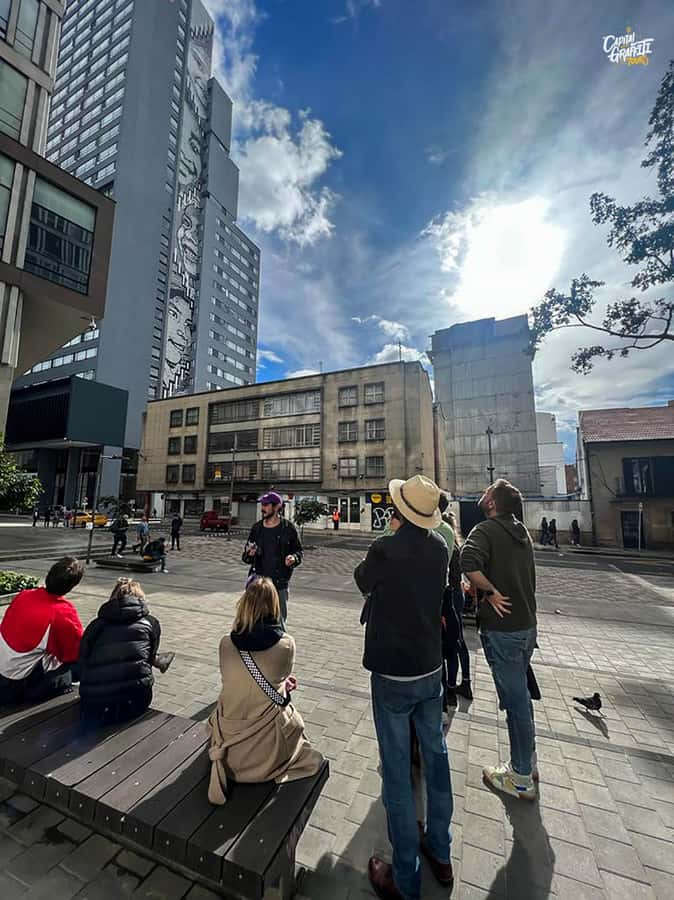
One of the biggest draws is simple: you’ll see the tallest illegal graffiti in Colombia. But the real value is how you look at it.
Instead of treating the mural like a single impressive sight, your guide helps you notice scale choices, placement, and visual strategy. Tall work changes how people relate to it. From farther back, you read the message as a whole. Up close, you can pick up details like line quality, color intensity, and the way layers are used to hold attention.
Illegal graffiti also carries a built-in tension. It exists in public while challenging authority. That tension is the point of the stop. Your guide uses the tall mural to talk about what the community is pushing against, and why street art can become a kind of ongoing testimony.
Practical note: when you’re aiming your phone at height, keep your hands steady and be aware of traffic. You’re watching the art, but you’re also in a real neighborhood, not a staged viewing platform.
Political Posters and Social Issues: Art as Ongoing Debate
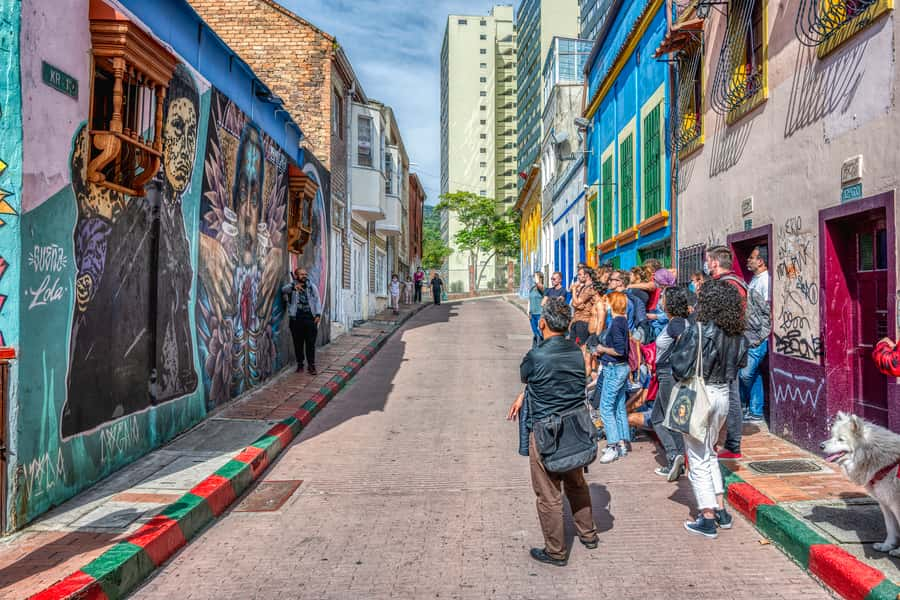
Bogotá’s street art is famous for attitude, but this tour adds structure to that attitude. You’ll explore an area with political posters addressing current social issues, and the tour helps connect those posters to the city’s present moment.
You’ll likely see how street messages work differently from traditional media. Posters are often direct and urgent. They can look like they belong to today’s headlines, even when the wall has been standing for years. Your guide frames what those messages are responding to, including references to the ongoing peace process and broader aspirations for a better future.
The best part here is that the political content is not delivered like a lecture. It’s taught through what you see, then connected to the bigger picture. You come away with a clearer sense of how urban art becomes a public conversation. And because these posters are tied to actual social issues, you start noticing patterns: who gets represented, what language repeats, and what kinds of images appear when people want to be heard.
False Positives, Resilience, and Why the Walls Won’t Stay Quiet
The tour doesn’t dodge the hard stuff. It highlights the resilience of the community in the face of false positives, and that theme is handled through the art you encounter.
False positives is one of those topics that is emotionally loaded and politically complex. Even without getting lost in terms, the meaning is usually clear when you’re shown the visuals and explained the context. You see how communities protect memory and press for accountability by using the city itself as a record.
This is one of the tour’s most powerful angles. It argues that graffiti is not just rebellion for its own sake. It can be survival, mourning, and insistence that the truth matters.
If you’re worried about the vibe, here’s the honest take: expect a mix of anger, determination, and careful explanation. It isn’t all heavy, but it is grounded. So bring a little emotional readiness if you tend to prefer light sightseeing only.
Other Bogota routes done on foot
How the Guides Translate Technique Into Meaning
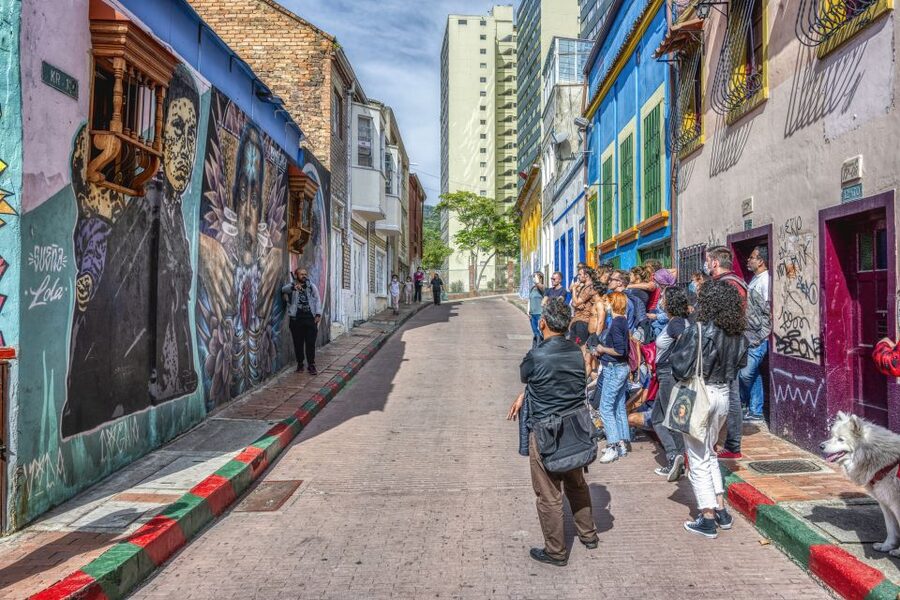
The tour’s education side is not hidden in the fine print. Your guides explain techniques, sources of inspiration, and the context that helps you understand why an artwork looks the way it does.
Because you’re working with an English-speaking guide, you’ll still get the details even if your Spanish is basic. And the tour lists multiple languages, so you might hear English, Spanish, Italian, French, or German depending on the group. That flexibility is useful in Bogotá, where you’ll often find a mix of nationalities in the street art scene.
A big part of what I like is the way technique gets tied to story. Instead of only saying the artwork is political, you’re shown how choices in style communicate urgency, grief, satire, or solidarity. That approach helps you notice things fast, like:
- whether a piece looks planned and composed or more reactive and fast
- how layers cover older messages
- how color intensity shifts attention to certain words or faces
You don’t need to be an art student. You just need to pay attention, and your guide does the heavy lifting of translation, both visual and cultural.
Social Impact Built Into the $15 Price
At $15 per person for about 150 minutes, you’re not just paying for a walk and a few photos. You’re paying for guided interpretation and for a model that supports ongoing mural work.
Here’s the value logic I find convincing: the tour is presented as artist-promoted, not just a sightseeing product. It emphasizes collaboration with local artists and community leaders and says it reinvests in financing and management of new murals that keep changing the urban landscape. That makes a difference because you’re not only looking at art you might later forget. Your money is tied to future creation.
If you choose the Shared option, the pricing works differently than many tours. What you pay per person is described as covering the suggested tip for the guides and their work, minus commission. The key practical point is that at the end of the tour, you do not have to pay anything extra, even if other travelers do.
That approach can feel fairer than the usual tip-then-hope system. Still, if you’re the type who likes to read the room with generosity, keep a little extra in mind, but the tour itself is set up so you are not required to add a late payment.
Duration and Timing: A 150-Minute Walk That Stays Focused
150 minutes is a sweet spot for street art. Long enough to cover multiple locations and themes, short enough that you’re not exhausted by the time you want to keep exploring on your own.
The tour is designed as a street walk through multiple street art and graffiti locations, with enough time for your guide to explain context and technique at each stop. That structure matters because graffiti isn’t static. You’re learning to see it as layered communication, not just a single image.
If you’re planning the rest of your day in Bogotá, I recommend scheduling something flexible right after. You may find yourself wanting to stop for extra photos or follow up with more street art in the same general area while the stories are still fresh in your mind.
Who This Tour Suits Best
This is a great fit if you want street art that connects to real Colombian life. You’ll enjoy it most if you like:
- political and social context, not just aesthetics
- street-level storytelling and lived community meaning
- learning how artists work, including techniques and inspiration
It is also a good choice for mixed-language groups because your guide can operate in multiple languages. And it offers private or small groups, which is useful if you prefer quieter conversations and more personal pace.
One more practical detail: the activity notes that valuables are not allowed. That means you should travel light. Keep only what you need during the walk, and store anything important according to your own comfort level. If you are used to carrying everything in a crossbody bag, this is a moment to simplify.
Practical Notes for a Smooth Bogotá Graffiti Experience
Here are the nuts-and-bolts items that make the tour easier from minute one:
- Arrive near Carrera 6 # 15-88, next to the Gold Museum, and identify your guide by the purple hoodie, cap, or umbrella.
- Expect a walk, so wear comfortable footwear and keep your phone secure while photographing murals.
- Bring your curiosity, not a bias for one type of street art. This tour mixes illegal graffiti, political posters, and community messages.
- If you are sensitive to heavy topics, you may want to mentally prepare for discussion connected to false positives and social struggle.
The tour is also listed as wheelchair accessible, which is a meaningful plus for travelers who need reliable access on city streets.
Should You Book Capital Graffiti Tours?
I’d book this tour if you want Bogotá street art with meaning. The standout strengths are clear: the chance to see the tallest illegal graffiti in Colombia, the political poster area focused on current social issues, and the way the walk addresses false positives and community resilience without turning art into a cold academic exercise.
At $15 for 150 minutes with guides, multiple stops, and an approach tied to ongoing mural support, it feels like strong value. You get education, context, and a more honest view of what street art can do in a city shaped by conflict and hope.
Only skip it if your ideal street art day is purely fun, light, and postcard-friendly. This tour is still engaging, but it has weight, and it wants you to understand the why, not just the what.
If you’re open to that, you’ll leave with a new skill: reading Bogotá’s walls like they’re part of the news cycle, part of the memory, and part of the future.
FAQ
Where is the meeting point for the graffiti tour?
You meet next to the Gold Museum (Carrera 6 # 15-88). Look for your guide wearing a purple hoodie, cap, or umbrella.
How long is the Bogotá graffiti tour?
The duration is 150 minutes.
How much does the tour cost?
The price listed is $15 per person.
What languages are available for the live tour guide?
The tour guide is available in English, Spanish, Italian, French, and German.
Is the tour wheelchair accessible?
Yes, the activity is listed as wheelchair accessible.
Is it a shared tour or can I book privately?
Both options are available. The listing offers private or small groups, and it also mentions a Shared option.
What is included in the tour price?
The tour includes experienced English-speaking guides and the exploration of multiple street art and graffiti locations.
What should I not bring?
The tour lists valuables as not allowed.
How does the Shared option work for payment at the end?
For the Shared option, the amount you pay per person is described as covering the suggested tip to guides and their work (minus commission), and you are told you do not have to pay anything extra at the end.
Can I cancel for a refund?
Yes. It offers free cancellation up to 24 hours in advance for a full refund.
Can I reserve now and pay later?
Yes. The listing says Reserve now & pay later, so you can book your spot and pay nothing today.
Bogota City Routes
Walk Bogota Slowly
Comuna 13 and the Painted Stairs
Just added to our Bogota shelf
- Fun Graffiti Workshop: The Art of Aerosol and Color
★ 5.0 · 3 reviews - From Bogota: White Water Rafting Experience
★ 4.4 · 3 reviews - From Bogota: Excursion to Jaime Duque Park
★ 5.0 · 3 reviews - Bogotá: La Candelaria Food Tour with Tastings
★ 4.2 · 3 reviews - Walking tour José Celestino Mutis Botanical Garden 3 hrs
★ 5.0 · 3 reviews
Comuna 13 & Graffiti Street Art Walks, compared.
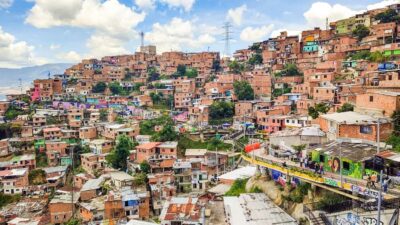 ★ 4.8Medellin: Comuna 13 Graffiti Tour, Cable Car & Street FoodFrom $189,046 reviews
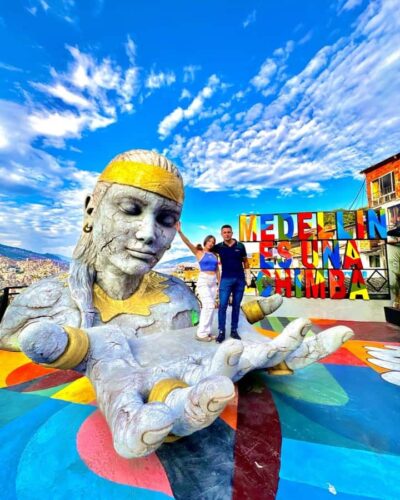 ★ 4.9Medellín: Comuna 13 True Story and Street Food TourFrom $141,779 reviews
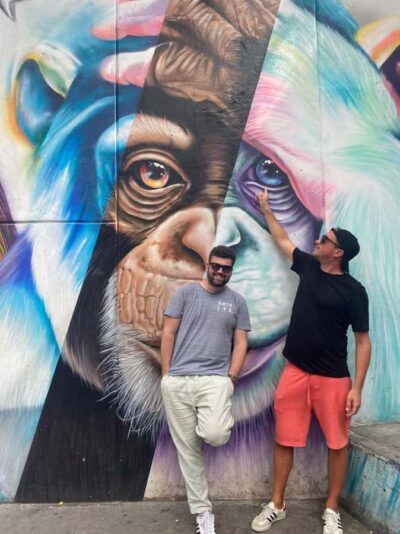 ★ 4.8Medellín: Comuna 13 District Tour with Cable Car RideFrom $271,467 reviews
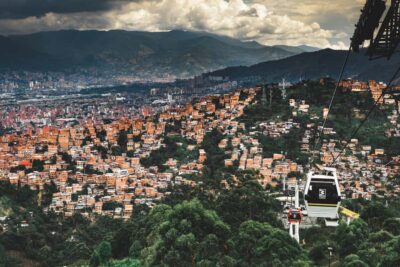 ★ 4.9Medellín: Private City Tour with Metrocable and Comuna 13From $76330 reviews
 ★ 4.9Medellín: Comuna 13 Tour with Snacks And Your Own GraffitiFrom $11311 reviews
 ★ 4.5City Tour + Commune 13 MedellinFrom $37295 reviews
 ★ 4.7Bogotá: La Candelaria Graffiti & Urban Art Guided TourFrom $16250 reviews
 ★ 4.9Medellín: Comuna 13 and Graffiti Guided Tour with a LocalFrom $16239 reviews
Where else this tour turns up